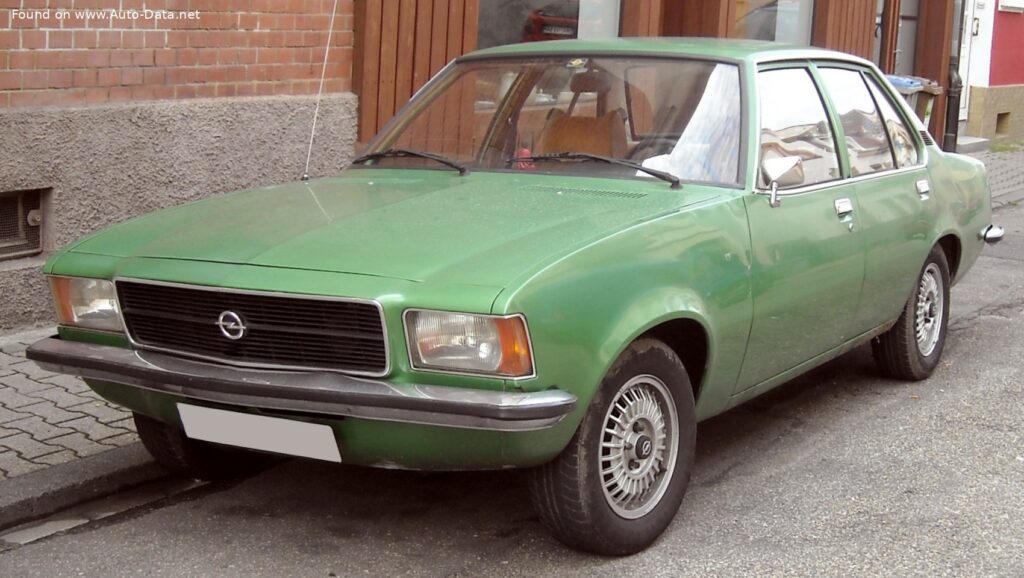
The Opel Rekord D 2.0 D (55 hp) was a diesel-powered variant of the Rekord D, produced between 1974 and 1977. This model represented Opel’s entry into the diesel passenger car market, offering an alternative to the gasoline-powered Rekord D models. Positioned as a fuel-efficient option, it catered to drivers prioritizing economy over outright performance. The Rekord D itself was a significant model for Opel, built on the 1HX0 platform, and represented a substantial update to the Rekord C, offering increased interior space and improved styling.
Powertrain & Engine Architecture
The heart of the Rekord D 2.0 D was its 1,998 cc (121.93 cu. in.) inline-four cylinder diesel engine. Designated with various internal codes depending on the specific market, this engine was a naturally aspirated, indirect injection diesel. It utilized a precombustion chamber injection system, a common technology for diesel engines of the era, which improved combustion efficiency and reduced engine noise compared to direct injection systems. The engine featured a single overhead camshaft (SOHC) valvetrain with two valves per cylinder.
The 2.0 D engine produced 55 horsepower (hp) at 4,400 rpm and 113 Newton-meters (83.34 lb-ft) of torque at 2,200 rpm. This relatively low power output was typical for diesel engines of the 1970s, prioritizing fuel efficiency and durability over high performance. The compression ratio was a high 22:1, characteristic of diesel engines, enabling efficient combustion of the fuel-air mixture. Bore and stroke dimensions were 86.5 mm (3.41 in) and 85 mm (3.35 in) respectively.
The Rekord D 2.0 D was exclusively offered with a four-speed manual transmission. This transmission was chosen to complement the engine’s torque characteristics and contribute to fuel economy. The drivetrain was rear-wheel drive, a standard configuration for European sedans of this period.
Driving Characteristics
The driving experience in the Rekord D 2.0 D was defined by its modest power output and emphasis on fuel efficiency. Acceleration was leisurely, with a top speed of approximately 130 km/h (80.78 mph). The four-speed manual transmission required careful gear selection to maintain momentum, particularly when climbing hills or overtaking. The engine’s torque peak at 2,200 rpm provided reasonable pulling power in everyday driving situations, but it lacked the responsiveness of the gasoline-powered Rekord D variants.
Compared to the 1.7 and 2.0 liter gasoline engines available in the Rekord D, the 2.0 D offered significantly lower performance but superior fuel economy. The gasoline engines provided a more engaging driving experience with quicker acceleration and higher top speeds, but at the cost of increased fuel consumption. The diesel model was aimed at drivers who prioritized practicality and economy over sporty performance.
Equipment & Trim Levels
The Rekord D 2.0 D was generally equipped with a relatively basic level of trim, reflecting its position as a more affordable and practical variant. Standard features typically included cloth upholstery, vinyl flooring, and a simple dashboard layout. The interior was functional and durable, designed for everyday use.
Optional extras available for the 2.0 D included upgraded upholstery, a radio, and a heated rear window. Higher trim levels, available on the gasoline-powered Rekord D models, such as leather seats and wood trim, were generally not offered on the diesel variant. The focus was on providing a reliable and economical vehicle rather than luxurious appointments.
Chassis & Braking
The Rekord D 2.0 D utilized a conventional chassis design with independent front suspension and a rigid axle rear suspension. The front suspension featured coil springs and wishbones, while the rear suspension employed leaf springs. This setup provided a comfortable ride quality, although it was not particularly sporty in handling. The kerb weight of the 2.0 D was 1,210 kg (2,667.59 lbs), contributing to its relatively modest performance.
The braking system consisted of disc brakes on the front wheels and drum brakes on the rear wheels. This configuration was typical for vehicles of this era and price range. The braking performance was adequate for everyday driving, but it lacked the stopping power of more modern braking systems. The vehicle’s drag coefficient was 0.46, which was typical for sedans of the 1970s.
Market Reception & Comparison
The Opel Rekord D 2.0 D was generally well-received by critics as a practical and fuel-efficient option. It filled a niche in the market for drivers seeking a diesel-powered sedan with reasonable comfort and reliability. However, its modest performance was often criticized, particularly when compared to the gasoline-powered Rekord D models.
Fuel economy was a key selling point for the 2.0 D, achieving approximately 7.9 l/100 km (29.8 US mpg, 35.8 UK mpg). This was significantly better than the fuel consumption of the gasoline engines. In terms of reliability, the 2.0 D diesel engine proved to be durable and long-lasting, although maintenance costs could be higher due to the complexity of the diesel injection system. Compared to competitors like the Ford Taunus and Volkswagen Passat, the Rekord D 2.0 D offered a competitive combination of fuel economy, practicality, and affordability.
Technical Specifications
| Brand | Opel |
| Model | Rekord |
| Generation | Rekord D |
| Type (Engine) | 2.0 D (55 Hp) |
| Start of production | 1974 |
| End of production | 1977 |
| Powertrain Architecture | Internal Combustion engine |
| Body type | Sedan |
| Seats | 5 |
| Doors | 2-4 |
| Fuel consumption (combined) | 7.9 l/100 km |
| Fuel consumption (US mpg) | 29.8 US mpg |
| Fuel consumption (UK mpg) | 35.8 UK mpg |
| Fuel Type | Diesel |
| Maximum speed | 130 km/h |
| Maximum speed (mph) | 80.78 mph |
| Weight-to-power ratio | 22 kg/Hp |
| Weight-to-torque ratio | 10.7 kg/Nm |
| Power | 55 Hp @ 4400 rpm |
| Power per litre | 27.5 Hp/l |
| Torque | 113 Nm @ 2200 rpm |
| Torque (lb.-ft.) | 83.34 lb.-ft. @ 2200 rpm |
| Engine displacement | 1998 cm3 |
| Engine displacement (cu. in.) | 121.93 cu. in. |
| Number of cylinders | 4 |
| Engine configuration | Inline |
| Cylinder Bore | 86.5 mm |
| Cylinder Bore (in.) | 3.41 in. |
| Piston Stroke | 85 mm |
| Piston Stroke (in.) | 3.35 in. |
| Compression ratio | 22:1 |
| Number of valves per cylinder | 2 |
| Fuel injection system | Precombustion chamber injection |
| Engine aspiration | Naturally aspirated engine |
| Valvetrain | SOHC |
| Kerb Weight | 1210 kg |
| Kerb Weight (lbs.) | 2667.59 lbs. |
| Max. weight | 1685 kg |
| Max. weight (lbs.) | 3714.79 lbs. |
| Max load | 475 kg |
| Max load (lbs.) | 1047.2 lbs. |
| Trunk (boot) space (minimum) | 408 l |
| Trunk (boot) space (cu. ft.) | 14.41 cu. ft. |
| Fuel tank capacity | 70 l |
| Fuel tank capacity (US gal) | 18.49 US gal |
| Fuel tank capacity (UK gal) | 15.4 UK gal |
| Length | 4567 mm |
| Length (in.) | 179.8 in. |
| Width | 1718 mm |
| Width (in.) | 67.64 in. |
| Height | 1415 mm |
| Height (in.) | 55.71 in. |
| Wheelbase | 2668 mm |
| Wheelbase (in.) | 105.04 in. |
| Front track | 1419 mm |
| Front track (in.) | 55.87 in. |
| Rear (Back) track | 1400 mm |
| Rear (Back) track (in.) | 55.12 in. |
| Ride height (ground clearance) | 130 mm |
| Ride height (ground clearance) (in.) | 5.12 in. |
| Drag coefficient (Cd) | 0.46 |
| Minimum turning circle (turning diameter) | 11.4 m |
| Minimum turning circle (turning diameter) (ft.) | 37.4 ft. |
| Drivetrain Architecture | Rear wheel drive |
| Drive wheel | Rear wheel drive |
| Number of gears and type of gearbox | 4 gears, manual transmission |
| Front brakes | Disc |
| Rear brakes | Drum |
Legacy
The Opel Rekord D 2.0 D, while not a high-performance model, played an important role in establishing Opel as a manufacturer of fuel-efficient diesel vehicles. The engine itself proved to be relatively durable, and many examples continued to operate for years after production ceased. Today, the Rekord D 2.0 D is a relatively rare sight, but it is appreciated by classic car enthusiasts for its simplicity, reliability, and historical significance. In the used car market, well-maintained examples command a modest premium, appealing to collectors and those seeking a unique and economical classic vehicle.