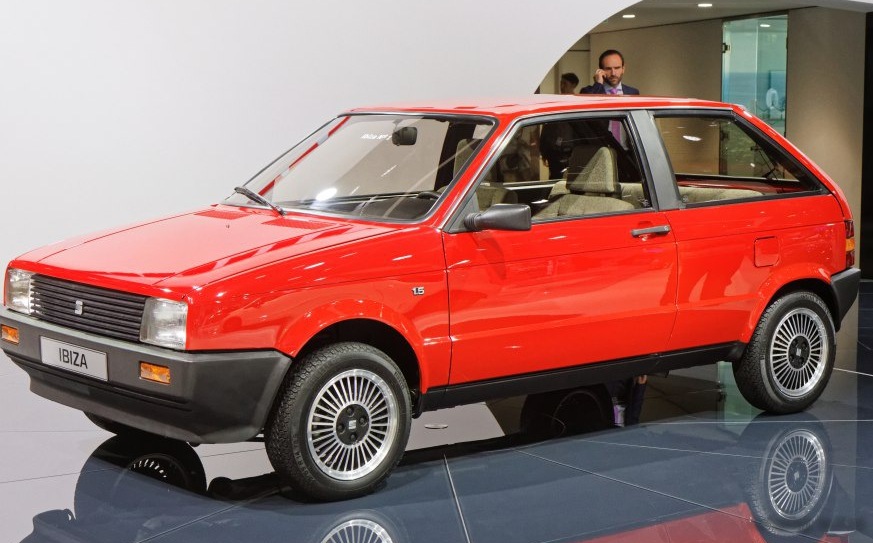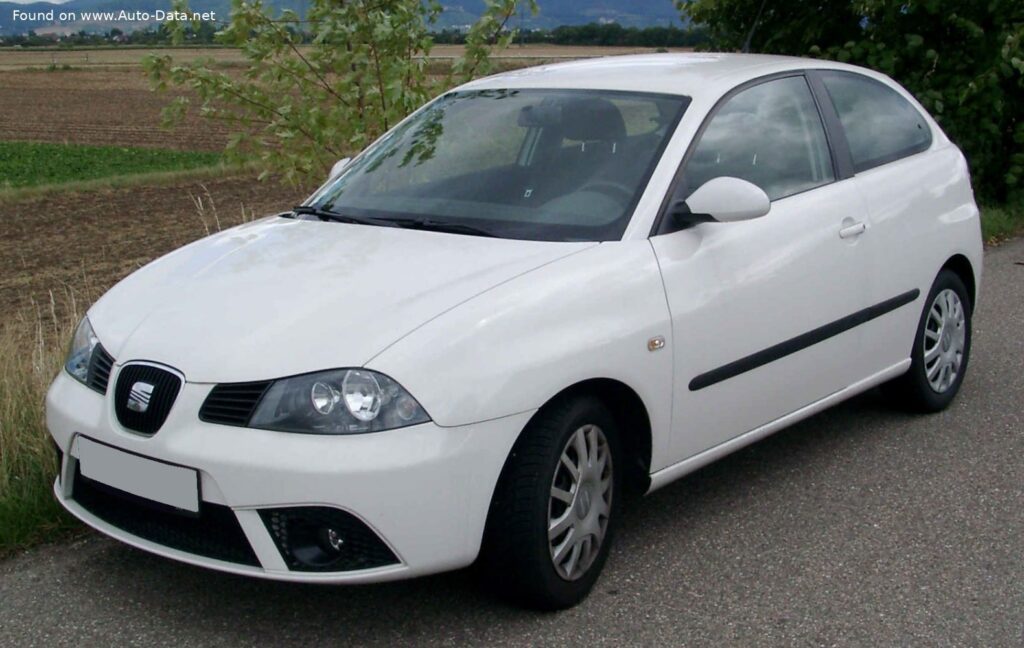
The Seat Ibiza III (facelift, introduced in 2006) 1.2, producing 54 horsepower, represented the entry point into the third-generation Ibiza range. Produced from 2006 to May 2007, this variant was aimed at budget-conscious buyers seeking economical transportation within the supermini segment. It was based on the Volkswagen Group’s PQ24 platform, also known as the 1HX0/A3 platform, shared with models like the Volkswagen Polo and Škoda Fabia. The 1.2-liter engine and five-speed manual transmission combination offered a balance of affordability and practicality, though performance was decidedly modest.
The 1.2-Liter Ibiza: Entry-Level Positioning
Within the 2006-2007 Ibiza III facelift lineup, the 1.2-liter 54 hp model occupied the base trim level. Above it sat variants with larger displacement engines, including 1.4-liter and 1.6-liter gasoline options, as well as diesel alternatives like the 1.9 TDI. The 1.2 was specifically targeted at first-time car buyers, city commuters, and those prioritizing fuel efficiency over outright performance. It was often equipped with a more basic level of standard equipment compared to its higher-spec siblings, though options were available to enhance comfort and convenience.
Powertrain & Engine Architecture
The heart of the Ibiza 1.2 was the BMD engine code, a 1.2-liter inline three-cylinder gasoline engine. This engine featured multi-port fuel injection, delivering fuel directly into the intake manifold. The engine’s valvetrain consisted of two valves per cylinder, a relatively simple design contributing to its reliability and low manufacturing cost. The engine displaced 1198 cc (73.11 cubic inches) and produced a maximum power output of 54 hp at 4750 rpm, and 106 Nm (78.18 lb-ft) of torque at 3000 rpm. This configuration resulted in a power-to-liter ratio of 45.1 hp/l.
The engine was transversely mounted at the front of the vehicle, driving the front wheels. The standard transmission was a five-speed manual gearbox. This transmission was chosen for its simplicity and contribution to fuel economy. The gear ratios were optimized for low-speed drivability and maximizing fuel efficiency, rather than providing sporty acceleration. The first gear was relatively short, aiding in starting from a standstill, while higher gears were spaced to maintain economical cruising speeds.
Engine Details
- Engine Code: BMD
- Displacement: 1198 cc (73.11 cu. in.)
- Cylinders: 3, Inline
- Fuel Injection: Multi-port
- Valves per Cylinder: 2
- Compression Ratio: 10.8:1
Driving Characteristics
The driving experience in the Ibiza 1.2 was characterized by its modest performance. Acceleration was slow, taking approximately 17.9 seconds to reach 100 km/h (62 mph) and 17 seconds to reach 60 mph. The top speed was limited to 155 km/h (96.31 mph). The engine felt strained when accelerating hard, particularly when carrying passengers or cargo. However, in urban environments and on slower roads, the 1.2-liter engine proved adequate for everyday driving. The five-speed manual transmission allowed drivers to keep the engine in its optimal power band, but frequent downshifts were often necessary when overtaking or climbing hills.
Compared to the higher-output versions of the Ibiza III, such as the 1.6-liter models, the 1.2 felt significantly less responsive. The 1.6 offered a more relaxed driving experience with noticeably quicker acceleration and greater flexibility. The diesel variants, like the 1.9 TDI, provided even more torque and superior fuel economy, but at a higher initial cost. The 1.2’s strength lay in its simplicity and fuel efficiency, making it a practical choice for those prioritizing economy over performance.
Equipment & Trim Levels
The standard equipment level on the Ibiza 1.2 was relatively basic, reflecting its position as the entry-level model. Typically, it included features such as power steering, central locking, and front airbags. Interior upholstery was usually cloth, and the dashboard featured a simple, functional design. Air conditioning was often an optional extra, as were features like electric windows and a radio/CD player. Higher trim levels, available as upgrades, added features like alloy wheels, upgraded interior trim, and more sophisticated audio systems.
The interior space was typical for a supermini, offering adequate room for four adults, though rear legroom could be limited. The rear seats could be folded down to increase luggage capacity, providing flexibility for carrying larger items. The trunk space ranged from 265 liters (9.36 cu. ft.) with the rear seats up to 1030 liters (36.37 cu. ft.) with the rear seats folded down.
Chassis & Braking
The Ibiza 1.2 utilized a MacPherson strut front suspension and a torsion beam rear suspension. This setup provided a reasonable balance of ride comfort and handling. The torsion beam rear suspension was a cost-effective solution commonly found in supermini vehicles. The front brakes were ventilated discs, offering good stopping power, while the rear brakes were drums. This combination was sufficient for the vehicle’s weight and performance capabilities.
The steering was hydraulically assisted, providing a light and easy driving experience. The 1.2-liter model typically came equipped with 14-inch or 15-inch steel wheels, with alloy wheels available as an optional upgrade. Tire sizes were typically 185/60 R14 or 195/50 R15.
Market Reception & Comparison
The Seat Ibiza 1.2 received mixed reviews from automotive critics. While praised for its affordability and fuel economy, it was often criticized for its lack of performance. Reviewers noted that the engine felt underpowered, particularly when fully loaded or driving on inclines. However, the Ibiza’s handling and ride quality were generally well-regarded. Compared to rivals like the Ford Fiesta and Renault Clio, the Ibiza 1.2 offered a competitive price point but lacked the refinement and performance of some of its competitors.
Fuel economy was a strong point for the Ibiza 1.2, with combined fuel consumption figures of around 5.9 l/100 km (39.9 US mpg, 47.9 UK mpg). This made it an attractive option for budget-conscious buyers. Reliability was generally good, although the three-cylinder engine could be prone to occasional issues if not properly maintained.
Technical Specifications
| Brand | Seat |
| Model | Ibiza |
| Generation | Ibiza III (facelift 2006) |
| Type (Engine) | 1.2 (54 Hp) |
| Start of production | 2006 |
| End of production | May, 2007 |
| Powertrain Architecture | Internal Combustion engine |
| Body type | Hatchback |
| Seats | 5 |
| Doors | 3-5 |
| Fuel consumption (urban) | 7.8 l/100 km (30.2 US mpg) |
| Fuel consumption (extra urban) | 4.8 l/100 km (49 US mpg) |
| Fuel consumption (combined) | 5.9 l/100 km (39.9 US mpg) |
| Fuel Type | Petrol (Gasoline) |
| Acceleration 0 – 100 km/h | 17.9 sec |
| Acceleration 0 – 62 mph | 17.9 sec |
| Maximum speed | 155 km/h (96.31 mph) |
| Kerb Weight | 1010 kg (2226.67 lbs) |
| Max. weight | 1510 kg (3328.98 lbs) |
| Engine Displacement | 1198 cm3 (73.11 cu. in.) |
| Number of cylinders | 3 |
| Power | 54 Hp @ 4750 rpm |
| Torque | 106 Nm @ 3000 rpm (78.18 lb.-ft. @ 3000 rpm) |
| Fuel tank capacity | 45 l (11.89 US gal) |
| Length | 3977 mm (156.57 in) |
| Width | 1698 mm (66.85 in) |
| Height | 1441 mm (56.73 in) |
| Wheelbase | 2460 mm (96.85 in) |
| Gears/Transmission | 5 gears, manual transmission |
Legacy
The Seat Ibiza III 1.2, while not a performance standout, proved to be a reliable and economical choice for many buyers. On the used car market today, these models are typically very affordable, making them attractive to those seeking a cheap and cheerful runabout. The three-cylinder engine, while simple, requires regular maintenance to ensure longevity. Common issues include oil leaks and wear on the timing chain. However, with proper care, the 1.2-liter engine can provide many years of service. The Ibiza 1.2 remains a popular choice for learner drivers and those seeking a low-cost vehicle for short journeys.