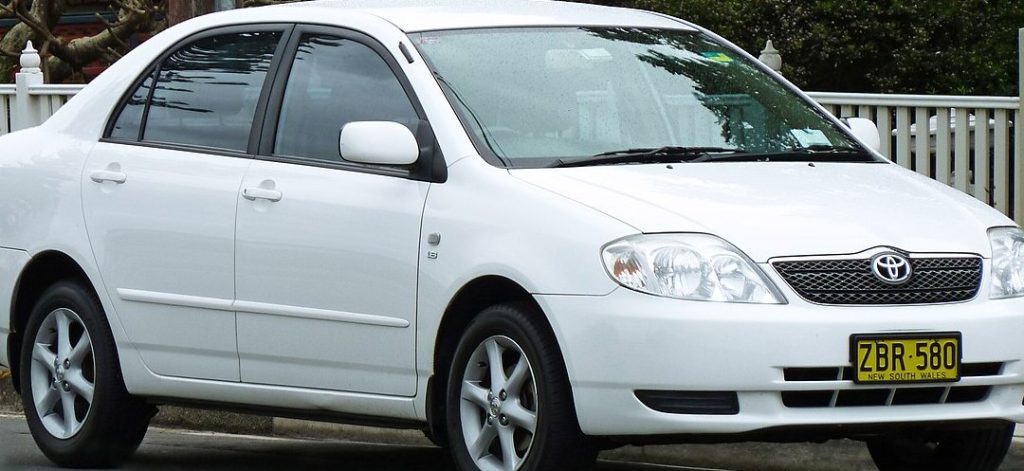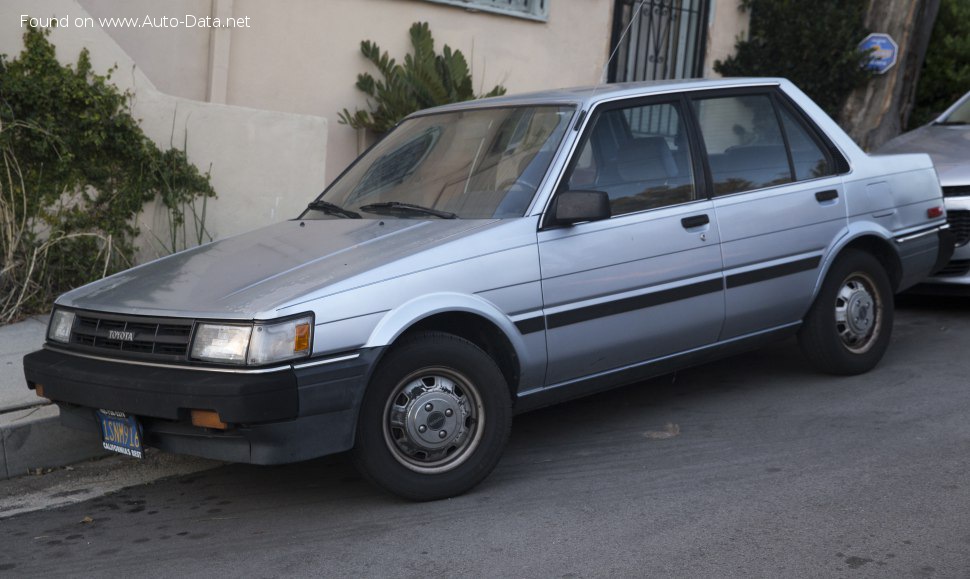
The Toyota Corolla E80, produced between 1983 and 1988, represented the fifth generation of Toyota’s globally successful Corolla line. Within this generation, the 1.8 D variant, powered by the 1C-L diesel engine and producing 58 horsepower, occupied a specific niche. It was primarily aimed at markets where diesel fuel was more affordable and where fuel economy was a paramount concern. This model served as the entry-level diesel offering within the E80 range, positioned below the more powerful (though not available in all markets) gasoline-powered options. The E80 chassis, known internally as the T100 series, was a significant departure from its predecessor, offering increased interior space and improved comfort while maintaining the Corolla’s reputation for reliability.
The 1.8 D Variant: A Focus on Economy
The 1.8 D trim of the E80 Corolla was specifically designed to appeal to buyers prioritizing fuel efficiency and low running costs. In many European and Asian markets, diesel engines were favored due to government incentives and lower fuel taxes. The 58 horsepower output, while modest by contemporary standards, was considered adequate for everyday commuting and long-distance travel, particularly given the relatively lightweight nature of the E80 Corolla. This variant was often chosen by fleet operators and private buyers seeking a dependable and economical vehicle. It was typically offered in a more basic trim level compared to the gasoline-powered models, focusing on essential features rather than luxury appointments.
Powertrain & Engine Architecture
The heart of the 1.8 D Corolla was the 1C-L diesel engine. This 1.8-liter (1779 cc) inline-four cylinder engine was a naturally aspirated, indirect injection diesel. The 1C-L engine featured a cast iron block and cylinder head, contributing to its durability. It utilized a Bosch rotary injection pump, a common system for diesel engines of the era, delivering fuel to the combustion chambers via indirect injection. This meant the fuel was injected into a pre-chamber before entering the main combustion chamber, promoting more complete combustion and reducing noise. The engine employed a single overhead camshaft (SOHC) valvetrain operating two valves per cylinder. The engine’s relatively low compression ratio (around 23:1) contributed to its longevity, but also limited its power output. The engine was mated to a four or five-speed manual transmission in most markets, though a three-speed automatic transmission was available as an option in some regions. The automatic transmission, while offering convenience, further reduced acceleration performance and slightly impacted fuel economy.
Driving Characteristics
The driving experience in the 1.8 D Corolla was characterized by its relaxed and unhurried nature. With only 58 horsepower and approximately 88 lb-ft of torque, acceleration was modest. The engine required careful gear selection, particularly when climbing hills or overtaking. The manual transmission versions offered more control and responsiveness, allowing drivers to maximize the available power. The automatic transmission, while convenient, resulted in noticeable performance degradation. The gear ratios were optimized for fuel economy rather than outright speed. Top speed was typically around 85-90 mph, though sustaining such speeds for extended periods was not recommended. The suspension, tuned for comfort, provided a reasonably smooth ride, absorbing most road imperfections effectively. However, the car exhibited noticeable body roll during cornering due to its soft suspension setup.
Equipment & Trim Levels
The 1.8 D Corolla typically came equipped with a relatively basic set of features. Standard equipment generally included cloth upholstery, a simple dashboard layout with analog gauges, and manual windows and door locks. Power steering was often an optional extra, as was air conditioning. The interior trim was typically functional and durable, prioritizing practicality over luxury. Radio options were available, ranging from basic AM/FM units to cassette players. Exterior features typically included steel wheels with hubcaps, black plastic bumpers, and relatively simple exterior trim. Higher trim levels, if available, might have included features such as upgraded upholstery, a more comprehensive instrument cluster, and alloy wheels. However, the 1.8 D was generally positioned as the entry-level diesel model, and therefore lacked many of the more luxurious features found in the gasoline-powered variants.
Chassis & Braking
The E80 Corolla utilized a front-engine, rear-wheel-drive layout. The chassis consisted of a body-on-frame construction, providing a robust and durable platform. The front suspension featured independent MacPherson struts, while the rear suspension employed a solid axle with leaf springs. This configuration provided a comfortable ride but limited handling precision. Braking systems varied depending on the market and trim level. Lower-spec models typically featured drum brakes on all four wheels, while higher-spec models often included front disc brakes and rear drum brakes. Power-assisted braking was not standard on all models. The steering system was a recirculating ball type, providing adequate steering feel but lacking the precision of more modern steering systems. Stabilizer bars were often omitted on the base models to keep costs down.
Market Reception & Comparison
The 1.8 D Corolla received generally positive reviews for its fuel economy and reliability. Critics praised its durability and low running costs, making it an attractive option for budget-conscious buyers. However, its modest performance was often criticized, particularly when compared to the more powerful gasoline-powered models. Compared to the 1.6L gasoline engine available in the E80, the 1.8 D offered significantly lower horsepower and torque, resulting in slower acceleration and reduced overall performance. However, the diesel engine provided substantially better fuel economy. Against competitors like the Volkswagen Golf Diesel and the Fiat Ritmo Diesel, the Corolla 1.8 D offered a comparable level of fuel efficiency and reliability, often at a slightly lower price point. The 1.8 D was often seen as a more practical and economical choice than the higher-performance gasoline variants, appealing to a different segment of the market.
Technical Specifications
| Body Type | Sedan, 4 Doors, 5 Seats |
| Engine Type | Internal Combustion Engine, Diesel |
| Engine Model/Code | 1C-L |
| Engine Displacement | 1.8 Liters (1779 cc) |
| Engine Aspiration | Naturally Aspirated |
| Power Output | 58 Hp |
| Torque Output | 88 lb-ft (approximately) |
| Fuel System | Bosch Rotary Injection Pump, Indirect Injection |
| Valvetrain | SOHC, 2 Valves per Cylinder |
| Transmission | 4-Speed or 5-Speed Manual, 3-Speed Automatic (optional) |
| Fuel Capacity | 50 Liters (13.2 US gallons) |
| Engine Oil Capacity | 4.3 Liters (4.54 US quarts) |
| Coolant Capacity | 7 Liters (7.4 US quarts) |
Legacy
The 1.8 D Corolla E80, while not the most powerful or exciting variant of the fifth-generation Corolla, has earned a reputation for exceptional reliability and longevity. The 1C-L diesel engine, known for its robust construction, is capable of accumulating high mileage with proper maintenance. Today, these vehicles are relatively rare, but those that remain are often well-maintained and sought after by enthusiasts and collectors. The 1.8 D’s simple mechanical design makes it relatively easy to repair and maintain, even by amateur mechanics. In the used car market, the 1.8 D commands a modest price, reflecting its age and relatively low performance. However, its reputation for reliability and fuel efficiency continues to make it an attractive option for buyers seeking a dependable and economical classic car. The E80 Corolla, in all its variants, solidified the Corolla’s position as a global automotive icon, and the 1.8 D played a significant role in expanding its appeal to a wider range of buyers.