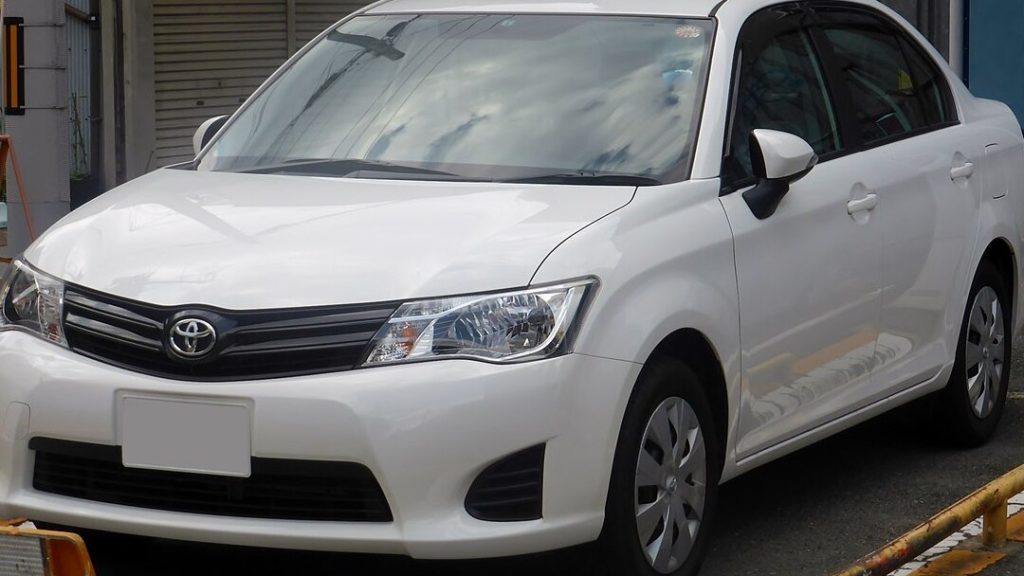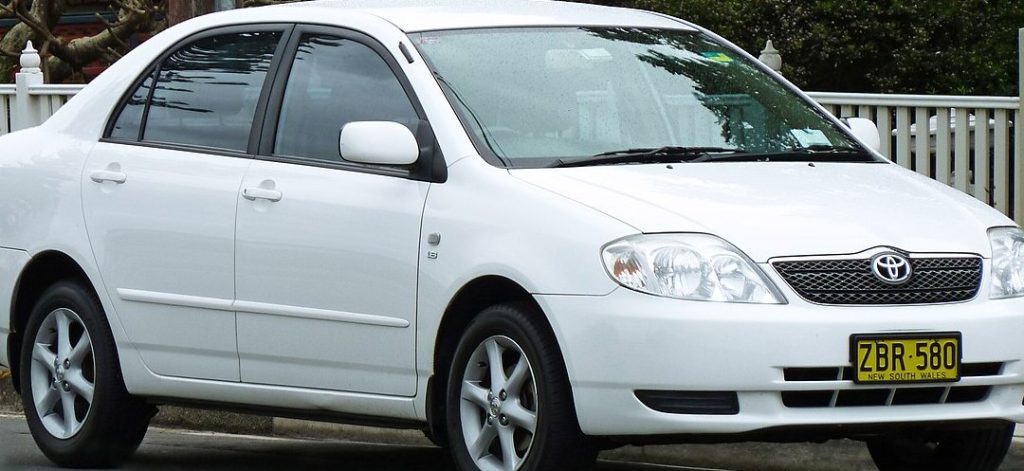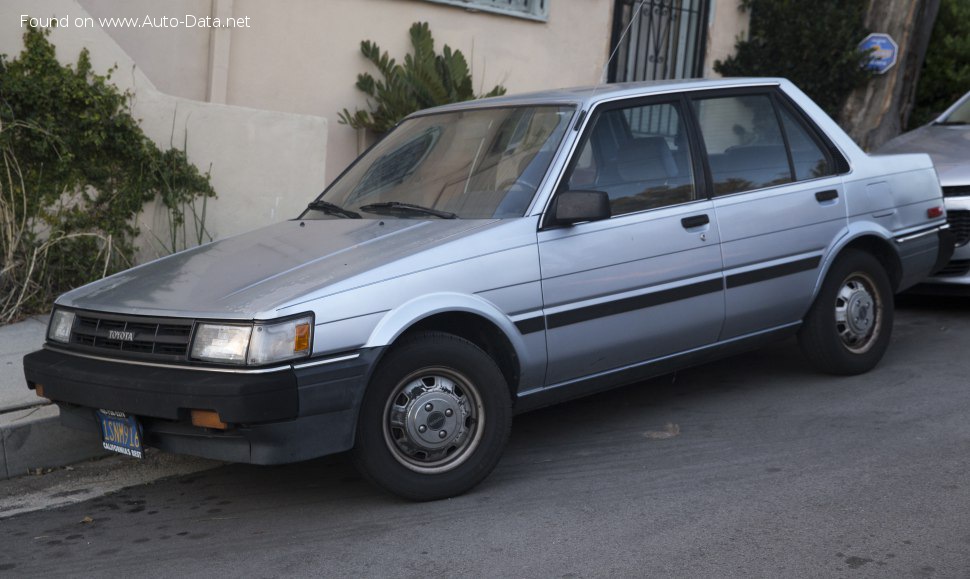
The Toyota Corolla E80, produced between 1983 and 1987 (with some models continuing into 1988), represented the fifth generation of Toyota’s globally successful Corolla line. Within this generation, the 1.8 D (64 hp) variant, powered by the 1C-L diesel engine, occupied a specific niche. Introduced primarily for European and other international markets where diesel fuel was more prevalent and economically advantageous, this model offered a fuel-efficient, albeit modestly powered, option within the E80 range. It served as an entry-level or budget-focused trim, appealing to buyers prioritizing economy over outright performance. Production spanned from 1985 to 1988, and it was exclusively offered as a four-door sedan.
The 1.8 D Variant: Positioning and Market Context
The E80 Corolla was available in a wide array of body styles – including sedan, coupe, liftback, and wagon – and with a diverse selection of engines, ranging from 1.3-liter gasoline units to a 1.6-liter gasoline engine and the 1.8-liter diesel discussed here. The 1.8 D was positioned at the lower end of the performance spectrum. Compared to the gasoline-powered Corollas, particularly the 1.6-liter versions, the diesel offered significantly less horsepower and acceleration. However, it provided substantially better fuel economy, a key selling point in markets with high gasoline prices or government incentives for diesel vehicles. It differed significantly from the more sporty or luxurious trims, which featured larger engines, upgraded interiors, and additional features like power windows and central locking. The target audience for the 1.8 D was primarily cost-conscious buyers, fleet operators, and those requiring a reliable and economical vehicle for daily commuting or long-distance travel.
Powertrain & Engine Architecture
The heart of the 1.8 D Corolla is the 1C-L diesel engine. This is a 1.8-liter (1779 cc) inline-four cylinder engine, naturally aspirated. It’s a relatively simple design, reflecting the engineering philosophies of the mid-1980s. The 1C-L engine utilizes indirect injection, a common diesel technology of the time. Fuel is injected into a pre-chamber, where it partially combusts before entering the main combustion chamber. This system contributes to quieter operation and reduced emissions compared to direct injection diesels, although it also results in slightly lower power output. The engine features a single overhead camshaft (SOHC) operating two valves per cylinder. The engine’s construction is robust, utilizing a cast iron block and head, contributing to its longevity. The 1C-L engine produces 64 horsepower (48 kW) at 4200 rpm and 98 lb-ft (133 Nm) of torque at 2400 rpm. The transmission paired with the 1.8 D was typically a four-speed manual or a four-speed automatic. The automatic transmission was designed for smooth, economical operation rather than sporty performance, with relatively wide gear ratios prioritizing fuel efficiency.
Driving Characteristics
Driving the Corolla 1.8 D is characterized by its relaxed and unhurried nature. Acceleration is modest, and the engine requires diligent use of the gear lever (in manual versions) to maintain momentum, especially when climbing hills or overtaking. The automatic transmission further softens the driving experience, providing smooth shifts but at the expense of responsiveness. The engine’s torque peak at 2400 rpm means that most of its usable power is available at lower engine speeds, making it well-suited for everyday driving conditions. Compared to the 1.6-liter gasoline Corolla, the 1.8 D feels noticeably slower, particularly at higher speeds. However, the diesel’s superior fuel economy and lower running costs often outweighed the performance deficit for its target buyers. The suspension is tuned for comfort, providing a reasonably smooth ride over most road surfaces. The steering is light and easy to use, making it suitable for urban driving. The overall driving experience is one of practicality and dependability, rather than excitement.
Equipment & Trim Levels
The 1.8 D Corolla typically came with a fairly basic level of equipment, reflecting its position as an entry-level model. Standard features generally included cloth upholstery, vinyl floor covering, a basic instrument cluster, and manual windows and door locks. Air conditioning was often an optional extra, as were power steering and a radio. Interior trim was typically functional and durable, prioritizing practicality over luxury. The dashboard layout was straightforward and easy to use, with clearly labeled controls. Trim levels varied depending on the market, but generally, the 1.8 D was offered in a single, relatively spartan trim. Optional extras were limited to items like upgraded audio systems, alloy wheels (rare), and a sunroof. The focus was on providing a reliable and affordable vehicle with the essential features for everyday transportation.
Chassis & Braking
The E80 Corolla 1.8 D utilized a conventional chassis layout, with a MacPherson strut front suspension and a torsion beam rear suspension. This setup provided a good balance of ride comfort and handling. The suspension was tuned to prioritize comfort over sporty handling, resulting in a relatively soft and forgiving ride. Braking systems varied depending on the market and trim level. Lower-spec models typically featured drum brakes on the rear wheels, while higher-spec models (and some markets) were equipped with disc brakes all around. The front brakes were typically ventilated discs. The braking system was adequate for the vehicle’s weight and performance, but it lacked the stopping power of more modern braking systems. Stabilizer bars were often fitted to the front suspension to reduce body roll during cornering. The steering system was a recirculating ball type, providing light and easy steering but lacking the precision of more modern rack-and-pinion systems.
Market Reception & Comparison
The Toyota Corolla 1.8 D received generally positive reviews for its fuel economy, reliability, and low running costs. Critics acknowledged its modest performance but recognized that it was not intended to be a sports car. The diesel engine was praised for its durability and longevity, and the overall build quality of the E80 Corolla was highly regarded. Compared to other diesel-powered cars of the time, the Corolla 1.8 D offered a good balance of price, performance, and reliability. In terms of fuel economy, it significantly outperformed the gasoline-powered Corollas, achieving upwards of 50 mpg (imperial gallons) on the highway. However, it was slower to accelerate and had a lower top speed. Compared to other trims in the E80 Corolla lineup, the 1.8 D was the least expensive to purchase and operate, making it an attractive option for budget-conscious buyers. Its simplicity also meant lower maintenance costs compared to more complex gasoline engine variants.
Technical Specifications
| Engine Code | 1C-L |
| Engine Type | Inline-4 Diesel |
| Displacement | 1779 cc (1.8 L) |
| Power Output | 64 hp (48 kW) @ 4200 rpm |
| Torque Output | 98 lb-ft (133 Nm) @ 2400 rpm |
| Fuel System | Indirect Injection |
| Valvetrain | SOHC, 2 valves per cylinder |
| Compression Ratio | 23.5:1 |
| Transmission | 4-speed Manual or 4-speed Automatic |
| Fuel Tank Capacity | 55 liters (14.5 US gallons) |
| Curb Weight | Approximately 1050-1150 kg (2315-2535 lbs) |
| Top Speed | Approximately 130 km/h (81 mph) |
Legacy
The Toyota Corolla E80 1.8 D, while not the most glamorous or powerful variant of the fifth-generation Corolla, has proven to be remarkably durable and reliable over the years. The 1C-L diesel engine is known for its longevity, and many examples are still on the road today, often with high mileage. In the used car market, these Corollas are valued for their simplicity, affordability, and fuel efficiency. They are often sought after by those looking for a basic, dependable vehicle for commuting or as a first car. Parts availability can be a challenge in some regions, but the 1C-L engine is relatively easy to maintain and repair. The E80 Corolla 1.8 D represents a significant chapter in Toyota’s history, demonstrating the company’s commitment to building reliable and economical vehicles that meet the needs of a wide range of customers. Its enduring presence on roads around the world is a testament to its robust engineering and enduring appeal.