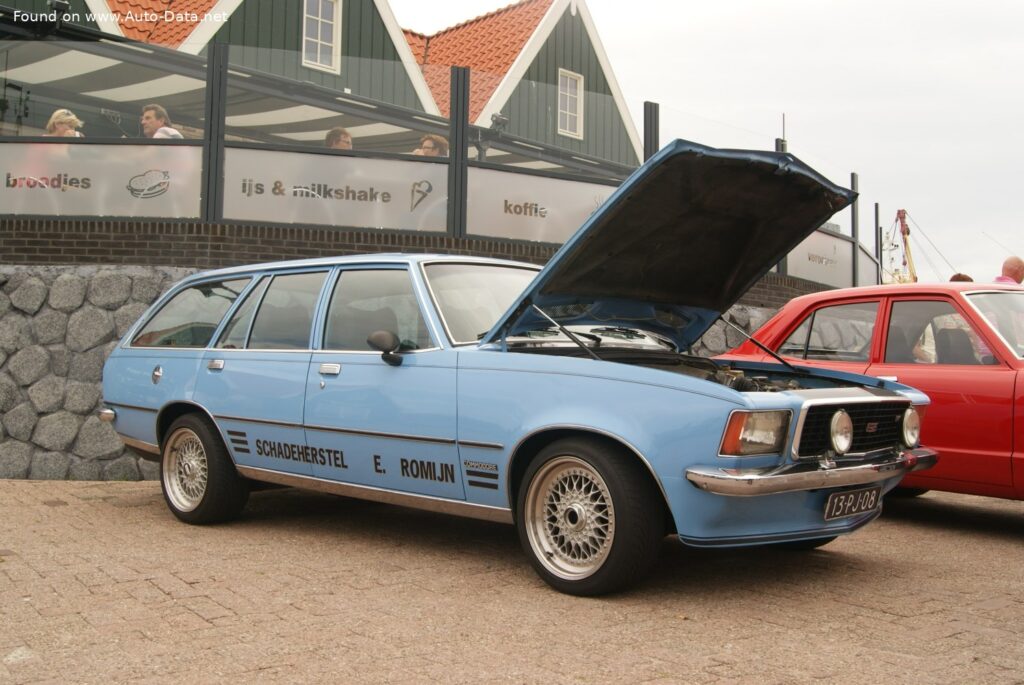
The Opel Rekord D Caravan 1.7 S, produced between 1972 and 1975, was a variant of the Rekord D series, a large family car manufactured by Opel. This particular model occupied a mid-range position within the Rekord D lineup, offering a balance between practicality, affordability, and reasonable performance. The Rekord D itself was a significant model for Opel, representing a modern approach to family motoring and contributing to the company’s success in the European market. It was built on the 1HX0 platform, later designated A3, and was available in both sedan and caravan (estate) body styles. The 1.7 S version, with its 83 horsepower engine, aimed to provide a more spirited driving experience than the base models while remaining economical for everyday use.
Powertrain & Engine Architecture
The heart of the Rekord D Caravan 1.7 S was its 1698 cc (103.62 cu. in.) inline-four cylinder engine. Designated with engine code 17S, this engine produced 83 hp (62 kW) at 5400 rpm and 127 Nm (93.67 lb-ft) of torque at 3200 rpm. The engine featured a compression ratio of 8.2:1 and utilized a single overhead camshaft (SOHC) valvetrain with two valves per cylinder. Fuel delivery was managed by a carburetor, a common feature for engines of this era. The engine’s bore and stroke measured 88 mm (3.46 in) and 69.8 mm (2.75 in) respectively. While not a particularly advanced engine by modern standards, it was considered reliable and relatively easy to maintain.
The 1.7 S was typically paired with a four-speed manual transmission, driving the rear wheels. While an automatic transmission was offered on some Rekord D models, it was less common with the 1.7 S engine, as the automatic would have significantly impacted performance. The rear-wheel-drive configuration was standard for the Rekord D series.
Engine Variations & Comparison
Compared to the base Rekord D models, the 1.7 S offered a noticeable power increase. The standard engine was a 1.5-liter unit producing around 60-75 hp. At the higher end of the spectrum, the Rekord D was also available with a 1.9-liter engine and, later, a 2.1-liter engine, offering significantly more power and performance. The 1.7 S positioned itself as a compromise, providing more pep than the base models without the higher cost and fuel consumption of the larger engines. The 1.9 and 2.1-liter versions were often chosen by drivers prioritizing performance, while the 1.5-liter models appealed to those seeking maximum fuel economy and affordability.
Driving Characteristics
The Rekord D Caravan 1.7 S offered a driving experience that was adequate for its time, but would feel quite slow by modern standards. Acceleration from 0 to 100 km/h (0-62 mph) took approximately 22 seconds, and 0 to 60 mph was achieved in around 20.9 seconds. The top speed was around 137 km/h (85.13 mph). The four-speed manual transmission provided reasonable control, but the engine’s relatively low torque output meant that frequent gear changes were necessary, especially when climbing hills or overtaking. The rear-wheel-drive layout offered predictable handling, but the car’s relatively soft suspension and high curb weight (1110 kg / 2447.13 lbs) meant it wasn’t particularly sporty. The Caravan body style, while offering excellent practicality, added weight and further reduced performance compared to the sedan version.
Equipment & Trim Levels
The Rekord D Caravan 1.7 S was generally equipped with basic, but functional, features. Standard equipment typically included cloth upholstery, a basic instrument panel, and manually operated windows and door locks. The interior was designed with practicality in mind, offering ample space for passengers and cargo. Optional extras included a radio, upgraded upholstery, and a sunroof. The trim level of the 1.7 S was considered mid-range, offering a step up in comfort and features compared to the base models, but lacking the luxury appointments of the higher-end trims.
Chassis & Braking
The Rekord D Caravan 1.7 S featured a conventional chassis design with independent front suspension and a rigid axle rear suspension. The front suspension utilized coil springs and wishbones, while the rear suspension employed leaf springs. Braking was provided by disc brakes on the front wheels and drum brakes on the rear wheels. The braking system was adequate for the car’s weight and performance, but lacked the sophistication of more modern braking systems. The car’s curb weight of 1110 kg (2447.13 lbs) and maximum weight of 1685 kg (3714.79 lbs) influenced the suspension and braking requirements. The front track measured 1419 mm (55.87 in) and the rear track 1400 mm (55.12 in).
Market Reception & Comparison
The Opel Rekord D Caravan 1.7 S was generally well-received by critics and buyers alike. It was praised for its practicality, affordability, and relatively comfortable ride. However, its performance was often criticized as being somewhat lackluster, especially when compared to more powerful rivals. Fuel economy was rated at 10.8 l/100 km (21.8 US mpg / 26.2 UK mpg / 9.3 km/l), which was typical for cars of this size and era. Compared to other trims in the Rekord D lineup, the 1.7 S offered a good balance between performance and economy, making it a popular choice for families and commuters. Its reliability was also considered to be good, contributing to its popularity in the used car market.
Technical Specifications
| Brand | Opel |
| Model | Rekord |
| Generation | Rekord D Caravan |
| Type (Engine) | 1.7 S (83 Hp) |
| Start of production | 1972 |
| End of production | 1975 |
| Body type | Station wagon (estate) |
| Seats | 5 |
| Doors | 3-5 |
| Fuel consumption (combined) | 10.8 l/100 km |
| Fuel consumption (US mpg) | 21.8 |
| Fuel consumption (UK mpg) | 26.2 |
| Fuel Type | Petrol (Gasoline) |
| Acceleration 0 – 100 km/h | 22 sec |
| Acceleration 0 – 62 mph | 22 sec |
| Acceleration 0 – 60 mph | 20.9 sec |
| Maximum speed | 137 km/h / 85.13 mph |
| Weight-to-power ratio | 13.4 kg/Hp |
| Power | 83 Hp @ 5400 rpm |
| Torque | 127 Nm @ 3200 rpm / 93.67 lb.-ft. @ 3200 rpm |
| Engine displacement | 1698 cm3 / 103.62 cu. in. |
| Number of cylinders | 4 |
| Engine configuration | Inline |
| Cylinder Bore | 88 mm / 3.46 in. |
| Piston Stroke | 69.8 mm / 2.75 in. |
| Compression ratio | 8.2:1 |
| Number of valves per cylinder | 2 |
| Fuel injection system | Carburettor |
| Engine aspiration | Naturally aspirated |
| Valvetrain | SOHC |
| Kerb Weight | 1110 kg / 2447.13 lbs |
| Max. weight | 1685 kg / 3714.79 lbs |
| Max load | 575 kg / 1267.66 lbs |
| Fuel tank capacity | 70 l / 18.49 US gal | 15.4 UK gal |
| Length | 4594 mm / 180.87 in |
| Width | 1715 mm / 67.52 in |
| Height | 1440 mm / 56.69 in |
| Wheelbase | 2668 mm / 105.04 in |
Legacy
The Opel Rekord D Caravan 1.7 S, while not a particularly groundbreaking vehicle, remains a fondly remembered classic among enthusiasts. The 17S engine, while not known for its high performance, proved to be relatively durable and reliable. Today, well-maintained examples are sought after by collectors and classic car enthusiasts. The car’s practicality, combined with its relatively simple mechanical design, makes it a relatively easy vehicle to maintain and restore. In the used car market, prices for good condition Rekord D Caravan 1.7 S models vary depending on condition and originality, but generally remain affordable, making them an accessible entry point into the world of classic European motoring.