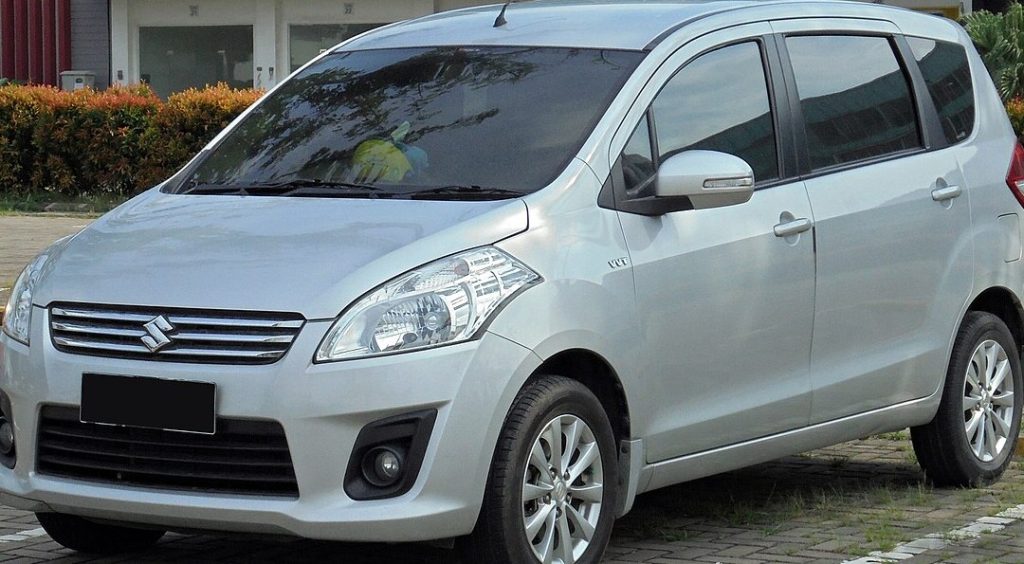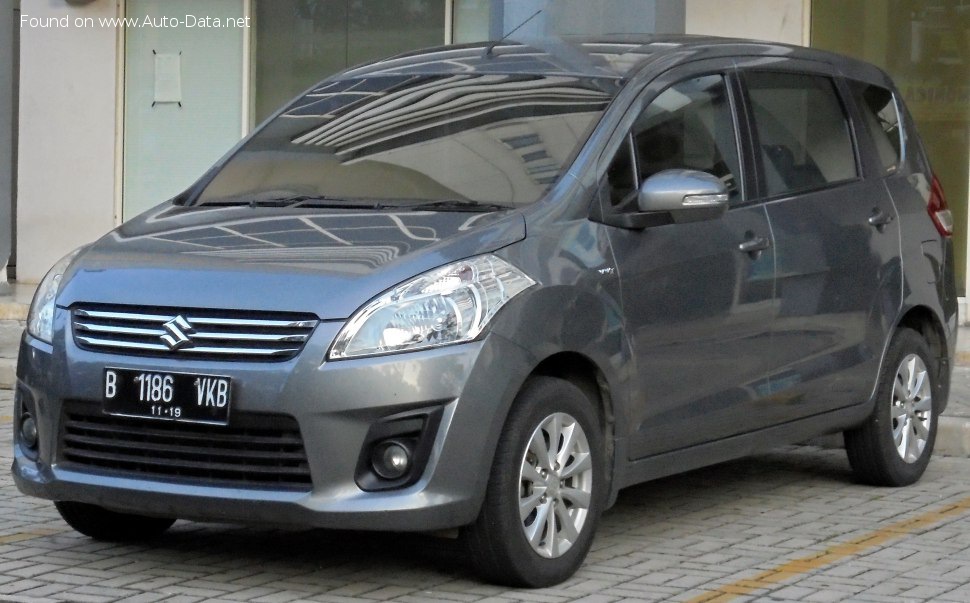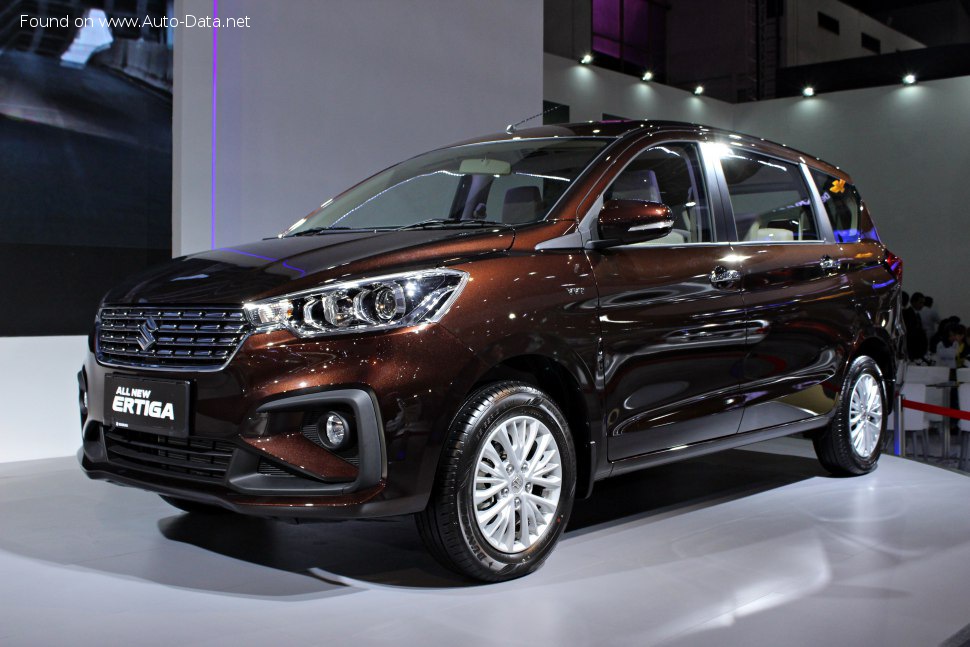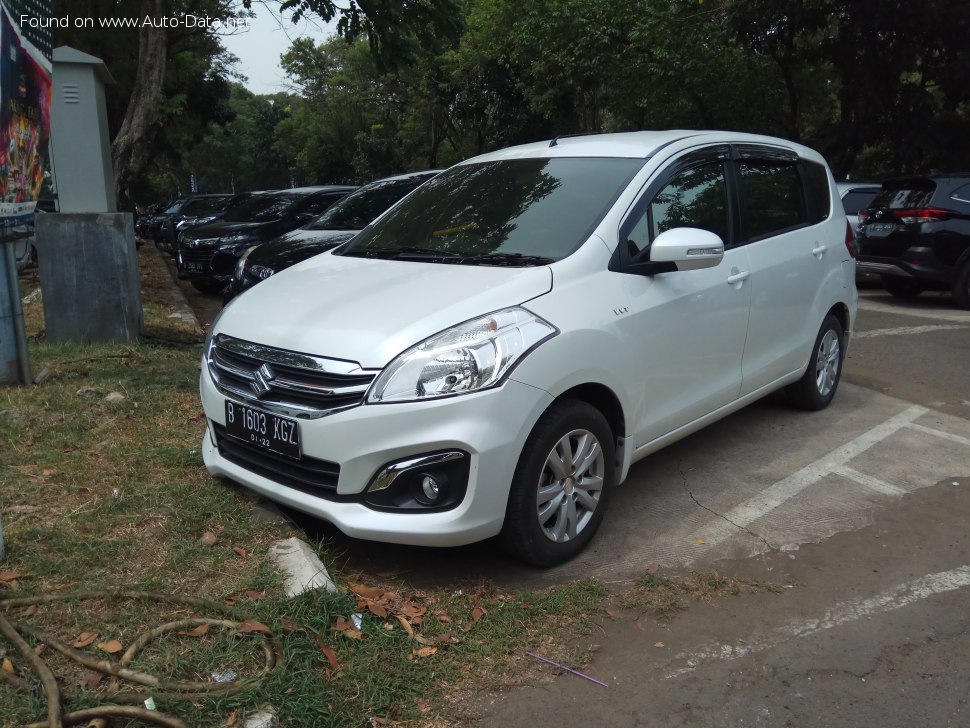
The Suzuki Ertiga I (facelift 2015) 1.4i, producing 95 horsepower, was a significant variant within the first generation Ertiga lineup, manufactured from August 2015 to 2018. Positioned as an entry-level to mid-range offering, this MPV (Multi-Purpose Vehicle) aimed to provide affordable and practical transportation for families, particularly in emerging markets. The facelift brought styling updates and refinements to the original Ertiga, enhancing its appeal. It was built on the Suzuki platform, designed to maximize interior space and fuel efficiency within a compact footprint. This specific engine and transmission combination represented a balance between cost, usability, and acceptable performance for its intended role.
Powertrain & Engine Architecture
The heart of the Ertiga 1.4i was the K14B engine, a 1.4-liter (1373 cm3 or 83.79 cubic inches) inline-four cylinder gasoline engine. This engine utilized a naturally aspirated configuration, meaning it did not employ forced induction like a turbocharger or supercharger. The K14B featured a Double Overhead Camshaft (DOHC) valvetrain with Variable Valve Timing (VVT), optimizing engine performance and fuel efficiency across a wider range of engine speeds. Fuel delivery was managed by a multi-port manifold injection system. The engine produced a maximum power output of 95 horsepower (Hp) at 6000 rpm and 130 Newton-meters (Nm) of torque at 4000 rpm, which translates to approximately 95.88 lb-ft of torque. The engine oil capacity was 3.1 liters (3.28 US quarts or 2.73 UK quarts), and the cooling system required 3.6 liters (3.8 US quarts or 3.17 UK quarts) of coolant.
Transmission
While the original content specified a 5-speed manual transmission, it’s important to note that the 1.4i engine was also offered with a 4-speed automatic transmission in some markets. This automatic option, while providing convenience, did impact performance and fuel economy compared to the manual version. The automatic transmission was designed to offer smooth shifts and ease of driving in urban conditions. The gear ratios were optimized for everyday driving, prioritizing fuel efficiency over outright acceleration. The automatic transmission contributed to the Ertiga’s appeal for drivers seeking a hassle-free driving experience.
Driving Characteristics
The 1.4i engine, paired with either the manual or automatic transmission, provided adequate, but not exhilarating, performance. The weight-to-power ratio of 12.2 kg/Hp (82.3 Hp/tonne) and weight-to-torque ratio of 8.9 kg/Nm (112.6 Nm/tonne) reflected its focus on practicality rather than sporty driving. Acceleration was modest, particularly when fully loaded with passengers and cargo. The manual transmission allowed for more driver control and slightly better fuel economy, while the automatic prioritized convenience. The engine felt most comfortable in the mid-range, providing sufficient power for highway cruising and overtaking maneuvers, although it required downshifting for more spirited acceleration. The automatic transmission, with its four gears, sometimes felt undergeared, especially when climbing hills or carrying a full load.
Equipment & Trim Levels
The Ertiga 1.4i (facelift 2015) typically came equipped with a basic level of standard features, reflecting its position as an affordable MPV. Standard equipment generally included air conditioning, power steering, and basic audio system. Interior upholstery was typically cloth, with a functional and durable design. Higher trim levels, available as options, could add features such as alloy wheels, a more advanced audio system with Bluetooth connectivity, power windows, and central locking. Safety features were generally limited to ABS (Anti-lock Braking System) and dual front airbags. The dashboard layout was straightforward and user-friendly, prioritizing practicality and ease of use. Optional extras often included rear parking sensors and a roof rack.
Chassis & Braking
The Ertiga 1.4i utilized a front-wheel-drive configuration. The front suspension employed an independent McPherson strut setup, providing a reasonable level of ride comfort and handling. The rear suspension utilized a torsion beam axle, a cost-effective and space-efficient design. The front brakes were ventilated discs, offering good stopping power, while the rear brakes were drums, a common cost-saving measure in this segment. The steering system was a rack and pinion type with electric power steering, providing light and easy steering feel. The vehicle rode on 15-inch wheels with tire size 185/65 R15. The ride height (ground clearance) was 185 mm (7.28 inches), suitable for navigating typical road conditions.
Market Reception & Comparison
The Suzuki Ertiga 1.4i (facelift 2015) was generally well-received in markets where affordable and spacious MPVs were in demand. Critics praised its practicality, fuel efficiency, and value for money. However, some reviewers noted its modest performance and basic interior appointments. Compared to other trims in the Ertiga lineup, such as those equipped with larger engines, the 1.4i offered a more economical option, but at the expense of performance. Its fuel economy was a key selling point, making it an attractive choice for budget-conscious buyers. Reliability was generally considered good, typical of Suzuki products. Compared to competitors in the same segment, the Ertiga 1.4i offered a compelling combination of space, affordability, and practicality.
Technical Specifications
| Brand | Suzuki |
| Model | Ertiga |
| Generation | Ertiga I (facelift 2015) |
| Type (Engine) | 1.4i (95 Hp) |
| Start of production | August, 2015 |
| End of production | 2018 |
| Powertrain Architecture | Internal Combustion engine |
| Body type | MPV |
| Seats | 7 |
| Doors | 5 |
| Fuel Type | Petrol (Gasoline) |
| Weight-to-power ratio | 12.2 kg/Hp, 82.3 Hp/tonne |
| Weight-to-torque ratio | 8.9 kg/Nm, 112.6 Nm/tonne |
| Power | 95 Hp @ 6000 rpm |
| Power per litre | 69.2 Hp/l |
| Torque | 130 Nm @ 4000 rpm (95.88 lb.-ft. @ 4000 rpm) |
| Engine layout | Front, Transverse |
| Engine Model/Code | K14B |
| Engine displacement | 1373 cm3 (83.79 cu. in.) |
| Number of cylinders | 4 |
| Engine configuration | Inline |
| Number of valves per cylinder | 4 |
| Fuel injection system | Multi-port manifold injection |
| Engine aspiration | Naturally aspirated engine |
| Valvetrain | DOHC-VVT |
| Engine oil capacity | 3.1 l (3.28 US qt | 2.73 UK qt) |
| Coolant | 3.6 l (3.8 US qt | 3.17 UK qt) |
| Kerb Weight | 1155-1175 kg (2546.34 – 2590.43 lbs.) |
| Max. weight | 1760 kg (3880.14 lbs.) |
| Max load | 585-605 kg (1289.7 – 1333.8 lbs.) |
| Trunk (boot) space – minimum | 135 l (4.77 cu. ft.) |
| Trunk (boot) space – maximum | 736 l (25.99 cu. ft.) |
| Fuel tank capacity | 45 l (11.89 US gal | 9.9 UK gal) |
| Length | 4265 mm (167.91 in.) |
| Width | 1695 mm (66.73 in.) |
| Height | 1685 mm (66.34 in.) |
| Wheelbase | 2740 mm (107.87 in.) |
| Front track | 1480 mm (58.27 in.) |
| Rear (Back) track | 1490 mm (58.66 in.) |
| Ride height (ground clearance) | 185 mm (7.28 in.) |
| Minimum turning circle (turning diameter) | 10.4 m (34.12 ft.) |
| Drivetrain Architecture | Front wheel drive, Internal Combustion engine |
| Number of gears and type of gearbox | 5 gears, manual transmission (or 4-speed automatic) |
| Front suspension | Independent type McPherson |
| Rear suspension | Torsion |
| Front brakes | Ventilated discs |
| Rear brakes | Drum |
| Assisting systems | ABS (Anti-lock braking system) |
| Steering type | Steering rack and pinion |
| Power steering | Electric Steering |
| Tires size | 185/65 R15 |
| Wheel rims size | 15 |
Legacy
The Suzuki Ertiga I (facelift 2015) 1.4i, while not a performance icon, established a solid reputation for reliability and practicality. The K14B engine, in particular, proved to be a durable and relatively trouble-free unit. On the used car market, these Ertigas continue to be sought after by buyers looking for an affordable and spacious family vehicle. Maintenance costs are generally low, and parts availability is good. While the 1.4i variant may not offer the same level of refinement or performance as higher-spec models, its simplicity and fuel efficiency make it a compelling option for those prioritizing value and practicality. The Ertiga’s success paved the way for subsequent generations, further solidifying Suzuki’s position in the MPV segment.