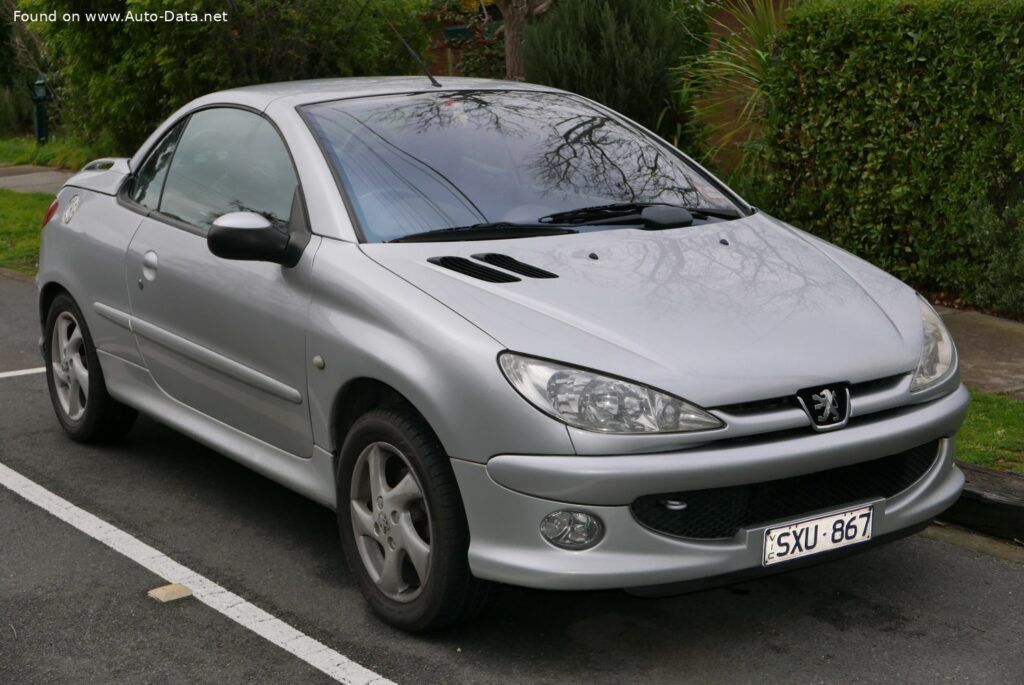
The Peugeot 206 CC 2.0 S16, produced from 2000 to 2007, represents a significant offering in the compact coupe-cabriolet segment. This model, based on the 206 platform (T1 series), distinguished itself with a naturally aspirated 2.0-liter engine and a five-speed manual transmission. It occupied the premium position within the 206 CC range, offering a more potent driving experience compared to the lower-spec 1.6-liter variants. The 206 CC, internally designated as the 2E/2D, was Peugeot’s first mass-produced coupe-cabriolet, aiming to blend sporty styling with open-top motoring accessibility.
Powertrain & Engine Architecture
The heart of the 206 CC 2.0 S16 is the EW10J4 engine, a 1997cc (121.86 cubic inches) inline-four cylinder gasoline engine. This engine, part of Peugeot’s EW series, is known for its robust construction and relatively simple design. The engine code RFN is commonly associated with this specific configuration. It features a multi-port fuel injection system, delivering fuel directly into the intake ports, and a double overhead camshaft (DOHC) valvetrain with four valves per cylinder. This configuration allows for efficient cylinder filling and exhaust scavenging, contributing to the engine’s power output.
The EW10J4 engine produces 135 horsepower (hp) at 6000 rpm and 190 Newton-meters (140.14 lb-ft) of torque at 4100 rpm. The compression ratio is set at 10.8:1. The engine’s lubrication system requires 4.25 liters (4.49 US quarts) of oil meeting Peugeot’s specified standards, while the cooling system holds 5 liters (5.28 US quarts). The five-speed manual transmission, a BE4/5 unit, provides precise gear changes and complements the engine’s power delivery. Gear ratios are tailored to provide a balance between acceleration and fuel efficiency.
Engine Specifications
The EW10J4 engine is a naturally aspirated design, meaning it does not utilize forced induction (turbocharging or supercharging). This results in a linear power delivery, making the engine predictable and easy to control. The engine’s design prioritizes reliability and ease of maintenance, making it a popular choice among enthusiasts. The engine’s transverse mounting within the front-wheel-drive chassis contributes to the car’s balanced handling characteristics.
Driving Characteristics
The 206 CC 2.0 S16 offers a noticeably more engaging driving experience than its 1.6-liter counterparts. The increased power and torque translate to quicker acceleration – 0 to 60 mph in approximately 8.5 seconds and a top speed of 126.76 mph (204 km/h). The five-speed manual transmission allows drivers to fully exploit the engine’s powerband. The gear ratios are well-matched to the engine’s characteristics, providing strong acceleration in each gear.
Compared to the 1.6-liter models, the 2.0 S16 feels more confident during overtaking maneuvers and provides a more relaxed cruising experience at highway speeds. While not a dedicated sports car, the 206 CC 2.0 S16 offers a satisfying level of performance for a compact coupe-cabriolet. The front-wheel-drive layout provides good traction, and the relatively lightweight construction (1227 kg / 2705.07 lbs) contributes to its nimble handling. The steering, utilizing a hydraulic rack and pinion system, provides precise feedback and a connected feel to the road.
Equipment & Trim Levels
The 2.0 S16 trim level was the top-of-the-line offering for the 206 CC. Standard equipment included alloy wheels (typically 16-inch), air conditioning, power windows, power door locks, and a high-quality audio system. Interior upholstery was typically a combination of cloth and leather, with sport seats providing enhanced support. The dashboard featured metallic trim accents, adding to the premium feel.
Optional extras included leather upholstery, automatic climate control, and a panoramic sunroof. Safety features included ABS (Anti-lock Braking System) and front airbags. The convertible top, a fully automatic retractable hardtop, was a key feature of the 206 CC, providing both open-air driving enjoyment and security when closed. The trunk space varied depending on whether the roof was up or down, offering 175 liters (6.18 cu. ft.) with the roof up and 410 liters (14.48 cu. ft.) with the roof down.
Chassis & Braking
The 206 CC utilizes a spring strut front suspension and a torsion beam rear suspension. This setup provides a good balance between ride comfort and handling. The torsion beam rear suspension is a cost-effective solution that minimizes weight and complexity. The front brakes are ventilated discs, providing strong stopping power, while the rear brakes are solid discs. The ABS system helps to prevent wheel lockup during hard braking, enhancing safety.
The 206 CC is equipped with hydraulic power steering, providing light and precise steering feel. Tire size is 205/50 R16, offering a good compromise between grip and ride comfort. The car’s relatively low weight-to-power ratio (9.1 kg/hp) contributes to its agile handling characteristics. The front track measures 1437 mm (56.57 in), while the rear track measures 1428 mm (56.22 in).
Market Reception & Comparison
The Peugeot 206 CC 2.0 S16 was generally well-received by automotive critics. It was praised for its stylish design, enjoyable driving experience, and the convenience of its retractable hardtop. However, some critics noted that the rear seats were cramped and best suited for occasional use. Fuel economy was rated at 8.6 l/100 km (27.4 US mpg, 32.8 UK mpg, 11.6 km/l) combined, which was reasonable for a car of its type.
Compared to the 1.6-liter 206 CC models, the 2.0 S16 offered a significant performance upgrade, but at a higher price point. It also offered better refinement and a more premium feel. In terms of reliability, the EW10J4 engine is generally considered to be a durable unit, but regular maintenance is essential. Common issues include oil leaks and occasional sensor failures. Compared to competitors like the Mazda MX-5 and Renault Megane Coupe-Cabriolet, the 206 CC offered a unique combination of style, practicality, and affordability.
Technical Specifications
| Brand | Peugeot |
| Model | 206 CC |
| Type | Coupe – Cabriolet |
| Engine | 2.0 S16 (135 Hp) |
| Production Years | 2000-2007 |
| Fuel Consumption (Urban) | 11.2 l/100 km (21 US mpg) |
| Fuel Consumption (Extra Urban) | 6.2 l/100 km (37.9 US mpg) |
| Fuel Consumption (Combined) | 8.6 l/100 km (27.4 US mpg) |
| Fuel Type | Petrol (Gasoline) |
| Acceleration 0-100 km/h | 8.9 sec |
| Acceleration 0-62 mph | 8.9 sec |
| Maximum Speed | 204 km/h (126.76 mph) |
| Power | 135 Hp @ 6000 rpm |
| Torque | 190 Nm @ 4100 rpm (140.14 lb.-ft. @ 4100 rpm) |
| Engine Displacement | 1997 cm3 (121.86 cu. in.) |
| Number of Cylinders | 4 |
| Kerb Weight | 1227 kg (2705.07 lbs.) |
| Max. Weight | 1562 kg (3443.62 lbs.) |
| Trunk Space (Min) | 175 l (6.18 cu. ft.) |
| Trunk Space (Max) | 410 l (14.48 cu. ft.) |
| Fuel Tank Capacity | 47 l (12.42 US gal) |
| Length | 3835 mm (150.98 in.) |
| Width | 1673 mm (65.87 in.) |
| Height | 1373 mm (54.06 in.) |
| Wheelbase | 2442 mm (96.14 in.) |
| Gears | 5, Manual |
Legacy
The Peugeot 206 CC 2.0 S16 remains a popular choice in the used car market, particularly among those seeking a stylish and affordable coupe-cabriolet. The EW10J4 engine is known for its reliability, provided it has been well-maintained. However, potential buyers should be aware of potential oil leaks and sensor failures. The 206 CC’s retractable hardtop continues to be a desirable feature, offering the security and weather protection of a coupe with the open-air enjoyment of a convertible. The 206 CC paved the way for future Peugeot coupe-cabriolet models, establishing the brand as a key player in this segment. Its blend of style, practicality, and affordability has ensured its enduring appeal among car enthusiasts.