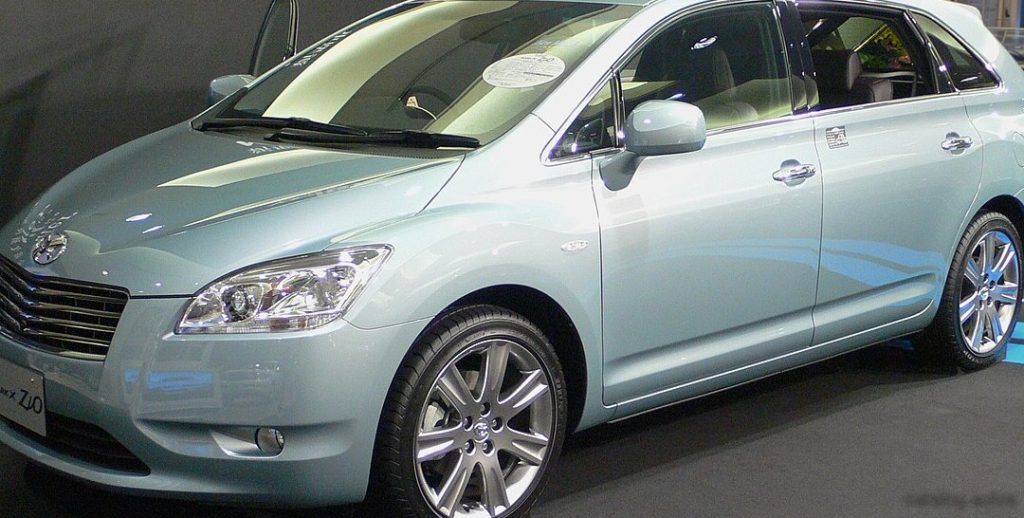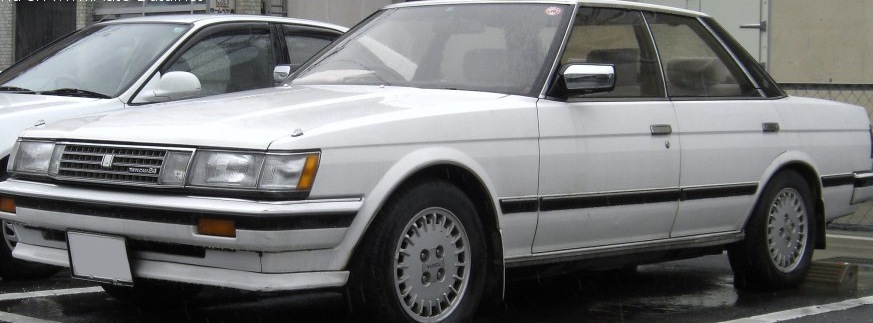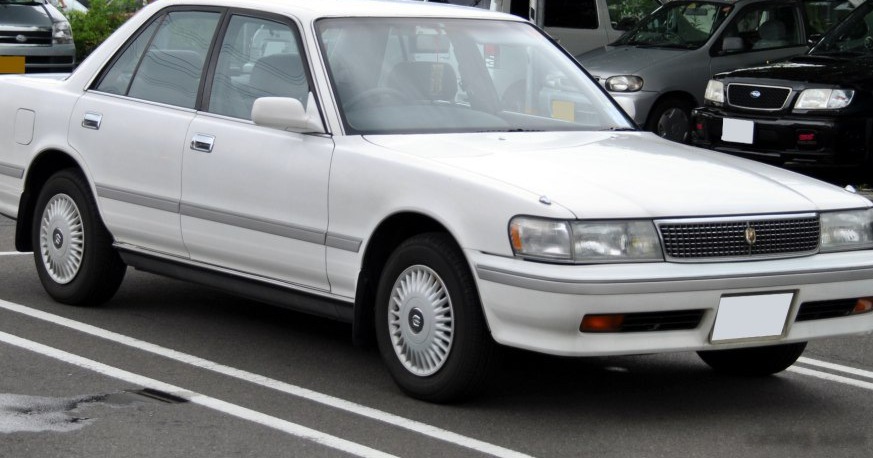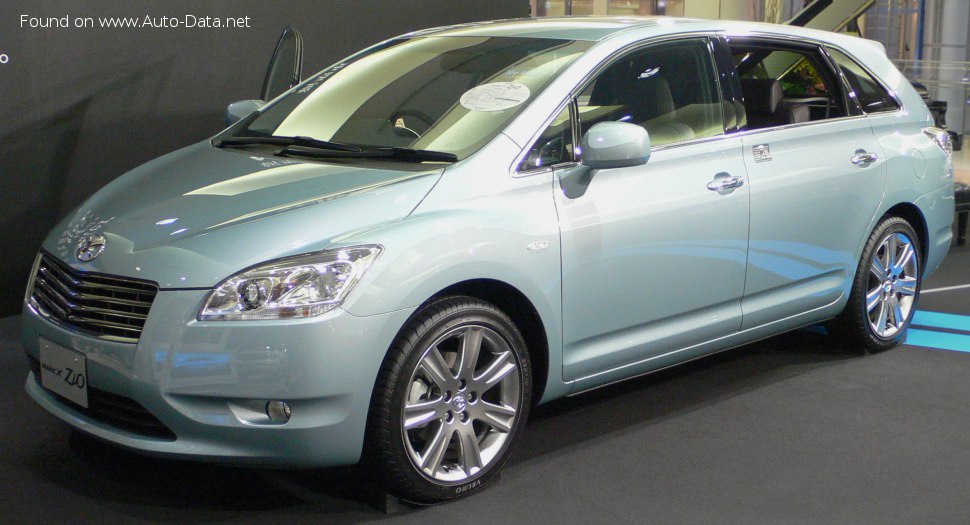
The Toyota Mark X Zio 3.5, produced between 2007 and 2013, represents a unique offering within the broader Toyota Mark X lineage. Positioned as a premium variant of the Mark X Zio (a station wagon derivative of the Mark X sedan), the 3.5 model distinguished itself with a significantly more powerful engine than the base models, targeting buyers seeking a blend of practicality, performance, and a more upscale driving experience. The Zio, in general, was a Japan-market exclusive, designed to appeal to families and individuals desiring a vehicle larger than a typical sedan but smaller and more manageable than a full-size minivan or SUV. The 3.5 trim occupied the top echelon of the Zio range, offering the highest level of performance and features.
Toyota Mark X Zio 3.5: An Overview
The Mark X Zio, launched in 2007, was Toyota’s attempt to capture a segment between traditional sedans and larger family vehicles. The “Zio” designation signified a more spacious and versatile body style compared to the standard Mark X sedan. The 3.5 variant, introduced alongside lower-powered engine options, was the performance flagship. It aimed to provide a sporty driving experience within the confines of a practical station wagon. Production ceased in 2013, coinciding with a broader restructuring of Toyota’s Japan-market lineup. The vehicle was never officially sold outside of Japan, making it a relatively rare sight elsewhere.
Powertrain & Engine Architecture
The heart of the Mark X Zio 3.5 is the 2GR-FE 3.5-liter naturally aspirated V6 engine. This engine is a member of Toyota’s GR family, known for its reliability and smooth power delivery. The 2GR-FE features a 60-degree V-angle, dual independent continuously variable valve timing with intelligence (VVT-i) on both intake and exhaust camshafts, and a cast aluminum cylinder block. It utilizes a port fuel injection system, delivering fuel directly into the intake ports. The engine produces 280 horsepower (hp) and is characterized by its relatively flat torque curve, providing usable power across a wide RPM range.
The engine is mated to a six-speed automatic transmission. This transmission, a common unit in Toyota vehicles of the era, is designed for smooth and responsive shifting. It features torque converter lock-up for improved fuel efficiency at cruising speeds. The transmission’s gear ratios are tuned to balance acceleration and highway cruising comfort. While not a sport-focused transmission, it provides adequate performance for the engine’s capabilities. The drivetrain is front-engine, rear-wheel drive (RWD) as standard, with all-wheel drive (AWD) available as an option. The AWD system utilizes a viscous coupling to distribute torque between the front and rear axles as needed, enhancing traction in adverse conditions.
Driving Characteristics
The Mark X Zio 3.5 delivers a noticeably more engaging driving experience than its lower-powered siblings. The 280 hp engine provides brisk acceleration, allowing for confident overtaking maneuvers and a generally lively feel. While not a sports car, the Zio 3.5 offers a level of performance uncommon in station wagons. The six-speed automatic transmission shifts smoothly and efficiently, although it lacks the responsiveness of a dual-clutch transmission. The RWD configuration contributes to a balanced handling feel, while the optional AWD system provides enhanced stability and grip, particularly in wet or snowy conditions. The suspension is tuned for comfort, providing a relatively smooth ride over most road surfaces. However, it’s not overly soft, offering reasonable body control during cornering. Compared to the 2.5-liter four-cylinder Zio models, the 3.5 offers a significant performance advantage, but at the cost of increased fuel consumption.
Equipment & Trim Levels
The Mark X Zio 3.5 was typically well-equipped, reflecting its position as the premium trim level. Standard features generally included leather upholstery, power-adjustable front seats, a multi-function steering wheel, automatic climate control, a premium audio system, and alloy wheels. Higher sub-trims often added features such as navigation system, sunroof, and advanced safety systems like adaptive cruise control and lane departure warning. Interior appointments were generally of high quality, with a focus on comfort and refinement. The dashboard layout was similar to that of the Mark X sedan, featuring a clean and functional design. Optional extras included upgraded audio systems, rear-seat entertainment systems, and various cosmetic enhancements.
Chassis & Braking
The Mark X Zio 3.5 utilizes a MacPherson strut suspension in the front and a double-wishbone suspension in the rear. This configuration provides a good balance of ride comfort and handling performance. Stabilizer bars are fitted to both the front and rear axles to reduce body roll during cornering. The braking system consists of ventilated disc brakes on all four wheels. Anti-lock braking system (ABS) and electronic brake-force distribution (EBD) are standard features. The braking performance is adequate for the vehicle’s weight and power, providing confident stopping power in most situations. Wheel sizes typically ranged from 17 to 18 inches, depending on the specific trim level.
Market Reception & Comparison
The Mark X Zio 3.5 received generally positive reviews in the Japanese automotive press. Critics praised its powerful engine, comfortable ride, and spacious interior. However, some noted that its styling was somewhat conservative compared to other vehicles in its class. Fuel economy was also a point of concern, as the 3.5-liter V6 engine consumed more fuel than the smaller engine options. Compared to other station wagons available in Japan, such as the Subaru Legacy Touring Wagon and the Nissan Stagea, the Mark X Zio 3.5 offered a more premium and sporty driving experience. However, it was also more expensive than many of its competitors. The 2.5-liter Zio models offered better fuel economy and a lower price point, appealing to a more budget-conscious buyer. The 3.5 model targeted those who prioritized performance and refinement.
Technical Specifications
| Engine Model/Code | 2GR-FE |
| Engine Type | Naturally Aspirated V6 |
| Displacement | 3,456 cc (211.2 cu in) |
| Power | 280 hp (209 kW) @ 6,200 rpm |
| Torque | 248 lb-ft (336 Nm) @ 4,800 rpm |
| Fuel Type | Gasoline |
| Fuel Injection | Port Fuel Injection |
| Valve Train | DOHC, 24 valves, VVT-i |
| Transmission | 6-speed Automatic |
| Drivetrain | RWD or AWD |
| Engine Oil Capacity | 6.1 liters (6.45 US qt / 5.37 UK qt) |
| Coolant Capacity | 8.7 liters (9.19 US qt / 7.65 UK qt) |
| Curb Weight (approx.) | 1,730 – 1,810 kg (3,814 – 3,990 lbs) |
Legacy
The Toyota Mark X Zio 3.5, while a niche vehicle confined to the Japanese market, has developed a following among enthusiasts who appreciate its blend of performance, practicality, and relative rarity. The 2GR-FE engine is known for its durability and reliability, and well-maintained examples of the Zio 3.5 continue to provide years of service. In the used car market, the 3.5 variant commands a premium over the lower-powered models. Its unique styling and powerful engine make it a desirable option for those seeking a distinctive and capable station wagon. The vehicle’s long-term reliability is generally considered good, although regular maintenance is essential to ensure optimal performance. Parts availability may be a concern outside of Japan, but many components are shared with other Toyota models, making sourcing replacements feasible.