
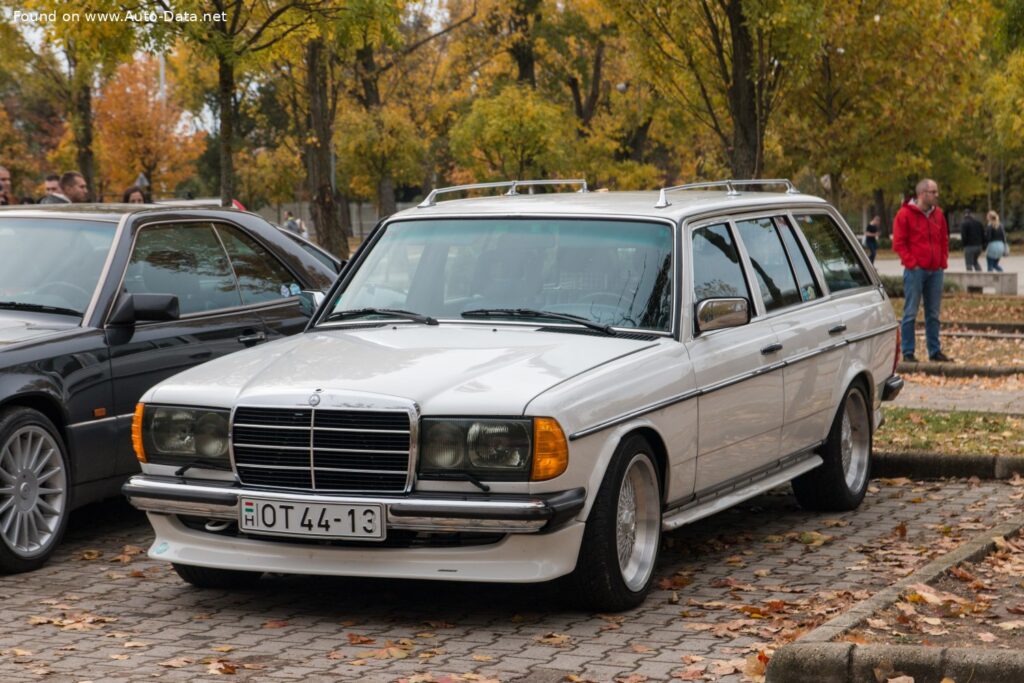
The Mercedes-Benz S123 200 T, produced between 1980 and 1985, represents the entry-level variant of the iconic W123 series estate (station wagon) models. Positioned as a more affordable and fuel-conscious option within the W123 lineup, the 200 T offered the practicality of the estate body style combined with a relatively modest, yet reliable, powertrain. It served as a crucial stepping stone for buyers seeking the prestige of a Mercedes-Benz without the higher price tag associated with the larger-engined models like the 230 T, 280 T, or the diesel variants. The S123 designation refers specifically to the estate (Touring) version of the W123 series.
The 200 T: A Detailed Overview
The W123 series, launched in 1976, was a significant success for Mercedes-Benz, known for its robust build quality, comfortable ride, and advanced safety features for its time. The S123 estate models, introduced in 1978, further expanded the appeal of the W123 by offering increased cargo capacity and versatility. The 200 T, with its 101 horsepower engine, was designed to appeal to buyers prioritizing economy and practicality over outright performance. It was often chosen by families and those requiring a dependable vehicle for everyday use.
Powertrain & Engine Architecture
The heart of the S123 200 T is the M102.920 engine, a 1.996-liter (2.0L) inline-four cylinder gasoline engine. This engine is a naturally aspirated, single overhead camshaft (SOHC) design. The M102 engine family is renowned for its durability and relatively simple construction, contributing to its longevity and ease of maintenance. The engine utilizes Bosch K-Jetronic mechanical fuel injection, a system favored by Mercedes-Benz for its reliability and precise fuel delivery. This system, while not as sophisticated as later electronic fuel injection systems, proved to be exceptionally durable and resistant to many of the issues that plagued early electronic systems.
The engine’s valvetrain consists of two valves per cylinder, operated by a single camshaft driven by a timing chain. The compression ratio is 8.8:1. The engine produces 101 horsepower (75 kW) at 5,800 rpm and 107 lb-ft (145 Nm) of torque at 3,800 rpm. The S123 200 T was exclusively offered with a four-speed automatic transmission. This transmission, while providing convenience, was not known for its sporty performance and was geared towards smooth, comfortable operation. The automatic transmission was a hydraulic control unit type, offering a relatively smooth, if not particularly quick, shift action.
Driving Characteristics
The driving experience in the S123 200 T is best described as comfortable and refined, rather than exhilarating. The 101 horsepower engine provides adequate power for everyday driving, but acceleration is modest, particularly when fully loaded. The four-speed automatic transmission contributes to this relaxed driving style, prioritizing smooth gear changes over rapid acceleration. Compared to the 230 T or 280 T, the 200 T feels noticeably slower, especially when merging onto highways or overtaking other vehicles. The gear ratios are optimized for fuel efficiency and cruising comfort, rather than outright performance. The 0-60 mph time is estimated to be around 13-14 seconds, and the top speed is approximately 95-100 mph. The focus was clearly on providing a dependable and comfortable vehicle for long journeys, rather than a sporty driving experience.
Equipment & Trim Levels
The S123 200 T, as the entry-level model, came with a fairly basic level of standard equipment, though still generous for the era. Standard features typically included cloth upholstery, a wood-trimmed dashboard, and basic instrumentation. Power steering was often included, but air conditioning was typically an optional extra. Other optional extras included a sunroof, upgraded stereo systems, and leather upholstery. The interior design was typical of Mercedes-Benz in the late 1970s and early 1980s – functional, well-built, and understated. The dashboard layout was clean and logical, with easy-to-read gauges. The seats were comfortable and supportive, even on long journeys. Trim levels were relatively limited, with most variations stemming from the addition of optional equipment packages.
Chassis & Braking
The S123 series utilized a robust independent suspension system. The front suspension featured McPherson struts with anti-roll bar, while the rear suspension employed a semi-trailing arm design with coil springs. The 200 T, being the lighter variant, often featured a smaller diameter stabilizer bar compared to the higher-powered models. The braking system consisted of disc brakes on the front wheels and drum brakes on the rear wheels. This configuration was common for vehicles of this era and weight class. The braking performance was adequate for normal driving conditions, but not particularly sporty. The steering was power-assisted, providing relatively light and easy steering effort.
Market Reception & Comparison
The S123 200 T was generally well-received by critics as a practical and reliable estate car. While its performance was not a standout feature, its fuel efficiency and comfortable ride were praised. Compared to the 230 T and 280 T, the 200 T offered a more affordable entry point into the W123 estate range. The 230 T, with its larger engine, provided significantly more power and performance, but at a higher price. The 280 T offered even more power and luxury, but was considerably more expensive. The 200 T’s fuel economy was noticeably better than the larger-engined models, making it an attractive option for buyers concerned about running costs. Reliability was a key strength of the 200 T, thanks to the robust M102 engine and the overall build quality of the W123 series.
Technical Specifications
| Engine Model | M 102.920 |
| Engine Type | Inline-Four Cylinder, Gasoline |
| Displacement | 1,996 cc (2.0 L) |
| Power Output | 101 hp (75 kW) @ 5,800 rpm |
| Torque | 107 lb-ft (145 Nm) @ 3,800 rpm |
| Fuel Injection | Bosch K-Jetronic |
| Valvetrain | SOHC, 2 Valves per Cylinder |
| Compression Ratio | 8.8:1 |
| Transmission | Four-Speed Automatic |
| Brakes (Front) | Disc |
| Brakes (Rear) | Drum |
| Weight (Approx.) | 2,930 lbs (1,330 kg) |
| Top Speed (Approx.) | 95-100 mph (153-161 km/h) |
| 0-60 mph (Approx.) | 13-14 seconds |
| Fuel Tank Capacity | 15.9 US gallons (60 liters) |
Legacy
The S123 200 T, while not the most powerful or luxurious variant of the W123 series, has earned a reputation as a dependable and practical classic. The M102 engine is known for its longevity, and many examples are still on the road today with high mileage. The S123 estate models, in general, are highly sought after by collectors and enthusiasts, and the 200 T represents a more affordable entry point into W123 ownership. Parts availability is generally good, although some specific trim pieces can be difficult to find. In the used car market, well-maintained examples of the S123 200 T command a reasonable price, reflecting their enduring appeal and reputation for reliability. The combination of practicality, comfort, and durability has ensured that the S123 200 T remains a popular choice for those seeking a classic Mercedes-Benz estate car.
