
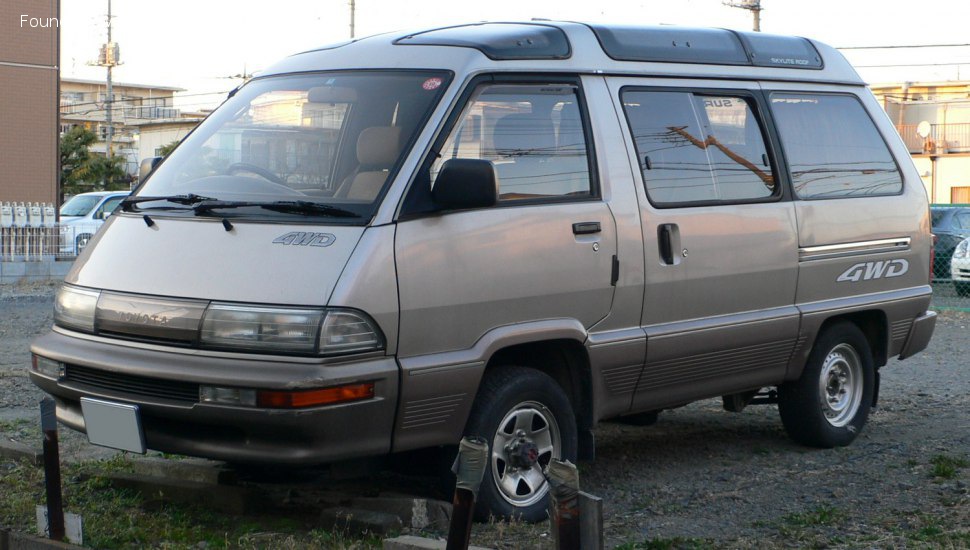
The Toyota MasterAce 1.8 i (79 hp) was a variant of the second-generation MasterAce, produced between 1988 and 1991. This model occupied the entry-level position within the MasterAce lineup during its production run, offering a more affordable and fuel-efficient option compared to higher-powered variants. The second-generation MasterAce, known internally as the XM20 series, represented a significant departure from its predecessor, adopting a more modern, van-like design and offering increased interior space. This generation of MasterAce was primarily aimed at commercial and family use, serving as a versatile vehicle for both work and leisure. The 1.8 i model, with its relatively modest power output, was particularly suited for urban driving and light-duty applications.
Toyota MasterAce 1.8 i: Overview and Positioning
The Toyota MasterAce, throughout its various generations, has been a mainstay of the Asian automotive market, particularly in countries like Japan, Indonesia, and the Philippines. The second-generation model, launched in 1988, was a key player in the mid-size van segment. The 1.8 i variant, producing 79 horsepower, was designed to appeal to buyers prioritizing economy and practicality over outright performance. It served as the base model, providing essential transportation without the added cost of more powerful engines or luxurious features. This positioning made it a popular choice for small businesses, families, and individuals seeking a reliable and affordable van.
Powertrain and Engine Architecture
The heart of the MasterAce 1.8 i is the 1R-E inline four-cylinder gasoline engine. This 1.8-liter (1781 cc) engine is a naturally aspirated unit, meaning it does not utilize a turbocharger or supercharger. The 1R-E engine features a single overhead camshaft (SOHC) valvetrain, operating with two valves per cylinder. Fuel delivery is managed by a Toyota electronic fuel injection (EFI) system, contributing to improved fuel efficiency and reduced emissions compared to earlier carbureted engines. The engine’s bore and stroke measure 86.0 mm x 81.5 mm, respectively, resulting in a compression ratio of 9.0:1. The 79 hp peak power output is achieved at 5,600 rpm, while the maximum torque of approximately 128 lb-ft (174 Nm) is delivered at 3,600 rpm.
The 1.8 i MasterAce was typically paired with a four-speed automatic transmission. This transmission, while not known for its sporty responsiveness, provided smooth and convenient gear changes, making it ideal for city driving. The automatic transmission’s gear ratios were optimized for fuel economy and ease of use, rather than acceleration. The transmission’s design focused on durability and reliability, reflecting Toyota’s reputation for building long-lasting components. Manual transmission options were available on other MasterAce trims, but the automatic was the predominant choice for the 1.8 i, catering to a broader range of drivers.
Driving Characteristics
The driving experience in the MasterAce 1.8 i is characterized by its practicality and ease of use. The 79 hp engine provides adequate power for everyday driving, but acceleration is modest, particularly when the van is fully loaded. The automatic transmission contributes to a relaxed driving style, with smooth gear changes and minimal driver effort. Compared to the higher-powered 2.0-liter and 2.4-liter engine options available in other MasterAce models, the 1.8 i feels noticeably less responsive. However, this trade-off is offset by improved fuel economy. The van’s suspension is tuned for comfort, absorbing bumps and irregularities in the road surface effectively. Steering is light and easy, making it maneuverable in urban environments. The overall driving experience is best described as functional and reliable, rather than exciting or sporty.
Equipment and Trim Levels
The MasterAce 1.8 i, as the entry-level trim, typically came equipped with a relatively basic set of features. Standard equipment generally included cloth upholstery, a simple dashboard layout with analog gauges, and manual windows and door locks. Air conditioning was often an optional extra, as were power steering and a radio/cassette player. The interior was designed with practicality in mind, featuring durable materials and a spacious cabin. The van’s seating configuration varied depending on the specific model, with options for seven or eight passengers. Higher trim levels of the MasterAce offered more luxurious features, such as upgraded upholstery, power windows, and a more sophisticated audio system. However, the 1.8 i focused on providing essential transportation at an affordable price point.
Chassis and Braking
The MasterAce 1.8 i utilizes a body-on-frame construction, providing a robust and durable chassis. The suspension system consists of independent front suspension with MacPherson struts and a rigid axle rear suspension with leaf springs. This setup provides a comfortable ride and adequate load-carrying capacity. The braking system typically features disc brakes on the front wheels and drum brakes on the rear wheels. The braking performance is adequate for the van’s weight and power output, but it is not particularly sporty. Steering is rack and pinion, providing precise and responsive handling. The van’s tires are typically sized for durability and fuel efficiency, rather than high-performance grip.
Market Reception and Comparison
The Toyota MasterAce 1.8 i was generally well-received in the markets where it was sold. Critics praised its reliability, practicality, and affordability. However, some reviewers noted its lack of power and relatively basic features. Compared to other vans in its class, such as the Mitsubishi Delica and the Nissan Serena, the MasterAce 1.8 i offered a competitive combination of price, reliability, and fuel economy. The 1.8 i consistently achieved fuel economy figures in the range of 25-30 mpg, making it an attractive option for budget-conscious buyers. In terms of reliability, the MasterAce 1.8 i benefited from Toyota’s reputation for building durable and long-lasting vehicles. Maintenance costs were generally low, and the van proved to be a dependable workhorse for many years.
Technical Specifications
| Body Type | Minivan |
| Engine Type | 1.8L Inline-4 Gasoline |
| Engine Code | 1R-E |
| Displacement | 1781 cc (1.8 liters) |
| Horsepower | 79 hp @ 5,600 rpm |
| Torque | 128 lb-ft (174 Nm) @ 3,600 rpm |
| Fuel System | Electronic Fuel Injection (EFI) |
| Valvetrain | SOHC, 2 valves per cylinder |
| Compression Ratio | 9.0:1 |
| Transmission | 4-speed Automatic |
| Drivetrain | Rear-Wheel Drive |
| Front Suspension | Independent, MacPherson Struts |
| Rear Suspension | Rigid Axle, Leaf Springs |
| Front Brakes | Disc |
| Rear Brakes | Drum |
| Production Years | 1988-1991 |
Legacy
The Toyota MasterAce 1.8 i, while not the most powerful or luxurious variant of the second-generation MasterAce, remains a respected and reliable vehicle in the used car market. Its simple design and durable powertrain contribute to its longevity. The 1R-E engine is known for its robustness and relatively low maintenance requirements. Today, these vans are often sought after by collectors and enthusiasts who appreciate their practicality and retro charm. While finding parts may become increasingly challenging as the van ages, the availability of aftermarket components and the widespread use of the 1R-E engine in other Toyota models ensure that these vehicles can be kept on the road for many years to come. The MasterAce 1.8 i represents a practical and dependable choice for those seeking a classic Japanese van.
