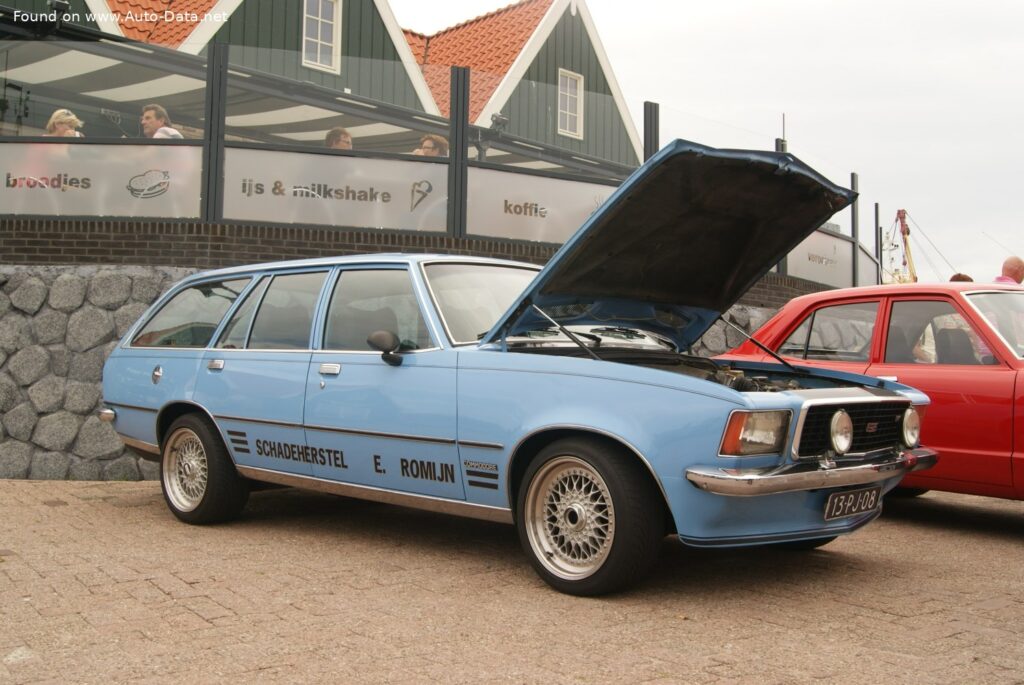
The Opel Rekord D Caravan 1.9 (90 hp) was a station wagon produced between 1975 and 1977, representing a key variant within the broader Rekord D series (1972-1977). Positioned as a practical and affordable family vehicle, the 1.9-liter engine with 90 horsepower and a four-speed manual transmission offered a balance between fuel economy and usability. The Rekord D series itself was built on the GM H-platform, shared with other European Opel and Vauxhall models, and represented a significant step forward in Opel’s design and engineering compared to its predecessor, the Rekord C. The Caravan body style, specifically, catered to buyers needing increased cargo capacity, making it a popular choice for families and businesses.
The 1.9-Liter Engine and its Role in the Rekord D Lineup
The 1.9-liter engine, designated with various internal codes depending on the specific market and year, was a mainstay of the Rekord D range. While larger engines like the 2.1-liter and 2.8-liter were available, offering increased performance, they also came with a higher price tag and increased running costs. The 1.9-liter version, producing 90 hp, served as the entry-level engine option for the Rekord D, particularly in the Caravan body style. It was aimed at buyers prioritizing practicality and economy over outright speed. Compared to the more powerful variants, the 1.9 offered a more relaxed driving experience and lower fuel consumption, making it a sensible choice for everyday use. A key difference between the 1.9 and the larger engines was the target demographic; the 1.9 appealed to families and those needing a workhorse vehicle, while the larger engines attracted drivers seeking a more spirited driving experience.
Powertrain & Engine Architecture
The 1.9-liter inline-four cylinder engine (typically identified by engine codes like 19S) featured a single overhead camshaft (SOHC) valvetrain with two valves per cylinder. It displaced 1897 cc (115.76 cubic inches) and utilized a compression ratio of 8.8:1. Fuel delivery was managed by a carburetor, a common feature for vehicles of this era. The engine’s design prioritized reliability and ease of maintenance over cutting-edge performance. The four-speed manual transmission was a standard feature, providing a direct connection between the engine and the rear wheels. The transmission’s gear ratios were tuned for fuel efficiency and everyday drivability, rather than aggressive acceleration. The rear-wheel drive configuration was typical for European sedans and wagons of the time, offering predictable handling characteristics.
Driving Characteristics
The Rekord D Caravan 1.9, with its 90 hp and four-speed manual transmission, offered a modest but adequate level of performance. Acceleration from 0 to 62 mph (0-100 km/h) took approximately 15 seconds, and the top speed was around 97.56 mph (157 km/h). While not a sports car, the 1.9-liter engine provided sufficient power for comfortable cruising and overtaking on highways. The manual transmission allowed for greater driver control and contributed to better fuel economy compared to an automatic option (which was available in some markets). The gear ratios were relatively long, prioritizing fuel efficiency at cruising speeds. In real-world driving, the 1.9-liter engine felt most comfortable in the mid-range, providing smooth and predictable power delivery. Compared to the 2.1-liter or 2.8-liter versions, the 1.9 felt less strained during acceleration and offered a more relaxed driving experience.
Equipment & Trim Levels
The Rekord D Caravan 1.9 typically came with a fairly basic level of standard equipment, reflecting its position as an entry-level model. Interior upholstery was typically cloth, with vinyl often used for durability. The dashboard layout was functional and straightforward, with clearly marked gauges for speed, fuel level, and engine temperature. Optional extras included a radio, upgraded upholstery, and a sunroof. The Caravan body style itself offered a significant amount of cargo space, making it ideal for families or those needing to transport large items. Trim levels varied depending on the market, but generally, the 1.9-liter version was offered in a base trim with limited options. Higher trim levels, typically reserved for the larger engine variants, included features like power steering, electric windows, and more luxurious interior appointments.
Chassis & Braking
The Rekord D Caravan featured a conventional chassis design with independent front suspension and a rigid rear axle. The front suspension utilized coil springs and wishbones, providing a comfortable ride. The rear suspension employed leaf springs, which were robust and capable of handling heavy loads. Braking was accomplished via disc brakes on the front wheels and drum brakes on the rear wheels. The braking system was adequate for the vehicle’s weight and performance, but lacked the stopping power of more modern systems. Steering was manual in the base models, with power steering available as an option. The suspension was tuned for comfort and stability, prioritizing a smooth ride over sporty handling. Stabilizer bars were often included to reduce body roll during cornering.
Market Reception & Comparison
The Opel Rekord D Caravan 1.9 was generally well-received by critics as a practical and affordable family vehicle. Its fuel economy was considered reasonable for the time, with combined fuel consumption around 11.7 l/100 km (20.1 US mpg). Reliability was also a strong point, with the 1.9-liter engine proving to be durable and relatively easy to maintain. Compared to other station wagons in its class, such as the Ford Taunus and Volvo 145, the Rekord D Caravan offered a good balance of space, comfort, and affordability. However, some critics noted that the 1.9-liter engine lacked the power of its competitors, particularly when fully loaded. The Rekord D Caravan’s spacious interior and practical design made it a popular choice for families and businesses, contributing to its strong sales figures throughout its production run.
Technical Specifications
| Engine Type | Inline-4 Cylinder, Carbureted |
| Engine Displacement | 1897 cm³ (115.76 cu in) |
| Power Output | 90 hp @ 4800 rpm |
| Torque | 145 Nm @ 3800 rpm (106.95 lb-ft @ 3800 rpm) |
| Compression Ratio | 8.8:1 |
| Fuel System | Carburetor |
| Transmission | 4-Speed Manual |
| Drive Wheels | Rear Wheel Drive |
| Kerb Weight | 1140 kg (2513.27 lbs) |
| Maximum Weight | 1740 kg (3836.04 lbs) |
| Fuel Tank Capacity | 70 liters (18.49 US gal) |
| Maximum Speed | 157 km/h (97.56 mph) |
| 0-100 km/h Acceleration | 15 seconds |
| Fuel Consumption (Combined) | 11.7 l/100 km (20.1 US mpg) |
| Length | 4594 mm (180.87 in) |
| Width | 1715 mm (67.52 in) |
| Height | 1440 mm (56.69 in) |
Legacy
The Opel Rekord D Caravan 1.9, while not the most powerful or technologically advanced vehicle of its time, remains a fondly remembered classic. The 1.9-liter engine, when properly maintained, proved to be remarkably durable, and many examples are still on the road today. In the used car market, the Rekord D Caravan 1.9 is appreciated for its simplicity, affordability, and practicality. Parts availability can be a challenge, but a dedicated community of enthusiasts ensures that spare parts and technical expertise are still accessible. The Rekord D Caravan represents a significant chapter in Opel’s history, embodying the company’s commitment to providing reliable and affordable transportation for families and businesses. Its enduring appeal lies in its honest design, robust construction, and practical functionality.