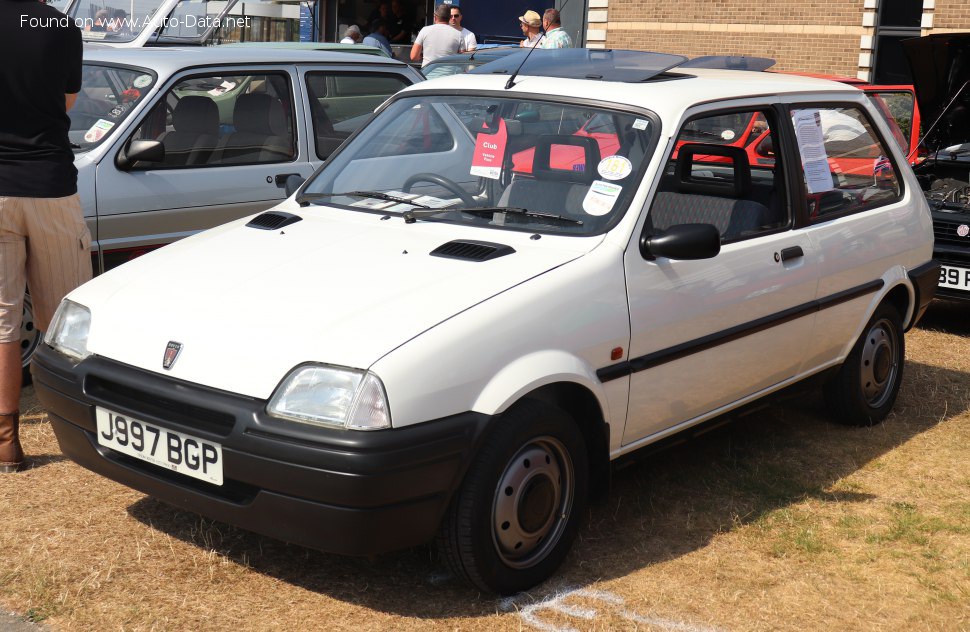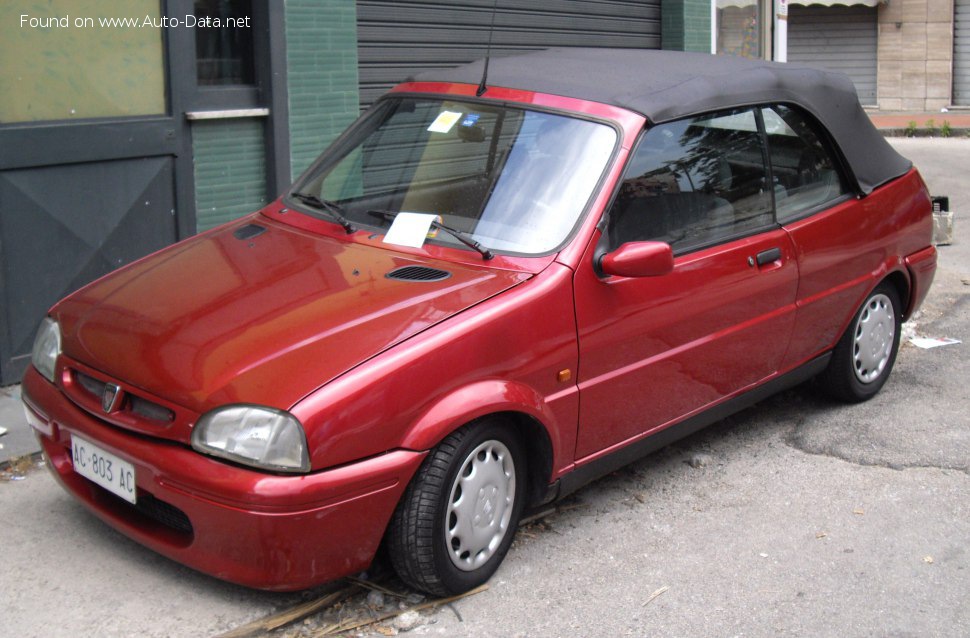
The Rover 100 Cabrio (XP) 114, produced between 1994 and 2000, represented the entry-level convertible offering within the Rover 100 range. Based on the Honda Civic platform developed under British Leyland’s collaboration with Honda, the 100 Cabrio aimed to provide affordable open-top motoring. The “114” designation refers to the 1.4-liter engine producing 75 horsepower. This variant occupied the base trim level, focusing on providing a cost-effective and accessible convertible experience, and was positioned below higher-specification 1.8L models. The Rover 100, and subsequently the Cabriolet, were built at Rover’s Cowley plant in Oxford, England, and were part of the 1HX0/A3 platform family.
Powertrain & Engine Architecture
The Rover 100 Cabrio 114 was powered by the K8 engine, a 1.4-liter (1396 cc) inline-four cylinder petrol engine. This engine, while originally designed by Rover, benefited significantly from Honda’s engineering input during its development. The K8 featured a single overhead camshaft (OHC) valvetrain with two valves per cylinder. Fuel delivery was managed by a single-point fuel injection system, a relatively simple and cost-effective technology for the time. The engine produced 75 hp at 5500 rpm and 86.29 lb-ft of torque at 4000 rpm. The engine’s bore and stroke measured 75mm x 79mm, resulting in a compression ratio of 9.7:1. Engine oil capacity was 4.5 liters (4.76 US quarts), and coolant capacity was also 4.5 liters (4.76 US quarts). The engine was transversely mounted at the front of the vehicle.
Transmission
The 114 Cabrio was equipped with a five-speed manual transmission as standard. While an automatic transmission was offered on some Rover 100 models, it was not typically paired with the 1.4-liter engine due to the limited power output. The manual gearbox was designed to provide smooth shifts and optimize the engine’s relatively modest torque curve. The gear ratios were tailored for fuel efficiency and acceptable acceleration, prioritizing usability over outright performance.
Driving Characteristics
The Rover 100 Cabrio 114 offered a relaxed and comfortable driving experience. With 75 hp propelling a vehicle weighing approximately 1962 lbs, acceleration was not a strong point. 0-60 mph took around 11.5 seconds, and 0-100 km/h required 12.1 seconds. Top speed was limited to 99.42 mph (160 km/h). The engine felt strained at higher speeds, and overtaking required careful planning. The five-speed manual transmission allowed drivers to keep the engine within its optimal power band, but the lack of torque meant frequent downshifts were necessary, particularly when climbing hills. Compared to the higher-output 1.8-liter versions, the 114 felt noticeably slower and less refined. However, the 1.4-liter engine was generally considered more fuel-efficient and less demanding on maintenance than its larger counterparts.
Equipment & Trim Levels
The Rover 100 Cabrio 114 was designed as an entry-level convertible, and its standard equipment reflected this. Typically, it included features such as power steering, a basic stereo system, and cloth upholstery. The dashboard layout was functional but relatively simple, with clearly labeled controls. The convertible top was manually operated, adding to the car’s affordability. Optional extras included alloy wheels, upgraded stereo systems, and more comfortable seating. Interior color schemes were typically conservative, with options like grey or beige cloth upholstery. The trim level focused on providing a basic, yet enjoyable, open-top driving experience without the expense of luxury features.
Chassis & Braking
The Rover 100 Cabrio utilized a front-wheel-drive layout. Front suspension consisted of wishbone springs, while the rear suspension employed a trailing arm setup. This configuration provided a reasonable balance between ride comfort and handling. The front brakes were discs, offering adequate stopping power, while the rear brakes were drums, a cost-saving measure common in this class of vehicle. Anti-lock Braking System (ABS) was included as a standard safety feature. The steering was rack and pinion, providing precise and responsive control. The vehicle rode on 185/55 R13 S tires. The curb weight of the 114 Cabrio was approximately 890 kg (1962.11 lbs), contributing to its relatively nimble handling.
Market Reception & Comparison
The Rover 100 Cabrio 114 was generally well-received as an affordable and stylish convertible. Critics praised its attractive design and accessible price point. However, the 1.4-liter engine was often criticized for its lack of power, particularly when compared to the 1.8-liter versions. Fuel economy was respectable, averaging around 35.6 US mpg (6.6 l/100 km). Reliability was generally good, although the single-point fuel injection system could occasionally require maintenance. Compared to other convertibles on the market at the time, such as the Mazda MX-5 Miata, the Rover 100 Cabrio offered a more practical and spacious interior, but lacked the Miata’s sporty handling characteristics. The 1.8L models offered a significant performance upgrade, but at a higher price point, making the 114 a popular choice for budget-conscious buyers.
Technical Specifications
| Brand | Rover |
| Model | 100 |
| Generation | 100 Cabrio (XP) |
| Type (Engine) | 114 (75 Hp) |
| Start of production | 1994 |
| End of production | 2000 |
| Body type | Cabriolet |
| Seats | 4 |
| Doors | 2 |
| Fuel consumption (combined) | 6.6 l/100 km |
| Fuel consumption (US mpg) | 35.6 |
| Fuel consumption (UK mpg) | 42.8 |
| Fuel Type | Petrol (Gasoline) |
| Acceleration 0 – 100 km/h | 12.1 sec |
| Acceleration 0 – 62 mph | 12.1 sec |
| Acceleration 0 – 60 mph | 11.5 sec |
| Maximum speed | 160 km/h (99.42 mph) |
| Weight-to-power ratio | 11.9 kg/Hp |
| Power | 75 Hp @ 5500 rpm |
| Torque | 117 Nm @ 4000 rpm (86.29 lb.-ft. @ 4000 rpm) |
| Engine layout | Front, Transverse |
| Engine Model/Code | K8 |
| Engine displacement | 1396 cm3 (85.19 cu. in.) |
| Number of cylinders | 4 |
| Engine configuration | Inline |
| Cylinder Bore | 75 mm (2.95 in.) |
| Piston Stroke | 79 mm (3.11 in.) |
| Compression ratio | 9.7:1 |
| Number of valves per cylinder | 2 |
| Fuel injection system | Single-point injection |
| Engine aspiration | Naturally aspirated |
| Valvetrain | OHC |
| Engine oil capacity | 4.5 l (4.76 US qt | 3.96 UK qt) |
| Coolant capacity | 4.5 l (4.76 US qt | 3.96 UK qt) |
| Kerb Weight | 890 kg (1962.11 lbs.) |
| Max. weight | 1310 kg (2888.06 lbs.) |
| Max load | 420 kg (925.94 lbs.) |
| Trunk (boot) space – minimum | 222 l (7.84 cu. ft.) |
| Fuel tank capacity | 35 l (9.25 US gal | 7.7 UK gal) |
| Length | 3521 mm (138.62 in.) |
| Width | 1550 mm (61.02 in.) |
| Height | 1395 mm (54.92 in.) |
| Wheelbase | 2270 mm (89.37 in.) |
| Front track | 1340 mm (52.76 in.) |
| Rear track | 1294 mm (50.94 in.) |
| Drivetrain Architecture | Front wheel drive |
| Number of gears | 5 |
| Gearbox type | Manual transmission |
| Front suspension | Wishbone |
| Rear suspension | Trailing arm |
| Front brakes | Disc |
| Rear brakes | Drum |
| Assisting systems | ABS |
| Steering type | Steering rack and pinion |
| Tires size | 185/55 R13 S |
Legacy
The Rover 100 Cabrio 114, while not a performance icon, holds a nostalgic place for many as an affordable and accessible entry into convertible ownership. The K8 engine, while simple, proved reasonably reliable with proper maintenance. Today, surviving examples are relatively rare and are sought after by enthusiasts and collectors. The 1.4-liter engine’s simplicity makes it easier and less expensive to maintain than the more complex 1.8-liter variants. However, finding parts can be challenging due to Rover’s demise in 2005. The 100 Cabrio 114 remains a charming and distinctive classic, representing a unique chapter in British automotive history.