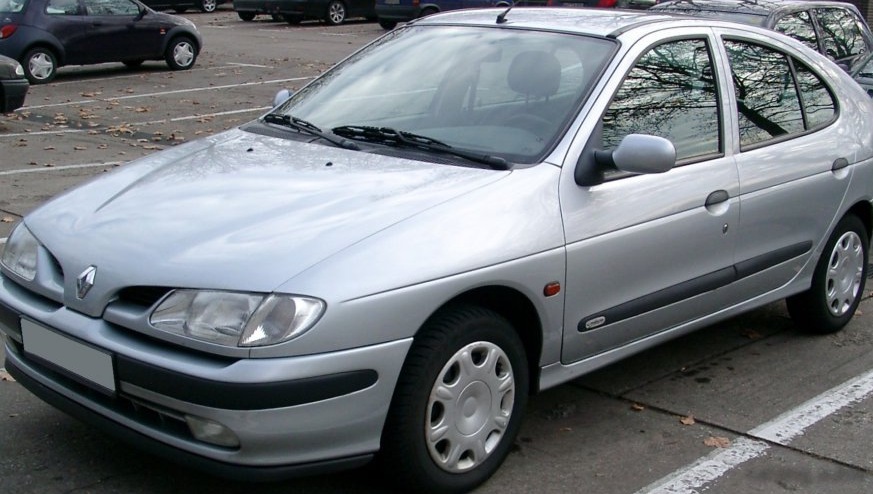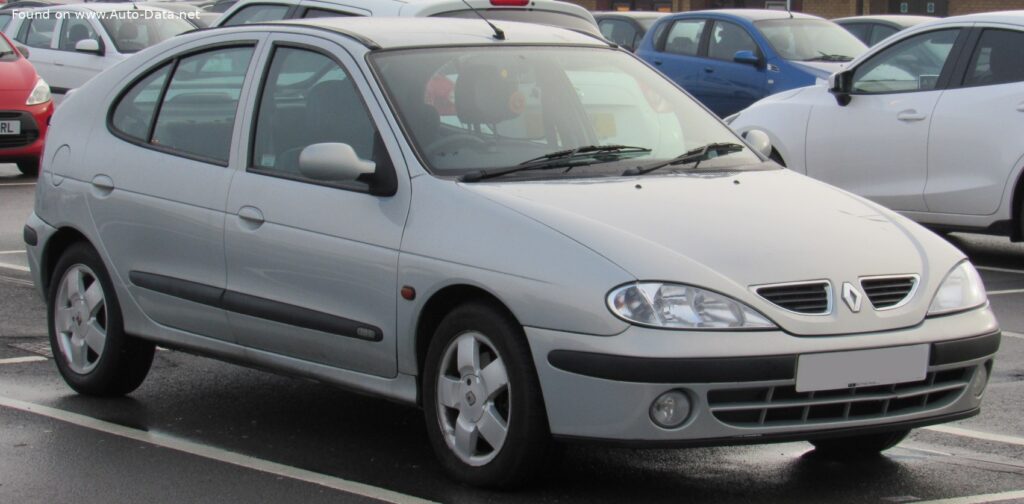
The Renault Megane I (Phase II), produced from 1999 to 2000, represented a mid-cycle refresh of Renault’s popular compact family car. Within the Phase II range, the 1.9 dTi variant, delivering 98 horsepower, occupied a position as a fuel-efficient and practical option aimed at buyers prioritizing economy and reasonable performance over outright speed. This model sat between the lower-powered petrol engines and the more expensive, higher-performance versions like the 2.0 16V. It was primarily offered as a five-door hatchback, though some limited production included a saloon (sedan) body style. The Megane I series, built on the 1HX0/A3 platform, aimed to provide a modern and versatile package in the competitive European C-segment.
1.9 dTi Powertrain & Engine Architecture
The heart of the Megane 1.9 dTi was the F9Q engine, a 1.9-liter inline four-cylinder diesel engine. This engine was a key component of Renault’s diesel offerings during the late 1990s and early 2000s. The F9Q engine utilized direct injection technology, a relatively advanced feature for the time, which improved fuel efficiency and reduced emissions compared to older indirect injection systems. The direct injection system employed a high-pressure common rail setup, delivering fuel directly into the combustion chamber. The engine featured an overhead camshaft (OHC) valvetrain with two valves per cylinder. A turbocharger with an intercooler was employed to boost power output, bringing the engine’s maximum power to 98 hp (73 kW) at 4000 rpm and peak torque to 200 Nm (147.51 lb-ft) at 2000 rpm.
The 1.9 dTi was exclusively paired with a five-speed manual transmission. An automatic transmission was not offered with this engine configuration. The gearbox was a standard, cable-operated unit designed for durability and ease of maintenance. The gear ratios were tuned to prioritize fuel economy and provide adequate acceleration for everyday driving. First gear was relatively short for quick take-offs, while fifth gear was geared for efficient cruising at highway speeds.
Engine Codes & Variations
While the F9Q designation covers the engine family, specific engine codes like F9Q760 or F9Q762 might be found depending on the exact production year and market. These codes often denote minor variations in engine calibration or emissions control equipment. The engine’s robust construction and relatively simple design contributed to its reputation for reliability, although proper maintenance was crucial to prevent issues with the turbocharger and fuel injection system.
Driving Characteristics
The Renault Megane 1.9 dTi offered a driving experience focused on practicality and fuel efficiency. With 98 hp, acceleration was adequate for most situations, but it wasn’t a particularly sporty vehicle. The 0-100 km/h (0-62 mph) sprint took approximately 12.3 seconds, and the top speed was around 183 km/h (113.71 mph). The turbocharger provided a noticeable boost in power at lower engine speeds, helping to overcome the inherent limitations of a relatively small-displacement diesel engine. However, the engine could feel somewhat strained when pushed hard, particularly when fully loaded.
Compared to the petrol-powered Megane variants, the 1.9 dTi offered significantly better fuel economy. The combined fuel consumption was around 5.2 l/100 km (45.2 US mpg), making it an attractive option for drivers covering long distances. The manual transmission allowed for precise control over gear selection, enabling drivers to optimize fuel efficiency and maintain comfortable cruising speeds. Compared to the higher-output 2.0 16V, the 1.9 dTi lacked the same level of responsiveness and overall performance, but it compensated with superior fuel economy and lower running costs.
Equipment & Trim Levels
The 1.9 dTi variant of the Megane I (Phase II) typically came with a moderate level of standard equipment. Base models generally included power steering, central locking, electric front windows, and an adjustable steering column. Interior upholstery was typically cloth, with a relatively simple dashboard layout. Higher trim levels, such as the “RT” or “Alizé,” added features like air conditioning, alloy wheels, a radio/cassette player, and upgraded interior trim. Optional extras included a sunroof, rear electric windows, and metallic paint. Safety features were relatively basic for the time, typically including ABS (Anti-lock Braking System) and driver and passenger airbags.
Chassis & Braking
The Megane I (Phase II) featured an independent coil spring suspension at the front and a torsion beam suspension at the rear. This setup provided a reasonable balance between ride comfort and handling. The front suspension geometry was designed to minimize body roll and provide predictable steering response. The rear torsion beam suspension was relatively simple and cost-effective, but it could sometimes feel less refined than a fully independent rear suspension. The braking system consisted of ventilated discs at the front and drum brakes at the rear. ABS was standard equipment, providing improved braking performance and stability in emergency situations. The steering was a rack and pinion system with hydraulic power assistance, offering light and precise steering feel.
Market Reception & Comparison
The Renault Megane 1.9 dTi was generally well-received by critics as a practical and economical family car. It was praised for its fuel efficiency, comfortable ride, and reasonable performance. However, some reviewers noted that the engine could be somewhat noisy and lacked the refinement of some of its competitors. Compared to other diesel-powered cars in the same segment, such as the Volkswagen Golf TDI, the Megane 1.9 dTi offered a competitive level of performance and economy. Its reliability was generally considered good, although some owners reported issues with the turbocharger and fuel injection system. The 1.9 dTi appealed to buyers who prioritized fuel economy and practicality over sporty handling or luxurious features.
Technical Specifications
| Brand | Renault |
| Model | Megane |
| Generation | Megane I (Phase II, 1999) |
| Type (Engine) | 1.9 dTi (98 Hp) |
| Start of production | 1999 |
| End of production | 2000 |
| Body type | Hatchback |
| Seats | 5 |
| Doors | 5 |
| Fuel consumption (urban) | 6.8 l/100 km (34.6 US mpg) |
| Fuel consumption (extra urban) | 4.4 l/100 km (53.5 US mpg) |
| Fuel consumption (combined) | 5.2 l/100 km (45.2 US mpg) |
| CO2 emissions | 139 g/km |
| Fuel Type | Diesel |
| Acceleration 0 – 100 km/h | 12.3 sec |
| Acceleration 0 – 62 mph | 12.3 sec |
| Maximum speed | 183 km/h (113.71 mph) |
| Emission standard | Euro 2 |
| Power | 98 Hp @ 4000 rpm |
| Torque | 200 Nm @ 2000 rpm (147.51 lb.-ft. @ 2000 rpm) |
| Engine layout | Front, Transverse |
| Engine Model/Code | F9Q |
| Engine displacement | 1870 cm3 (114.11 cu. in.) |
| Number of cylinders | 4 |
| Cylinder Bore | 80 mm (3.15 in.) |
| Piston Stroke | 93 mm (3.66 in.) |
| Compression ratio | 18.3:1 |
| Kerb Weight | 1140 kg (2513.27 lbs.) |
| Fuel tank capacity | 60 l (15.85 US gal) |
| Trunk (boot) space – minimum | 348 l (12.29 cu. ft.) |
| Trunk (boot) space – maximum | 1210 l (42.73 cu. ft.) |
| Number of gears | 5 |
| Gearbox type | Manual |
Legacy
The Renault Megane 1.9 dTi, while now an older vehicle, maintains a reasonable reputation for reliability, particularly the engine itself. The F9Q diesel engine is known for its durability when properly maintained. In the used car market, these models are often sought after by buyers looking for an affordable and economical vehicle. However, potential buyers should be aware of the age-related issues that can affect older diesel engines, such as turbocharger wear, fuel injector problems, and corrosion. Parts availability is generally good, and the relatively simple design of the engine makes it relatively easy to repair. The 1.9 dTi variant of the Megane I represents a significant step forward in Renault’s diesel technology and remains a viable option for those seeking a practical and fuel-efficient compact car.