
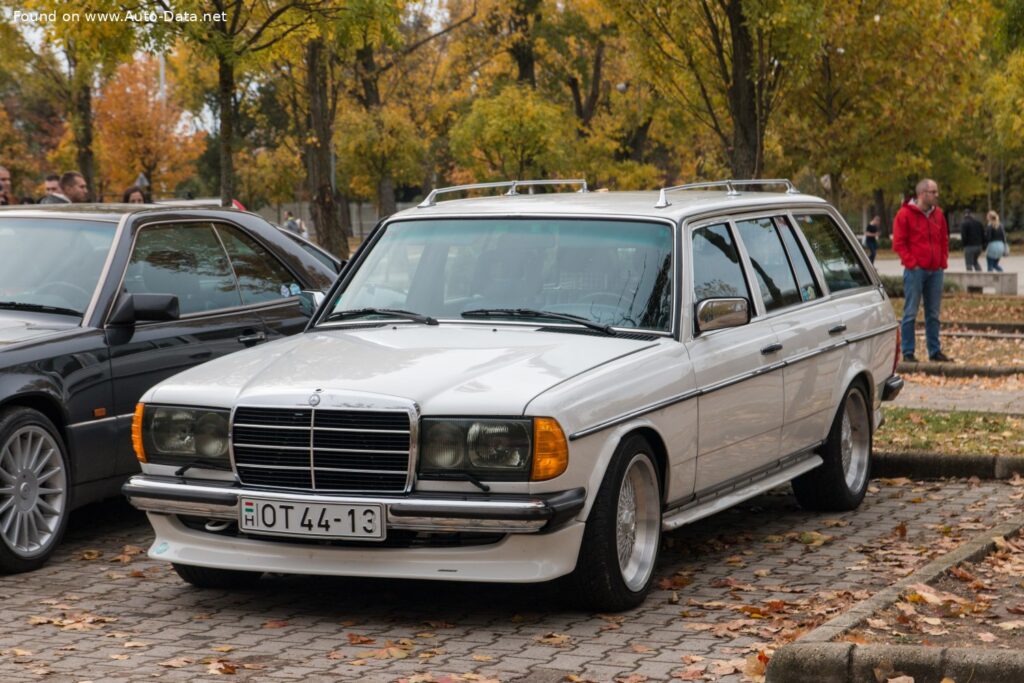
The Mercedes-Benz S123 200 T, produced from May 1980 to January 1986, represents a significant iteration within the W123 series, specifically the T-Modell (estate/station wagon) body style. This variant occupied the entry-level position within the T-Modell range, offering a more affordable and fuel-conscious option compared to the higher-displacement 230 T, 250 T, and 280 T models. The S123 chassis, internally designated as the 123 series, was a pivotal design for Mercedes-Benz, known for its robust engineering, safety features, and enduring build quality. The 200 T, with its 109 horsepower engine and automatic transmission, catered to buyers prioritizing practicality and comfort over outright performance.
The 200 T: Positioning and Market Role
The 200 T served as the gateway to the desirable W123 T-Modell lineup. Mercedes-Benz positioned it as an ideal vehicle for families and individuals needing ample cargo space combined with the prestige of the Mercedes-Benz brand. Compared to the more powerful six-cylinder variants, the 200 T offered a lower purchase price and, crucially, improved fuel economy – a growing concern for buyers in the early 1980s. While the 230 T and above provided more spirited driving experiences, the 200 T focused on providing a comfortable and reliable transportation solution. It was a common choice for those who valued the practicality of a wagon without needing the extra performance of the larger engines.
Powertrain & Engine Architecture
The heart of the 200 T is the M102 V 20 engine, a 1,997 cc (121.86 cubic inches) inline-four cylinder gasoline engine. This engine, identified by the code 102.920, is a naturally aspirated, single overhead camshaft (SOHC) design. Unlike later Mercedes-Benz engines, the 200 T utilized a carburetor – specifically, a Solex 35/40 PHH – for fuel delivery. This carburetor system, while reliable, is less efficient and offers less precise fuel control than the fuel injection systems found in the higher-end W123 models. The engine produces 109 hp at 5,200 rpm and 170 Nm (125.39 lb-ft) of torque at 3,000 rpm. The compression ratio is 9:1.
The 200 T was almost exclusively paired with a four-speed automatic transmission. This transmission, while providing convenience, was not known for its sporty responsiveness. Gear ratios were optimized for fuel efficiency and smooth cruising rather than rapid acceleration. The transmission’s design prioritized durability and ease of maintenance, aligning with the overall ethos of the W123 series.
Driving Characteristics
The driving experience in a 200 T Automatic is best described as comfortable and relaxed. Acceleration is modest, taking approximately 16.4 seconds to reach 100 km/h (62 mph) and around 15.6 seconds to 60 mph. The automatic transmission contributes to a smooth, albeit somewhat sluggish, driving feel. The carburetor can sometimes result in a slight hesitation during acceleration, particularly when the engine is cold. Compared to the manual transmission versions of the 200 T, the automatic sacrifices some responsiveness. The higher-displacement models (230 T, 250 T, 280 T) offered significantly more power and a more engaging driving experience, but at the cost of increased fuel consumption and a higher price point. The 200 T’s strength lies in its ability to provide a comfortable and reliable ride for everyday use, particularly on longer journeys.
Equipment & Trim Levels
The 200 T, as the entry-level T-Modell, came standard with a respectable level of equipment. Interior upholstery typically consisted of cloth, although vinyl options were available. The dashboard layout was functional and straightforward, featuring analog gauges for speed, tachometer, fuel level, coolant temperature, and clock. Standard features included power-assisted steering, front disc brakes, and rear disc brakes (a notable feature for the era). Optional extras included a sunroof, air conditioning, upgraded audio systems, and power windows. The level of trim could vary depending on the market, with some regions offering more standard features than others. The overall interior ambiance was one of understated elegance and durability, typical of Mercedes-Benz design.
Chassis & Braking
The S123 chassis utilizes a double wishbone suspension at the front and a trailing arm suspension at the rear. This suspension setup provides a comfortable ride and good handling characteristics, although it is not particularly sporty. The 200 T’s weight of approximately 1,470 kg (3,240.8 lbs) is relatively light for a vehicle of its size, contributing to reasonable fuel economy. Braking is provided by disc brakes on all four wheels, offering adequate stopping power for the vehicle’s weight and performance. The steering system is a cone worm with recirculation balls, providing a relatively heavy but precise steering feel. Tire size was typically 195/70 R14 for both front and rear wheels, mounted on 6J x 14 inch rims.
Market Reception & Comparison
The 200 T was generally well-received by automotive critics as a practical and well-built station wagon. While its performance was not considered exciting, its fuel economy and reliability were praised. Compared to other station wagons of the era, the 200 T offered a higher level of refinement and build quality. Fuel consumption figures were around 12.1 l/100 km (19.4 US mpg) in urban conditions and 8.6 l/100 km (27.4 US mpg) on the open road. Reliability was a strong point, with the M102 engine being known for its longevity. However, the carburetor system required periodic maintenance and could be prone to issues if not properly cared for. The automatic transmission, while durable, was not as efficient as a manual transmission.
Technical Specifications
| Brand | Mercedes-Benz |
| Model | S123 200 T |
| Production Years | 1980-1986 |
| Body Type | Station Wagon (Estate) |
| Engine Model | M 102 V 20 / 102.920 |
| Engine Displacement | 1,997 cm3 (121.86 cu. in.) |
| Number of Cylinders | 4, Inline |
| Fuel Type | Petrol (Gasoline) |
| Power Output | 109 hp @ 5200 rpm |
| Torque | 170 Nm (125.39 lb.-ft.) @ 3000 rpm |
| Fuel Injection | Carburettor (Solex 35/40 PHH) |
| Transmission | 4-speed Automatic |
| Drive Wheels | Rear Wheel Drive |
| Kerb Weight | 1470 kg (3240.8 lbs) |
| Maximum Weight | 2090 kg (4607.66 lbs) |
| Fuel Tank Capacity | 70 l (18.49 US gal) |
| Dimensions (Length) | 4725 mm (186.02 in) |
| Dimensions (Width) | 1786 mm (70.31 in) |
| Dimensions (Height) | 1470 mm (57.87 in) |
Legacy
The Mercedes-Benz S123 200 T, while not the most powerful or sought-after variant of the W123 T-Modell, remains a respected and desirable classic car. The M102 engine, despite its carburetor, is known for its durability and relatively simple maintenance requirements. Today, well-maintained examples of the 200 T command reasonable prices in the used car market, appealing to enthusiasts who appreciate the W123’s build quality and timeless design. The automatic transmission, while not a performance enhancer, contributes to the car’s ease of use and makes it a comfortable cruiser. The 200 T represents a sweet spot in the W123 lineup, offering a blend of practicality, comfort, and Mercedes-Benz prestige at a more accessible price point than its higher-displacement siblings. Its enduring popularity is a testament to the W123’s reputation as one of the most over-engineered and reliable vehicles ever produced.
