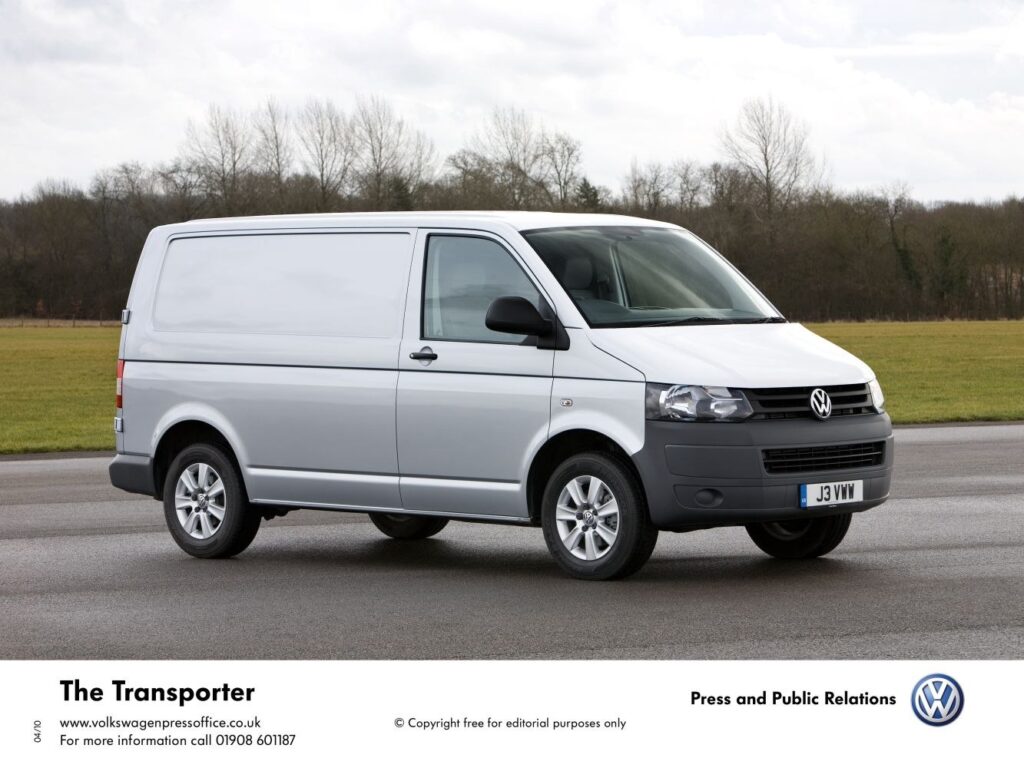
The Volkswagen Transporter (T5) facelift, produced from 2009 to 2015, represented a significant refresh of the fifth-generation Transporter line. Within this generation, the 2.0 TDI variant with 102 horsepower (Hp) and a manual transmission (often paired with the L1H2 body configuration – short wheelbase, medium roof height) occupied a crucial position as a workhorse model. This version was aimed at commercial users and those prioritizing fuel efficiency and practicality over outright performance. It served as a more economical alternative to the more powerful TDI engines and bridged the gap between basic, stripped-down models and the higher-specification passenger-oriented versions.
Powertrain & Engine Architecture
The heart of the Transporter 2.0 TDI (102 Hp) is the EA189 series engine, specifically the CAAB engine code. This is a 1.968-liter (120.09 cubic inches) inline four-cylinder diesel engine. It utilizes a common rail direct fuel injection system, delivering fuel directly into the combustion chamber at extremely high pressure for improved efficiency and reduced emissions. The engine features a turbocharger with an intercooler, which forces more air into the cylinders, boosting power output. The valvetrain employs a dual overhead camshaft (DOHC) design with four valves per cylinder, optimizing gas flow and contributing to improved performance.
The 2.0 TDI CAAB engine produces 102 horsepower at 3500 rpm and 250 Nm (184.39 lb-ft) of torque between 1500 and 2500 rpm. This torque curve is characteristic of diesel engines, providing strong low-end pulling power ideal for hauling loads. The engine has a compression ratio of 16.5:1. The engine oil capacity is 7 liters (7.4 US quarts / 6.16 UK quarts) and requires a specification adhering to Volkswagen’s standards for the EA189 engine family. A particulate filter was included as standard equipment to reduce soot emissions, meeting Euro 5 emission standards.
Transmission Details
The 2.0 TDI (102 Hp) Transporter typically came equipped with a five-speed manual transmission. This gearbox was chosen for its robustness and efficiency, aligning with the vehicle’s intended use as a commercial van. The gear ratios were optimized for maximizing fuel economy and providing adequate acceleration for typical load-carrying scenarios. While an automatic transmission was available on some T5 models, it was less common with this specific engine output, as the automatic would have diminished fuel economy and performance further.
Driving Characteristics
The driving experience in the 102 Hp 2.0 TDI Transporter is best described as practical and utilitarian. Acceleration is modest, with a 0-100 km/h (0-62 mph) time of approximately 15.4 seconds. The focus is on providing sufficient power for everyday tasks and hauling loads, rather than sporty performance. The strong low-end torque makes it capable of carrying heavy loads without feeling strained, but overtaking maneuvers require careful planning. The five-speed manual transmission allows the driver to maintain optimal engine speed for efficiency or power, depending on the situation. Compared to the more powerful TDI variants (like the 140 or 180 Hp versions), this engine feels noticeably slower, especially when fully loaded. However, it offers a significant advantage in fuel economy.
Equipment & Trim Levels
The 2.0 TDI (102 Hp) Transporter, particularly in the Panel Van configuration, was generally equipped with a functional, rather than luxurious, interior. Standard features typically included a driver’s seat with basic adjustments, a durable plastic dashboard, and minimal sound insulation. The cabin was designed for practicality and ease of cleaning. The van typically offered seating for two or three occupants.
Optional extras included features like air conditioning, upgraded audio systems, electric windows, central locking, and various storage solutions. Higher trim levels, such as Trendline or Highline, added more comfort and convenience features, but the base model was deliberately kept simple to maintain a competitive price point. Interior upholstery was typically hard-wearing fabric, chosen for its durability. The L1H2 body style provided a generous cargo space of approximately 6700 liters (236.61 cubic feet).
Chassis & Braking
The Transporter T5 utilized a robust chassis designed to withstand the demands of commercial use. The front suspension consisted of an independent McPherson strut setup with coil springs and an anti-roll bar, providing a comfortable ride and stable handling. The rear suspension employed a semi-independent trailing arm configuration with coil springs and a transverse stabilizer bar. This setup balanced load-carrying capacity with ride quality.
Braking systems varied depending on the specific model and year. Typically, the front brakes were ventilated discs measuring 308×29.5 mm, while the rear brakes were also ventilated discs measuring 294×22 mm. Anti-lock Braking System (ABS) was standard equipment. The steering system was a hydraulic power-assisted rack and pinion setup, providing precise and responsive steering feel. The vehicle was equipped with 215/65 R16 tires mounted on 6.5J x 16 inch steel or alloy wheels.
Market Reception & Comparison
The 2.0 TDI (102 Hp) Transporter was generally well-received by commercial vehicle operators and those seeking a fuel-efficient van. Critics praised its practicality, reliability, and low running costs. However, some reviewers noted its lack of power, particularly when fully loaded or traveling uphill. Compared to the more powerful TDI variants, it offered a lower purchase price and better fuel economy, but at the expense of performance. Fuel consumption figures averaged around 7.2-7.5 liters per 100 kilometers (32.7-31.4 US mpg), making it a competitive option in its class. The 1.9 TDI models, while older, were often compared, with the 2.0 TDI offering improvements in refinement and emissions compliance.
Technical Specifications
| Brand | Volkswagen |
| Model | Transporter (T5, facelift 2009) Panel Van |
| Type | 2.0 TDI (102 Hp) L1H2 |
| Start of production | 2009 |
| End of production | 2015 |
| Engine | EA189 / CAAB |
| Engine Displacement | 1968 cm3 (120.09 cu. in.) |
| Number of Cylinders | 4, Inline |
| Power | 102 Hp @ 3500 rpm |
| Torque | 250 Nm @ 1500-2500 rpm (184.39 lb.-ft.) |
| Fuel Consumption (Combined) | 7.2-7.5 l/100 km (32.7 – 31.4 US mpg) |
| CO2 Emissions | 190-198 g/km |
| Transmission | 5-speed Manual |
| Kerb Weight | 1687-2103 kg (3719.2 – 4636.32 lbs.) |
| Max. Weight | 2800-3200 kg (6172.94 – 7054.79 lbs.) |
| Fuel Tank Capacity | 80 l (21.13 US gal) |
| Length | 4892 mm (192.6 in.) |
| Width | 1904 mm (74.96 in.) |
| Height | 2176 mm (85.67 in.) |
Legacy
The 2.0 TDI (102 Hp) engine, while not the most powerful option in the T5 range, proved to be a reliable and durable powertrain. The EA189 engine family, despite later facing scrutiny regarding emissions, was generally well-regarded for its longevity. Today, used examples of this Transporter variant are readily available and often represent a cost-effective option for businesses or individuals needing a practical and dependable van. Maintenance costs are relatively low, and parts availability is good. However, potential buyers should be aware of the potential for issues related to the diesel particulate filter (DPF) and the turbocharger, particularly on vehicles with high mileage. The 2.0 TDI (102 Hp) Transporter remains a popular choice in the used commercial vehicle market, valued for its simplicity, fuel efficiency, and overall reliability.