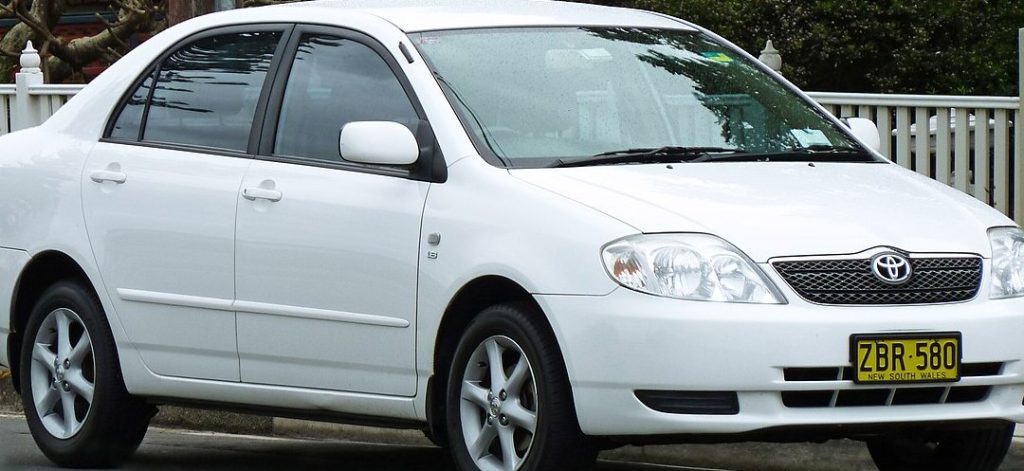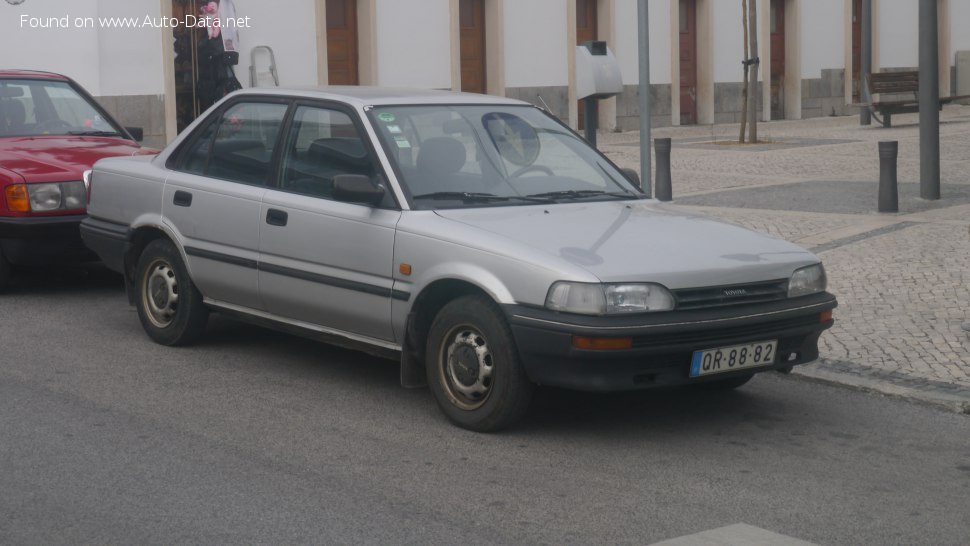
The Toyota Corolla E90, produced between 1987 and 1989, represented the sixth generation of Toyota’s globally successful Corolla line. Within the E90 series, the AE92 designation specifically denotes the 1.6-liter, 90 horsepower variant, typically equipped with an automatic transmission in the North American market. This model occupied an important position as a relatively affordable and practical entry point into the Corolla range, offering a balance between fuel efficiency and everyday usability. It served as a stepping stone for buyers who found the base 1.6-liter manual transmission model too spartan, while remaining more accessible than the higher-performance and more expensive GT models.
The 1.6L (AE92) Corolla: A Detailed Overview
The AE92 1.6L Corolla was a key component of Toyota’s strategy to offer a diverse range of options within the E90 generation. While the E90 platform encompassed various body styles including coupes, hatchbacks, and wagons, the AE92 was primarily available as a four-door sedan. This configuration catered to families and individuals prioritizing practicality and comfort. The 90 horsepower output, while not particularly sporty, was considered adequate for daily commuting and highway driving during the late 1980s. The automatic transmission further enhanced its appeal to drivers seeking ease of use, particularly in urban environments.
Powertrain & Engine Architecture
At the heart of the AE92 1.6L Corolla lies the 4A-LC engine. This 1.6-liter (1587 cc) inline-four cylinder engine is a naturally aspirated unit, meaning it does not employ forced induction like a turbocharger or supercharger. The 4A-LC engine features a single overhead camshaft (SOHC) valvetrain, operating with two valves per cylinder. This configuration, while simpler than dual overhead cam designs, contributed to the engine’s reliability and ease of maintenance. Fuel delivery is managed by a Toyota electronic fuel injection (EFI) system, providing precise control over the air-fuel mixture for optimal combustion and emissions control.
The automatic transmission paired with the 4A-LC engine was typically a three-speed unit. While not offering the responsiveness of a manual transmission or the efficiency of a modern automatic with more gears, it provided smooth and effortless gear changes. The transmission’s gear ratios were optimized for fuel economy and comfortable cruising, rather than outright acceleration. The torque converter design allowed for smooth launches and minimized driveline shock. The transmission was known for its durability, though like any automatic, it required regular fluid changes to maintain optimal performance.
Driving Characteristics
The driving experience in the AE92 1.6L automatic is best described as comfortable and predictable. Acceleration is modest, with 0 to 60 mph times estimated around 12-14 seconds. This performance level is significantly lower than the more powerful Corolla GT models, which featured larger engines and sport-tuned suspensions. However, the AE92’s strength lies in its usability. The automatic transmission eliminates the need for manual gear changes, making it ideal for city driving and stop-and-go traffic. The engine delivers adequate power for merging onto highways and maintaining cruising speeds, though passing maneuvers require careful planning.
Compared to the manual transmission version of the 1.6L Corolla, the automatic variant sacrifices some responsiveness and fuel efficiency. The manual transmission allows drivers to maintain optimal engine speed for maximum power and economy, while the automatic transmission’s torque converter introduces some energy loss. However, the convenience of the automatic transmission often outweighs these drawbacks for many drivers. The suspension is tuned for comfort, providing a relatively smooth ride over uneven road surfaces. Handling is adequate for everyday driving, but the AE92 is not designed for spirited cornering.
Equipment & Trim Levels
The AE92 1.6L Corolla typically came equipped with a basic but functional set of features. Standard equipment generally included cloth upholstery, a basic AM/FM radio, and manual windows and door locks. Air conditioning was often an optional extra, as were power windows and locks. Interior trim levels varied depending on the market and specific package selected. Higher trim levels might include upgraded upholstery, a more sophisticated sound system, and additional convenience features. The dashboard layout was straightforward and functional, with clearly labeled controls. Safety features were relatively basic for the era, typically including seatbelts and a collapsible steering column.
In the North American market, the Corolla was often offered in base and LE (Luxury Edition) trims. The LE trim added features like upgraded interior materials, a better sound system, and sometimes, power windows and locks. The AE92 1.6L automatic was commonly found in the base trim, offering a cost-effective entry point into the Corolla lineup.
Chassis & Braking
The AE92 Corolla utilizes a front-engine, front-wheel-drive layout. The suspension consists of MacPherson struts at the front and a torsion beam axle at the rear. This suspension setup provides a good balance between ride comfort and handling. The steering is rack-and-pinion, offering precise and responsive control. The braking system typically features disc brakes at the front and drum brakes at the rear. The drum brakes at the rear were a cost-saving measure, but they provided adequate stopping power for the vehicle’s weight and performance. Stabilizer bars were often included to reduce body roll during cornering.
The chassis of the AE92 is relatively lightweight, contributing to its fuel efficiency and maneuverability. The body structure is designed to absorb impact energy in the event of a collision, providing a degree of occupant protection. However, safety standards were less stringent in the late 1980s compared to modern vehicles.
Market Reception & Comparison
The AE92 1.6L Corolla was generally well-received by critics and consumers alike. It was praised for its reliability, fuel efficiency, and affordability. While not a performance leader, it offered a practical and dependable transportation solution. Compared to other vehicles in its class, such as the Honda Civic and Nissan Sentra, the Corolla was often seen as a slightly more conservative but equally reliable option. The automatic transmission variant was particularly popular among drivers who prioritized convenience and ease of use.
Fuel economy was a strong point for the AE92 1.6L, with EPA estimates ranging from 26-30 mpg in the city and 32-38 mpg on the highway. This fuel efficiency made it an attractive option for budget-conscious buyers. Reliability was another key strength, with the 4A-LC engine and automatic transmission proving to be durable and long-lasting. However, some critics noted that the interior was somewhat basic and lacked the refinement of some competitors.
Technical Specifications
| Body Type | 4-Door Sedan |
| Engine Type | 1.6L Inline-4 Cylinder |
| Engine Code | 4A-LC |
| Displacement | 1587 cc (96.8 cu in) |
| Horsepower | 90 hp @ 5,200 rpm |
| Torque | 100 lb-ft @ 3,600 rpm |
| Fuel System | Electronic Fuel Injection (EFI) |
| Transmission | 3-Speed Automatic |
| Drivetrain | Front-Wheel Drive |
| Front Suspension | MacPherson Strut |
| Rear Suspension | Torsion Beam |
| Front Brakes | Disc |
| Rear Brakes | Drum |
| Curb Weight | 2,370 lbs (approx.) |
| Fuel Capacity | 13.2 gallons (50 liters) |
Legacy
The AE92 1.6L Corolla has maintained a respectable reputation for reliability and affordability in the used car market. Many examples are still on the road today, a testament to Toyota’s engineering and build quality. While not highly sought after by collectors, it remains a popular choice for budget-minded buyers and those seeking a simple, dependable vehicle. The 4A-LC engine is known for its longevity and relatively low maintenance costs. However, as with any older vehicle, regular maintenance and attention to potential issues such as rust and worn components are essential. The AE92 1.6L automatic represents a significant chapter in the Corolla’s history, embodying Toyota’s commitment to providing practical, reliable, and affordable transportation to a wide range of customers.