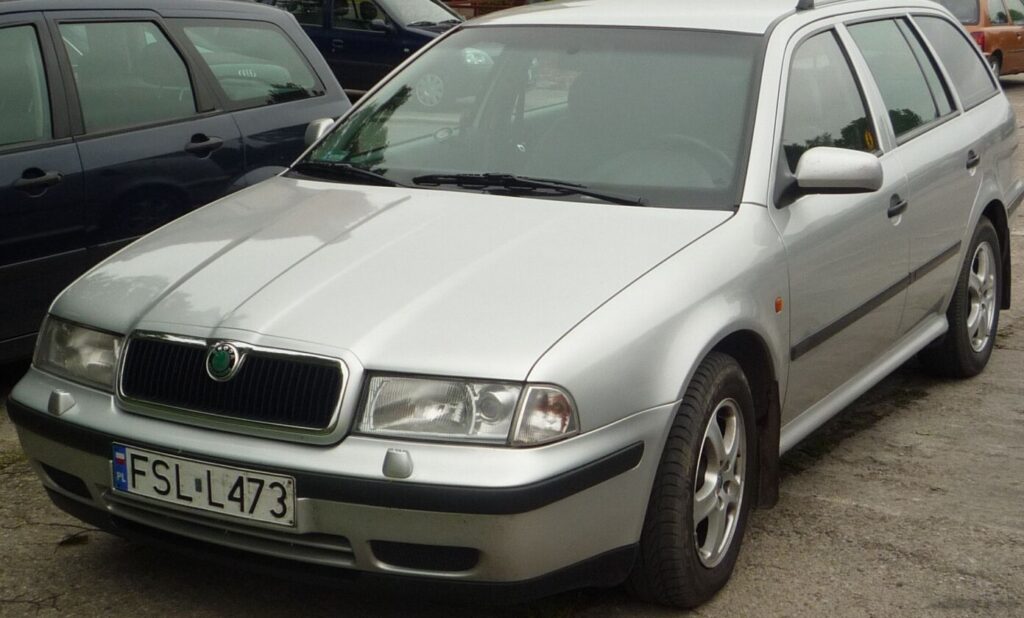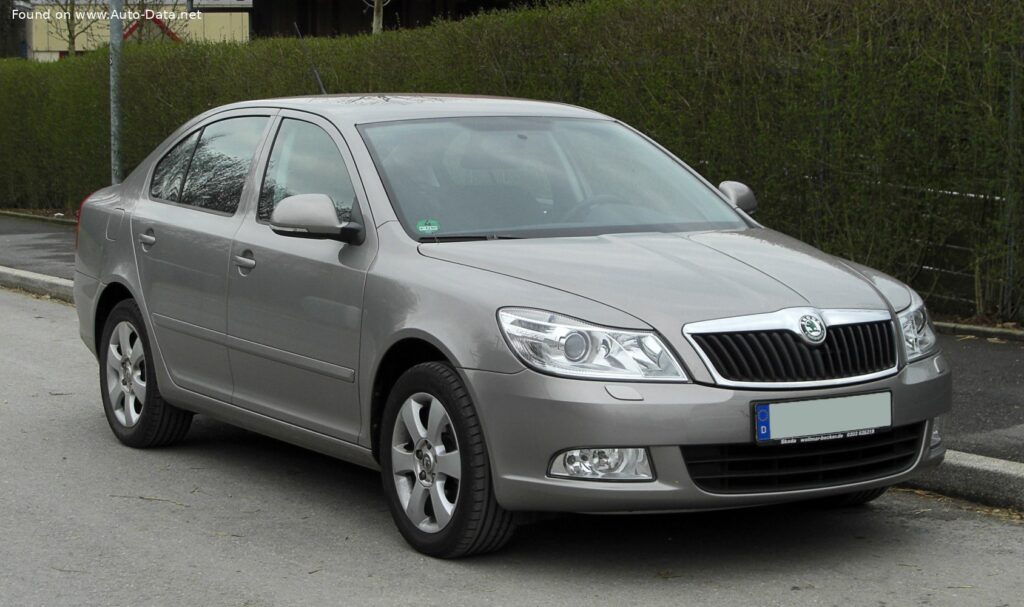
The Skoda Octavia II, specifically the facelifted version introduced in 2009, represented a significant evolution of Skoda’s popular compact car. Production of the 2.0 TDI CR (140 hp) DSG variant ran from 2010 to 2013. This model occupied a mid-range position within the Octavia II lineup, offering a balance between performance, fuel efficiency, and equipment levels. It was positioned above the lower-powered diesel and gasoline engines, and below the more potent diesel variants and the sporty RS model. The Octavia II was built on the Volkswagen Group’s A5 (1HX0) platform, shared with models like the Volkswagen Golf Mk5 and Audi A3.
Powertrain & Engine Architecture
The heart of the Octavia II 2.0 TDI CR (140 hp) DSG is the CFHC or CLCB engine code, a 1968 cc inline four-cylinder diesel engine. “CR” denotes Common Rail direct fuel injection, a system that delivers fuel at extremely high pressure for improved combustion efficiency and reduced emissions. This engine utilizes a turbocharger with an intercooler to boost power output. The engine produces 140 horsepower at 4000 rpm and 320 Nm (236 lb-ft) of torque at 1750 rpm. The engine features four valves per cylinder and a compression ratio of 18.5:1.
The “DSG” designation refers to the dual-clutch transmission, specifically the 6-speed DQ250. This transmission offers quicker and smoother gear changes compared to a traditional automatic transmission. It operates by pre-selecting the next gear, allowing for near-instantaneous shifts. The DQ250 is a dry-clutch unit, known for its efficiency and responsiveness. The transmission’s gear ratios are tuned to provide a balance between acceleration and fuel economy, with a relatively tall final drive ratio to aid in highway cruising.
Fuel Injection and Valvetrain
The Common Rail direct injection system employed in the 2.0 TDI CR engine is a Bosch system, capable of multiple injection events per combustion cycle. This allows for precise control over the combustion process, optimizing power delivery and minimizing noise and emissions. The valvetrain consists of a double overhead camshaft (DOHC) design, ensuring efficient valve operation and contributing to the engine’s overall performance.
Driving Characteristics
The 2.0 TDI CR (140 hp) DSG Octavia II offered a noticeable step up in performance compared to the lower-powered engine options. Acceleration from 0 to 100 km/h (0-62 mph) takes approximately 9.6 seconds, while 0-60 mph is achieved in around 9.1 seconds. The DSG transmission contributes significantly to this performance, providing quick and seamless gear changes. While not as sporty as the higher-output TDI variants or the RS model, the 140 hp engine provides ample power for everyday driving and comfortable highway cruising. The torque output of 320 Nm is readily available from low engine speeds, resulting in strong acceleration in most driving situations. The DSG transmission’s automatic mode provides a convenient driving experience, while the manual shift mode allows drivers to take more control over gear selection.
Compared to the manual transmission versions of the same engine, the DSG offers slightly quicker acceleration due to the faster gear changes. However, some drivers may prefer the more direct feel of a manual gearbox. The 1.8 TSI gasoline engine, while offering similar horsepower, lacked the low-end torque of the 2.0 TDI, resulting in a different driving experience.
Equipment & Trim Levels
The 2.0 TDI CR (140 hp) DSG Octavia II was typically offered in SE, Elegance, and Style trim levels, depending on the market. Standard equipment generally included air conditioning, power windows, central locking, an audio system with CD player, and alloy wheels. Higher trim levels added features such as automatic climate control, a multi-function steering wheel, parking sensors, and upgraded upholstery. Optional extras included a sunroof, navigation system, and leather seats. Interior upholstery was typically cloth on the SE trim, with higher trims offering partial or full leather options. The dashboard layout was consistent across the range, featuring a functional and ergonomic design.
Chassis & Braking
The Octavia II 2.0 TDI CR (140 hp) DSG utilized an independent McPherson strut suspension system at the front, providing a comfortable ride and good handling characteristics. The rear suspension employed a torsion beam setup, which is a cost-effective and space-efficient solution. The front brakes were ventilated discs, while the rear brakes were typically solid discs, although some earlier models may have featured drum brakes depending on the specific trim level and market. Anti-lock Braking System (ABS) was standard equipment. Stabilizer bars were fitted to both the front and rear axles to reduce body roll during cornering. Tire sizes varied depending on the trim level, ranging from 195/65 R15 to 225/45 R17.
Market Reception & Comparison
The Skoda Octavia II 2.0 TDI CR (140 hp) DSG was generally well-received by automotive critics. It was praised for its fuel efficiency, comfortable ride, spacious interior, and practical hatchback body style. The DSG transmission was also a popular feature, offering a smooth and responsive driving experience. Fuel economy figures were typically around 5.9 l/100 km (39.9 US mpg) combined, making it an attractive option for drivers seeking a fuel-efficient vehicle. Compared to the 1.8 TSI gasoline engine, the 2.0 TDI offered significantly better fuel economy, although the gasoline engine was generally quieter and smoother. The 2.0 TDI CR (140 hp) was also more economical to run than the higher-output TDI variants, due to lower insurance costs and potentially reduced maintenance expenses.
Technical Specifications
| Brand | Skoda |
| Model | Octavia II (facelift 2009) |
| Type (Engine) | 2.0 TDI CR (140 Hp) DSG |
| Start of production | 2010 year |
| End of production | 2013 year |
| Fuel consumption (economy) – urban | 7.8 l/100 km (30.2 US mpg) |
| Fuel consumption (economy) – extra urban | 4.8 l/100 km (49 US mpg) |
| Fuel consumption (economy) – combined | 5.9 l/100 km (39.9 US mpg) |
| Fuel Type | Diesel |
| Acceleration 0 – 100 km/h | 9.6 sec |
| Acceleration 0 – 62 mph | 9.6 sec |
| Acceleration 0 – 60 mph | 9.1 sec |
| Maximum speed | 207 km/h (128.62 mph) |
| Emission standard | Euro 4 |
| Weight-to-power ratio | 10.2 kg/Hp |
| Weight-to-torque ratio | 4.5 kg/Nm |
| Power | 140 Hp @ 4000 rpm |
| Torque | 320 Nm @ 1750 rpm (236.02 lb.-ft. @ 1750 rpm) |
| Engine layout | Front, Transverse |
| Engine Model/Code | CFHC, CLCB |
| Engine displacement | 1968 cm3 (120.09 cu. in.) |
| Number of cylinders | 4 |
| Engine configuration | Inline |
| Cylinder Bore | 81 mm (3.19 in.) |
| Piston Stroke | 95.5 mm (3.76 in.) |
| Compression ratio | 18.5:1 |
| Number of valves per cylinder | 4 |
| Fuel injection system | Diesel Commonrail |
| Engine oil capacity | 4.3 l (4.54 US qt | 3.78 UK qt) |
| Coolant | 8.7 l (9.19 US qt | 7.65 UK qt) |
| Kerb Weight | 1430 kg (3152.61 lbs.) |
| Max. weight | 2015 kg (4442.31 lbs.) |
| Max load | 585 kg (1289.7 lbs.) |
| Trunk (boot) space – minimum | 585 l (20.66 cu. ft.) |
| Trunk (boot) space – maximum | 1455 l (51.38 cu. ft.) |
| Fuel tank capacity | 55 l (14.53 US gal | 12.1 UK gal) |
| Length | 4569 mm (179.88 in.) |
| Width | 1769 mm (69.65 in.) |
| Height | 1462 mm (57.56 in.) |
| Wheelbase | 2578 mm (101.5 in.) |
| Number of gears and type of gearbox | 6 gears, automatic transmission |
Legacy
The 2.0 TDI CR (140 hp) DSG powertrain in the Skoda Octavia II has proven to be relatively reliable, although, like all diesel engines, it is susceptible to issues related to the diesel particulate filter (DPF) and the dual-mass flywheel. Regular maintenance, including oil changes and DPF regeneration, is crucial for long-term reliability. On the used car market, these Octavias are generally considered a good value proposition, offering a blend of practicality, fuel efficiency, and affordability. The DSG transmission, while generally reliable, may require servicing or replacement at higher mileages. Overall, the 2.0 TDI CR (140 hp) DSG Octavia II remains a popular choice for buyers seeking a well-rounded and economical compact car.