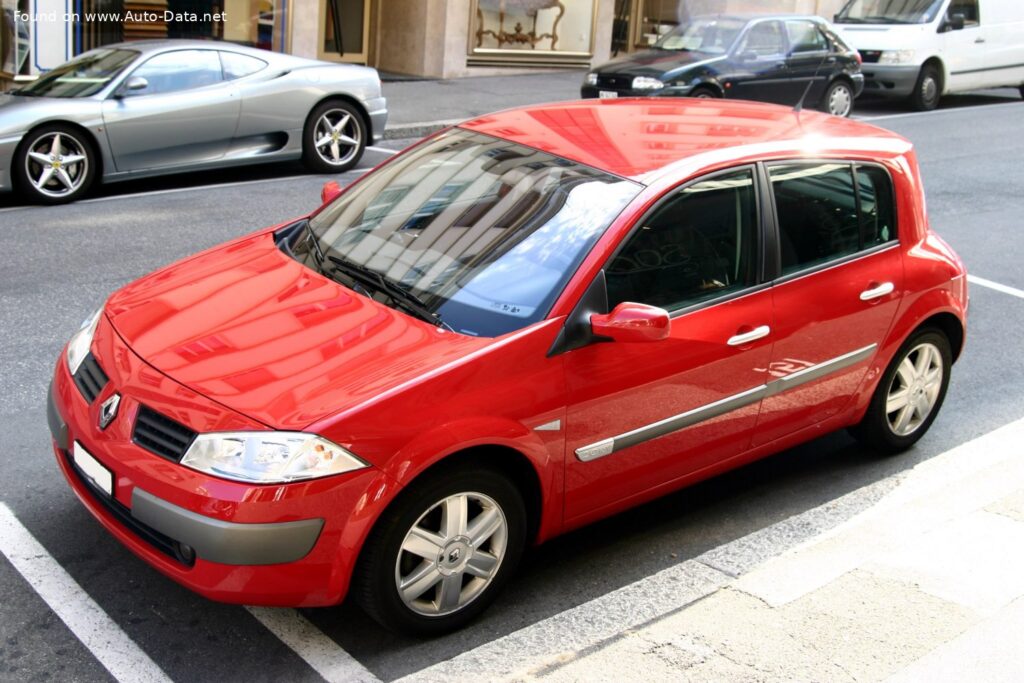
The Renault Megane II 1.4 16V, producing 82 horsepower, was a mainstay of the Megane II range from its introduction in 2002 until 2005. Positioned as the entry-level engine option, it catered to buyers prioritizing fuel efficiency and affordability within the compact hatchback segment. This variant was a key component of Renault’s strategy to offer a broad range of choices within the Megane II generation (designated XM0/AE chassis), appealing to a wider customer base. It served as the gateway to the Megane II lineup, offering a more accessible price point compared to the higher-performance 1.6L, 2.0L, and diesel variants.
Powertrain & Engine Architecture
The heart of the Megane II 1.4 16V is the K4J engine, a 1390cc (84.82 cubic inches) inline-four cylinder gasoline engine. This engine utilizes a multi-port fuel injection system, delivering fuel directly into the intake ports just before the intake valves. The engine features a double overhead camshaft (DOHC) valvetrain, operating 16 valves (four per cylinder) to optimize airflow and combustion efficiency. The compression ratio is set at 10:1. The K4J engine is a naturally aspirated design, meaning it does not employ forced induction like a turbocharger or supercharger.
While a five-speed manual transmission was standard, the 1.4 16V was also offered with a four-speed automatic transmission. This automatic, a Renault-sourced unit, was designed for smooth operation and ease of use, further enhancing the appeal of this trim level to drivers seeking convenience. The automatic transmission’s gear ratios were optimized for fuel economy and acceptable acceleration, though it did impact overall performance compared to the manual version. The automatic transmission was not known for particularly quick shifts, prioritizing comfort over sporty responsiveness.
Engine Specifications
The K4J engine produces a maximum power output of 82 hp (61 kW) at 6000 rpm, and a peak torque of 124 Nm (91.46 lb-ft) at 3750 rpm. This translates to a power-to-liter ratio of 59 hp/liter. The engine’s relatively modest output contributes to its fuel efficiency, but also results in a slower 0-100 km/h (0-62 mph) acceleration time of 13.5 seconds. The engine oil capacity is 4.8 liters (5.07 US quarts / 4.22 UK quarts), and requires a specification adhering to Renault’s standards.
Driving Characteristics
The Renault Megane II 1.4 16V Automatic offered a comfortable, if not particularly exhilarating, driving experience. The engine’s power delivery is linear, with peak torque arriving at a relatively accessible 3750 rpm. However, the 82 hp output meant that overtaking maneuvers required careful planning, especially when fully loaded or on inclines. The four-speed automatic transmission, while smooth, lacked the responsiveness of more modern gearboxes. Upshifts were deliberate, and downshifts could sometimes feel hesitant. Compared to the 1.6L and 2.0L variants, the 1.4 16V felt noticeably slower, particularly in highway situations. The manual transmission version offered a more engaging driving experience and slightly improved acceleration, but the automatic was favored by those prioritizing ease of use.
The steering was light and easy to use, making it well-suited for urban driving. The suspension, tuned for comfort, absorbed bumps and imperfections in the road reasonably well, though it wasn’t particularly sporty in its handling characteristics.
Equipment & Trim Levels
The 1.4 16V typically served as the base trim level, offering a reasonable level of standard equipment. Standard features generally included power steering, central locking, electric front windows, and an AM/FM radio. Safety features included ABS (Anti-lock Braking System) and driver and passenger airbags. Interior upholstery was typically cloth, with a relatively simple dashboard layout.
Optional extras included air conditioning, alloy wheels, a CD player, and rear electric windows. Higher trim levels, often denoted by names like “Expression” or “Dynamique,” built upon the base 1.4 16V specification, adding more comfort and convenience features. These could include automatic headlights, rain-sensing wipers, and upgraded interior trim.
Chassis & Braking
The Megane II 1.4 16V utilized an independent McPherson strut suspension system at the front, providing a good balance of comfort and handling. The rear suspension employed a torsion beam setup, which was cost-effective and contributed to the car’s compact dimensions. The front brakes were ventilated discs, offering good stopping power, while the rear brakes were typically solid discs. The steering system was a rack and pinion type with electric power assistance, providing a light and responsive feel.
The car rode on 195/65 R15 tires, mounted on 6J x 15 inch steel or alloy wheels. The relatively narrow tires contributed to fuel efficiency but limited grip compared to wider tires found on higher-performance trims.
Market Reception & Comparison
The Renault Megane II 1.4 16V was generally well-received as an affordable and practical hatchback. Critics praised its fuel efficiency and comfortable ride, but noted its lack of outright performance. Compared to the 1.6L and 2.0L variants, the 1.4 16V offered significantly lower running costs, making it an attractive option for budget-conscious buyers. However, it lacked the punch and refinement of its more powerful siblings. The diesel variants, while more expensive to purchase, offered even better fuel economy and stronger low-end torque.
Fuel economy figures were competitive for its class, with combined fuel consumption averaging around 6.9 l/100 km (34.1 US mpg / 40.9 UK mpg). CO2 emissions were rated at 162 g/km, placing it within the Euro 3 emission standard.
Technical Specifications
| Brand | Renault |
| Model | Megane |
| Generation | Megane II |
| Engine Type | 1.4 16V (82 Hp) |
| Production Years | 2002-2005 |
| Body Type | Hatchback |
| Seats | 5 |
| Doors | 5 |
| Fuel Consumption (Urban) | 9.2 l/100 km (25.6 US mpg) |
| Fuel Consumption (Extra Urban) | 5.6 l/100 km (42 US mpg) |
| Fuel Consumption (Combined) | 6.9 l/100 km (34.1 US mpg) |
| CO2 Emissions | 162 g/km |
| Fuel Type | Petrol (Gasoline) |
| Acceleration 0-100 km/h | 13.5 sec |
| Acceleration 0-62 mph | 13.5 sec |
| Maximum Speed | 171 km/h (106.25 mph) |
| Engine Displacement | 1390 cm3 (84.82 cu. in.) |
| Number of Cylinders | 4 |
| Engine Layout | Front, Transverse |
| Engine Code | K4J |
| Power | 82 Hp @ 6000 rpm |
| Torque | 124 Nm @ 3750 rpm (91.46 lb.-ft. @ 3750 rpm) |
| Kerb Weight | 1165 kg (2568.39 lbs.) |
| Max. Weight | 1715 kg (3780.93 lbs.) |
| Trunk Space (Minimum) | 330 l (11.65 cu. ft.) |
| Trunk Space (Maximum) | 1190 l (42.02 cu. ft.) |
| Fuel Tank Capacity | 60 l (15.85 US gal) |
Legacy
The Renault Megane II 1.4 16V, particularly with the automatic transmission, has proven to be a relatively reliable powertrain. The K4J engine is known for its durability, and while not without its quirks, major engine failures are uncommon. Common issues include occasional sensor failures and oil leaks. The automatic transmission, while not the most sophisticated, is generally robust if properly maintained.
On the used car market, the 1.4 16V variants are typically the most affordable Megane II models. They represent a good value for buyers seeking a practical and economical hatchback, but potential buyers should be aware of the engine’s limited performance. Parts availability is generally good, and maintenance costs are relatively low, making it a sensible choice for first-time car owners or those on a tight budget. However, its age means that regular maintenance and inspection are crucial to ensure continued reliability.