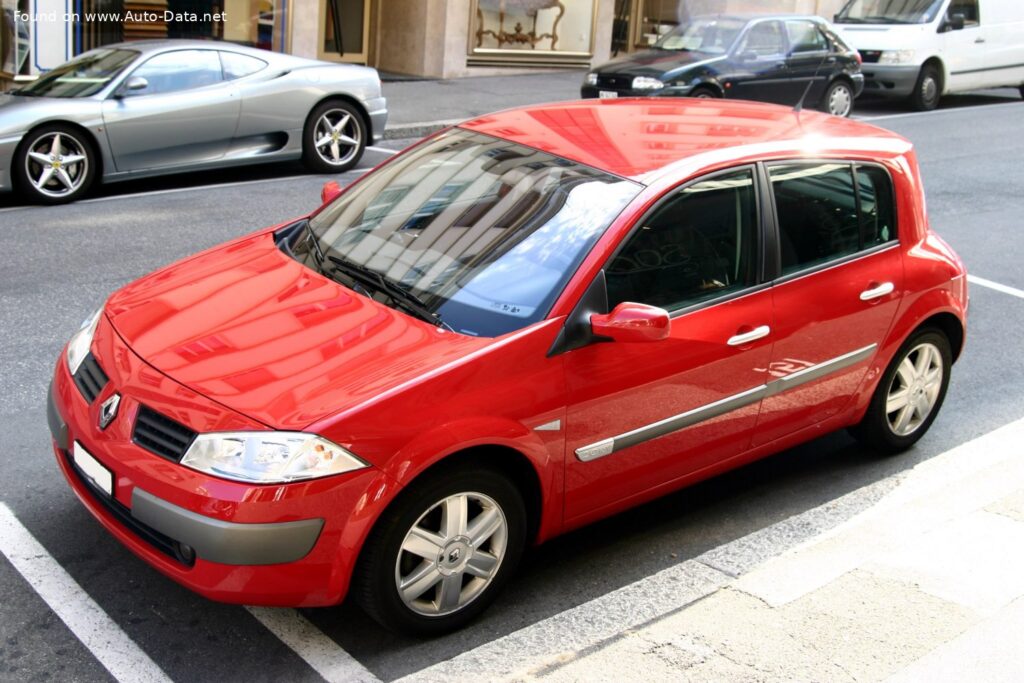
The Renault Megane II 1.5 dCi Automatic, produced between 2004 and 2005, represented an entry-level offering within the second generation Megane (XM2/AE) range. Positioned as a fuel-efficient and accessible option, it catered to buyers prioritizing economy and ease of use over outright performance. This variant combined a 1.5-liter common rail diesel engine with a four-speed automatic transmission, a relatively uncommon pairing in the European C-segment at the time. The Megane II, launched in 2003, aimed to elevate Renault’s presence in the compact family car market, offering improved quality, design, and technology compared to its predecessor.
Powertrain & Engine Architecture
The heart of the Megane II 1.5 dCi Automatic is the K9K engine, a four-cylinder, inline diesel engine displacing 1461 cc (89.16 cubic inches). This engine is a member of Renault’s K-series diesel family, known for its robust design and fuel efficiency. The K9K 714 engine code, specifically used in this application, features a turbocharger with an intercooler to enhance power output. Fuel is delivered via a second-generation common rail direct injection system, operating at a high pressure of 1600 bar. This system allows for precise fuel metering and optimized combustion, contributing to both performance and reduced emissions.
The engine utilizes a single overhead camshaft (OHC) design with two valves per cylinder. The compression ratio is relatively high at 18.8:1, typical for diesel engines, maximizing thermal efficiency. The engine produces 101 horsepower (75 kW) at 4000 rpm and 200 Nm (147.51 lb-ft) of torque at 1900 rpm. The four-speed automatic transmission, a DP0 (also known as AL4) unit, was sourced from Japan (AISIN). This transmission is a conventional hydraulic automatic, offering smooth shifts but lacking the efficiency of more modern transmissions. It features torque converter lock-up to improve fuel economy at cruising speeds.
Fuel Injection and Valvetrain Details
The diesel common rail system employed in the K9K engine utilizes solenoid injectors. These injectors are electronically controlled, allowing for multiple injection events per combustion cycle. This multi-injection strategy optimizes combustion, reducing noise, vibration, and harshness (NVH) while improving fuel economy and lowering emissions. The OHC valvetrain is a simple and reliable design, utilizing rocker arms to actuate the valves. The timing belt requires periodic replacement as part of scheduled maintenance.
Driving Characteristics
The Renault Megane II 1.5 dCi Automatic delivers modest performance. Acceleration from 0 to 100 km/h (0-62 mph) takes approximately 14.7 seconds, and the top speed is around 174 km/h (108 mph). The automatic transmission, while providing convenience, does detract from the engine’s potential. The gear ratios are spaced to prioritize fuel economy rather than rapid acceleration. The torque converter introduces some slippage, reducing overall efficiency. Compared to the manual transmission version of the same engine, the automatic variant feels noticeably slower and less responsive. Higher-output versions of the Megane II, such as those equipped with the 2.0-liter petrol engine or the 1.9 dCi diesel, offer significantly more spirited performance.
In real-world driving, the 1.5 dCi Automatic excels in urban environments and on the highway. The engine provides sufficient torque for everyday driving situations, and the automatic transmission makes navigating traffic congestion effortless. However, overtaking maneuvers require careful planning, and the engine can feel strained when climbing hills or carrying a full load. The transmission’s shift quality is generally smooth, but it can occasionally exhibit some hesitation or hunting for the right gear.
Equipment & Trim Levels
The 1.5 dCi Automatic trim level typically represented the base or near-base specification for the Megane II. Standard equipment generally included power steering, central locking, electric front windows, and an audio system. Air conditioning was often an optional extra. Interior upholstery was typically cloth, and the dashboard featured a functional but relatively basic design. Safety features included ABS (Anti-lock Braking System) and driver and passenger airbags. Optional extras could include alloy wheels, rear electric windows, a sunroof, and upgraded audio systems. The specific equipment levels varied slightly depending on the country and market.
Chassis & Braking
The Megane II 1.5 dCi Automatic utilizes an independent McPherson strut suspension at the front and a torsion beam suspension at the rear. This suspension setup provides a reasonable balance between ride comfort and handling. The front suspension incorporates a stabilizer bar to reduce body roll during cornering. The braking system consists of ventilated discs at the front and solid discs at the rear. The ABS system helps to prevent wheel lock-up during emergency braking. The steering is a power-assisted rack and pinion system, providing precise and responsive steering feel. The tires are typically 195/65 R15 size, mounted on 6.5J x 15 inch steel or alloy wheels.
Market Reception & Comparison
The Renault Megane II 1.5 dCi Automatic received mixed reviews. Critics praised its fuel efficiency and comfortable ride, but criticized its lack of performance and the somewhat dated four-speed automatic transmission. Compared to other trims in the Megane II lineup, the 1.5 dCi Automatic offered the lowest price point but also the least exciting driving experience. The 1.9 dCi variants, with their higher power output and six-speed manual transmissions, were generally preferred by drivers seeking more performance. The petrol-powered versions offered a smoother and more refined driving experience, but at the expense of fuel economy. In terms of reliability, the K9K engine proved to be generally robust, but the DP0 automatic transmission was known to be susceptible to issues if not properly maintained.
Technical Specifications
| Engine Type | 1.5 dCi Turbo Diesel |
| Engine Code | K9K 714 |
| Displacement | 1461 cm³ (89.16 cu in) |
| Cylinders | 4, Inline |
| Power | 101 hp @ 4000 rpm |
| Torque | 200 Nm (147.51 lb-ft) @ 1900 rpm |
| Fuel Injection | Diesel Commonrail |
| Valvetrain | OHC, 2 valves per cylinder |
| Transmission | 4-speed Automatic (DP0/AL4) |
| Drive Type | Front Wheel Drive |
| Kerb Weight | 1245 kg (2744.76 lbs) |
| Maximum Weight | 1795 kg (3957.3 lbs) |
| Fuel Consumption (Urban) | 7.7 l/100 km (30.5 US mpg) |
| Fuel Consumption (Extra Urban) | 4.7 l/100 km (50 US mpg) |
| Fuel Consumption (Combined) | 5.8 l/100 km (40.6 US mpg) |
| CO2 Emissions | 153 g/km |
| Acceleration 0-100 km/h | 14.7 sec |
| Top Speed | 174 km/h (108.12 mph) |
Legacy
The Renault Megane II 1.5 dCi Automatic, while not the most dynamic version of the Megane II, remains a relatively common sight on used car markets. The K9K engine is known for its durability and fuel efficiency, making it a practical choice for budget-conscious buyers. However, potential buyers should be aware of the potential for issues with the DP0 automatic transmission. Regular maintenance, including fluid changes, is crucial to ensure its longevity. The 1.5 dCi Automatic represents a sensible and economical option for those seeking a comfortable and reliable compact family car, but it’s important to consider its limitations in terms of performance and transmission refinement.