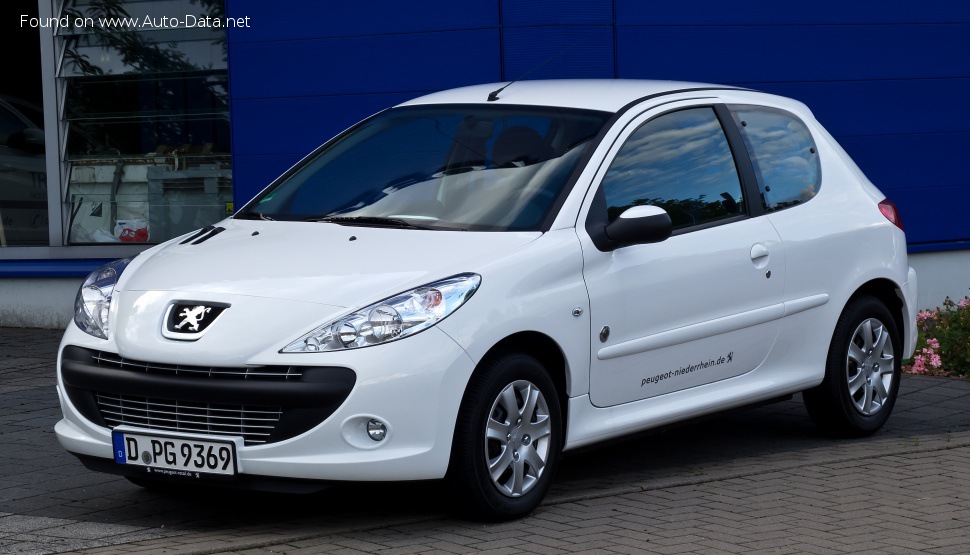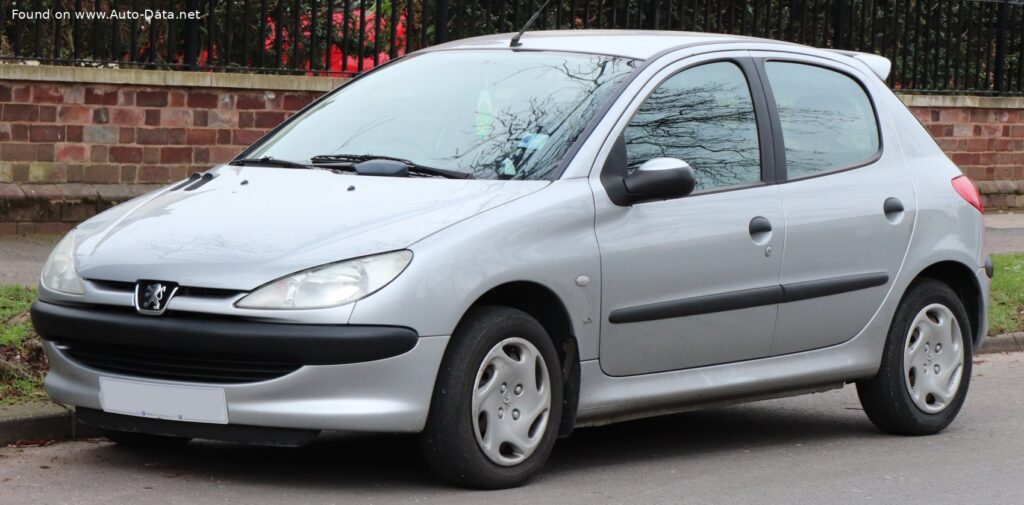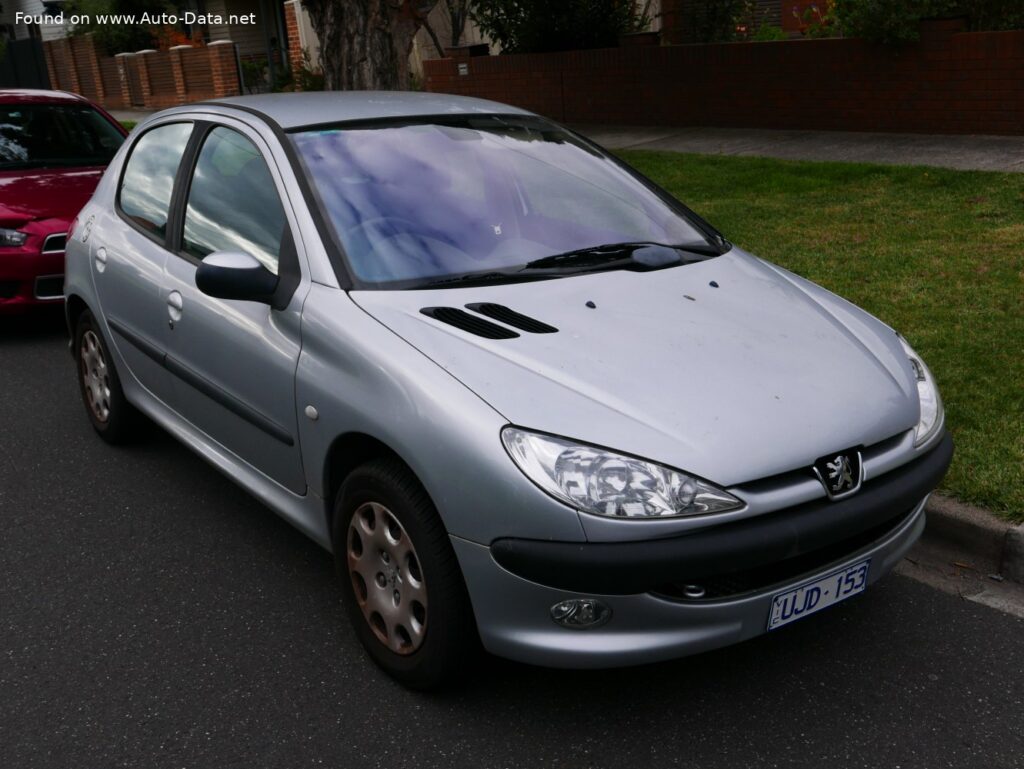
The Peugeot 206, specifically the 1.4i variant producing 75 horsepower, was a popular subcompact hatchback manufactured from 2003 to 2009 as part of the facelifted second generation of the 206 series. Introduced to offer a more affordable entry point into the 206 range, this model occupied the lower end of the lineup, appealing to buyers prioritizing economy and practicality over outright performance. It was positioned below the more powerful 1.6 and 2.0-liter engine options, and also differed significantly from the diesel variants available. The 206, overall, was a significant model for Peugeot, representing a move towards more modern design and engineering, and the 1.4i played a key role in its sales success.
Powertrain & Engine Architecture
The heart of the 206 1.4i is the KFW (and sometimes ADZ) TU3JP engine, a 1361 cc (83.05 cubic inches) inline four-cylinder gasoline engine. This engine utilizes a naturally aspirated configuration and a multi-port fuel injection system. The TU3 engine family is known for its relative simplicity and durability, making it a cost-effective choice for Peugeot. The engine features a single overhead camshaft (SOHC) valvetrain with two valves per cylinder. This configuration contributes to its smooth operation, though it doesn’t offer the higher revving potential of dual overhead cam designs.
The 75 hp output is achieved at 5500 rpm, while peak torque of 120 Nm (88.51 lb-ft) is delivered at 2800 rpm. The engine’s compression ratio is 10.2:1. Engine oil capacity is 3 liters (3.17 US quarts / 2.64 UK quarts), and the cooling system requires 7 liters (7.4 US quarts / 6.16 UK quarts). The 1.4i was almost exclusively paired with a five-speed manual transmission, though a four-speed automatic transmission was offered as an option, albeit less common. The automatic transmission was a conventional hydraulic unit, chosen for its affordability and ease of maintenance, rather than any advanced features.
Automatic Transmission Details
The optional four-speed automatic transmission, while providing convenience, significantly impacted the vehicle’s performance. The gear ratios were optimized for fuel efficiency rather than acceleration. First gear was relatively short, providing adequate launch capability, but subsequent gears were spaced to prioritize cruising economy. This resulted in a noticeable delay in response when overtaking or climbing hills. The automatic transmission also contributed to a slight reduction in overall fuel economy compared to the manual version.
Driving Characteristics
The 206 1.4i, particularly in automatic guise, offered a comfortable but uninspiring driving experience. Acceleration from 0-100 km/h (0-62 mph) took approximately 13.2 seconds, and 0-60 mph was achieved in around 12.5 seconds. The top speed was limited to 170 km/h (105.63 mph). The engine’s power delivery was linear, but lacked the punch of the higher-capacity engines. The automatic transmission further muted the driving experience, with noticeable shift delays and a tendency to hold onto gears for longer periods. Compared to the five-speed manual version, the automatic felt noticeably slower and less engaging. However, for urban driving and commuting, the automatic provided a relaxed and convenient experience.
The steering was light and precise, making it easy to maneuver in tight spaces. The suspension, while tuned for comfort, provided adequate handling stability. The car felt stable at highway speeds, but was not particularly sporty. The overall driving experience was geared towards practicality and ease of use, rather than driving excitement.
Equipment & Trim Levels
The 1.4i typically served as the entry-level trim in many markets, and as such, came with a relatively basic standard equipment list. Standard features generally included power steering, central locking, front airbags, and an adjustable steering column. Interior upholstery was typically cloth, with a simple dashboard layout. Air conditioning was often an optional extra, as were features like electric windows and a radio/CD player. Higher trim levels, such as the ‘Sport’ or ‘Style’ variants, added features like alloy wheels, upgraded interior trim, and additional safety equipment. The availability of specific features varied depending on the country and year of manufacture.
Chassis & Braking
The 206 1.4i utilized a front-wheel-drive layout with a MacPherson strut front suspension and a torsion beam rear suspension. This suspension setup provided a good balance between comfort and handling. The front brakes were disc brakes, while the rear brakes were typically drum brakes, a cost-saving measure for the entry-level model. Anti-lock Braking System (ABS) was often an optional extra, depending on the market and trim level. The car rode on 175/65 R14 tires mounted on 14-inch steel wheels, although alloy wheels were available on higher trim levels. The kerb weight of the 1.4i was approximately 950 kg (2094.39 lbs), contributing to its relatively modest performance.
Market Reception & Comparison
The Peugeot 206 1.4i was generally well-received by critics as an affordable and practical small car. It was praised for its fuel efficiency, comfortable ride, and ease of use. However, it was also criticized for its lack of power and somewhat dated interior. Compared to the 1.6-liter and 2.0-liter versions, the 1.4i offered significantly less performance, but at a lower price point. The diesel variants, while more expensive, offered superior fuel economy and torque. The 1.4i’s fuel consumption figures were respectable, averaging around 6.4 l/100 km (36.8 US mpg / 44.1 UK mpg) in combined driving. Reliability was generally good, although the automatic transmission was sometimes prone to issues. The 1.4i proved to be a popular choice for first-time buyers, city dwellers, and those seeking a low-cost, reliable mode of transportation.
Technical Specifications
| Brand | Peugeot |
| Model | 206 |
| Generation | 206 (facelift 2003) |
| Type (Engine) | 1.4i (75 Hp) |
| Start of production | 2003 |
| End of production | 2009 |
| Powertrain Architecture | Internal Combustion engine |
| Body type | Hatchback |
| Seats | 5 |
| Doors | 3-5 |
| Fuel consumption (urban) | 8.9 l/100 km (26.4 US mpg / 31.7 UK mpg) |
| Fuel consumption (extra urban) | 5 l/100 km (47 US mpg / 56.5 UK mpg) |
| Fuel consumption (combined) | 6.4 l/100 km (36.8 US mpg / 44.1 UK mpg) |
| CO2 emissions | 152 g/km |
| Fuel Type | Petrol (Gasoline) |
| Acceleration 0 – 100 km/h | 13.2 sec |
| Acceleration 0 – 62 mph | 13.2 sec |
| Acceleration 0 – 60 mph | 12.5 sec |
| Maximum speed | 170 km/h (105.63 mph) |
| Emission standard | Euro 3 |
| Weight-to-power ratio | 12.7 kg/Hp |
| Weight-to-torque ratio | 7.9 kg/Nm |
| Power | 75 Hp @ 5500 rpm |
| Torque | 120 Nm @ 2800 rpm (88.51 lb.-ft. @ 2800 rpm) |
| Engine layout | Front, Transverse |
| Engine Model/Code | KFW TU3JP |
| Engine displacement | 1361 cm3 (83.05 cu. in.) |
| Number of cylinders | 4 |
| Engine configuration | Inline |
| Cylinder Bore | 75 mm (2.95 in.) |
| Piston Stroke | 77 mm (3.03 in.) |
| Compression ratio | 10.2:1 |
| Number of valves per cylinder | 2 |
| Fuel injection system | Multi-port manifold injection |
| Engine aspiration | Naturally aspirated |
| Valvetrain | SOHC |
| Engine oil capacity | 3 l (3.17 US qt | 2.64 UK qt) |
| Coolant | 7 l (7.4 US qt | 6.16 UK qt) |
| Kerb Weight | 950 kg (2094.39 lbs.) |
| Max. weight | 1450 kg (3196.7 lbs.) |
| Trunk (boot) space – minimum | 210 l (7.42 cu. ft.) |
| Trunk (boot) space – maximum | 992 l (35.03 cu. ft.) |
| Fuel tank capacity | 50 l (13.21 US gal | 11 UK gal) |
| Length | 3822 mm (150.47 in.) |
| Width | 1652 mm (65.04 in.) |
| Height | 1425 mm (56.1 in.) |
| Wheelbase | 2442 mm (96.14 in.) |
Legacy
The Peugeot 206 1.4i, while not the most exciting version of the 206, remains a popular choice in the used car market due to its affordability and reliability. The TU3 engine is known for its longevity, and with regular maintenance, can provide many years of service. The simplicity of the engine and transmission also makes it relatively easy and inexpensive to repair. However, potential buyers should be aware of the potential for issues with the automatic transmission, and should have it thoroughly inspected before purchase. Today, the 206 1.4i represents a practical and economical option for those seeking a small, reliable hatchback.