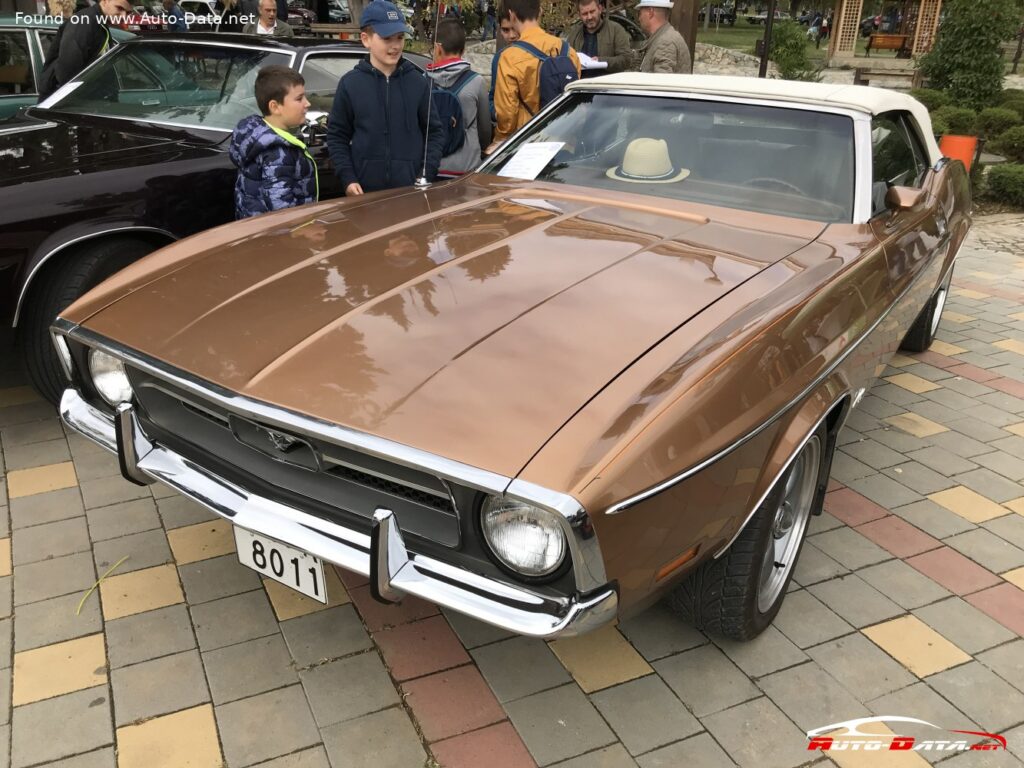
The Ford Mustang Convertible I (facelift 1970) with the 5.8-liter V8 engine producing 240 horsepower represents a significant iteration in the first generation Mustang’s lifecycle. Introduced as part of a mid-cycle refresh, this variant was produced from 1970 through 1973. It occupied a position as a performance-oriented offering within the Mustang lineup, appealing to buyers seeking open-air motoring with substantial power. The facelift brought with it revised styling cues, larger dimensions, and a broader range of engine options, solidifying the Mustang’s continued success in the pony car market. This particular configuration, combining the 351 cubic inch V8 with a convertible body style, aimed to deliver a thrilling driving experience while maintaining a degree of practicality.
The 1970-1973 Mustang Convertible: A Refreshed Classic
The 1970 Mustang underwent a substantial redesign, moving away from the original fastback and coupe designs towards a larger, more luxurious platform. This facelift aimed to address criticisms of the earlier models’ cramped interiors and limited practicality. The convertible version, in particular, benefited from the increased size, offering more passenger space and a more comfortable overall experience. The 5.8L V8 option was positioned as a step up from the smaller inline-six and 302 cubic inch V8 engines, offering a noticeable increase in performance. It wasn’t the top-tier engine option (the 429 cubic inch engines offered even more power), but it struck a balance between performance and affordability.
Powertrain & Engine Architecture
At the heart of the 1970-1973 Mustang Convertible I (5.8 V8) lies the Ford 351 Windsor engine, designated as a 5.8-liter (351.01 cubic inches) V8. This engine, internally coded with various suffixes depending on specific calibration, produced 240 horsepower at 5400 rpm and 475 Newton-meters (350.34 lb-ft) of torque at 3400 rpm. The engine featured a 9:1 compression ratio and utilized a carburetor for fuel delivery. The valvetrain employed an overhead valve (OHV) configuration with two valves per cylinder. The engine’s layout was front-mounted and longitudinal, driving the rear wheels. The 351 Windsor was known for its robust construction and relative ease of maintenance, making it a popular choice among enthusiasts. Engine oil capacity was 4.8 liters (5.07 US quarts / 4.22 UK quarts), and the cooling system required 13.7 liters (14.48 US quarts / 12.05 UK quarts) of coolant.
While a three-speed manual transmission was standard, a Cruise-O-Matic automatic transmission was a popular option. The automatic transmission featured three forward speeds and was designed to provide smooth and comfortable shifting. The gear ratios were optimized for both acceleration and cruising, although the automatic did slightly diminish the overall performance compared to the manual transmission equipped models.
Driving Characteristics
The 1970-1973 Mustang Convertible I (5.8 V8) offered a distinctly American driving experience. The 351 Windsor engine provided ample power for spirited acceleration and confident highway cruising. While not as nimble as some European sports cars of the era, the Mustang offered a comfortable ride and a satisfying exhaust note. The automatic transmission, while convenient, resulted in some power loss compared to the manual transmission. The rear-wheel-drive configuration provided a traditional driving feel, and the relatively short wheelbase contributed to a responsive handling characteristic. The convertible top, while adding some weight, did not significantly detract from the overall driving experience. The car felt substantial and planted on the road, offering a sense of security and confidence.
Equipment & Trim Levels
The Mustang Convertible I (5.8 V8) came standard with a range of features designed to enhance comfort and convenience. Standard interior appointments included cloth upholstery, a basic instrument cluster, and a steering wheel. Optional extras included upgraded interior trim packages, power steering, power brakes, air conditioning, and a premium sound system. The convertible top was typically available in a variety of colors, and options like a rear decklid spoiler and various wheel covers were also available. The trim levels offered a degree of customization, allowing buyers to tailor the car to their individual preferences. While not a luxury vehicle in the truest sense, the Mustang Convertible offered a comfortable and well-equipped interior for its time.
Chassis & Braking
The 1970-1973 Mustang Convertible utilized a robust chassis designed to handle the power of the 351 Windsor engine. The front suspension featured a wishbone design with a transverse stabilizer bar, providing a comfortable ride and predictable handling. The rear suspension employed a rigid axle setup with leaf springs, a traditional design that offered good load-carrying capacity. The braking system consisted of disc brakes on the front wheels and drum brakes on the rear wheels. Power steering was an available option, making maneuvering the relatively large Mustang easier, particularly at low speeds. Tire size was typically 205/65 R15 for both front and rear wheels, mounted on 6.5J x 15 inch rims.
Market Reception & Comparison
The 1970-1973 Mustang Convertible I (5.8 V8) was generally well-received by automotive critics and the public. It was praised for its stylish design, comfortable interior, and powerful engine. Compared to the smaller-engined Mustangs, the 5.8L V8 version offered a significant performance upgrade. However, it was also noted that the larger size and weight of the redesigned Mustang diminished some of the original’s nimble handling characteristics. Compared to the higher-performance Mustang variants equipped with the 429 cubic inch engines, the 351 Windsor offered a more balanced combination of performance and affordability. Fuel economy, while not a primary concern for many buyers, was lower than that of the smaller-engined models. Reliability was generally good, although the carburetor required periodic maintenance.
Technical Specifications
| Brand | Ford |
| Model | Mustang |
| Generation | Mustang Convertible I (facelift 1970) |
| Engine Type | 5.8 V8 (240 Hp) |
| Production Years | 1970-1973 |
| Body Type | Cabriolet |
| Seats | 4 |
| Doors | 2 |
| Fuel Type | Petrol (Gasoline) |
| Power | 240 Hp @ 5400 rpm |
| Torque | 475 Nm @ 3400 rpm / 350.34 lb.-ft. @ 3400 rpm |
| Engine Layout | Front, Longitudinal |
| Engine Displacement | 5752 cm3 / 351.01 cu. in. |
| Number of Cylinders | 8 |
| Engine Configuration | V-engine |
| Cylinder Bore | 101.6 mm / 4 in. |
| Piston Stroke | 88.9 mm / 3.5 in. |
| Compression Ratio | 9:1 |
| Number of Valves per Cylinder | 2 |
| Fuel Injection System | Carburettor |
| Engine Aspiration | Naturally Aspirated |
| Engine Oil Capacity | 4.8 l / 5.07 US qt | 4.22 UK qt |
| Coolant Capacity | 13.7 l / 14.48 US qt | 12.05 UK qt |
| Trunk Space (Maximum) | 229 l / 8.09 cu. ft. |
| Fuel Tank Capacity | 76 l / 20.08 US gal | 16.72 UK gal |
| Length | 4813 mm / 189.49 in. |
| Width | 1882 mm / 74.09 in. |
| Height | 1290 mm / 50.79 in. |
| Wheelbase | 2769 mm / 109.02 in. |
| Front Track | 1562 mm / 61.5 in. |
| Rear Track | 1549 mm / 60.98 in. |
| Minimum Turning Circle | 12.1 m / 39.7 ft. |
| Drivetrain | Rear wheel drive |
| Number of Gears | 3 (manual) |
| Gearbox Type | Manual Transmission |
| Front Suspension | Wishbone, Transverse stabilizer |
| Rear Suspension | Rigid axle suspension, Leaf spring |
| Front Brakes | Disc |
| Rear Brakes | Drum |
| Steering Type | Cone worm with recirculation balls |
| Power Steering | Hydraulic (optional) |
| Tire Size | 205/65 R15 |
| Wheel Rim Size | 6.5J x 15 |
Legacy
The 1970-1973 Mustang Convertible I (5.8 V8) remains a popular classic car among collectors and enthusiasts. The 351 Windsor engine is known for its durability and relative ease of maintenance, making these Mustangs relatively affordable to own and operate. While not as highly sought after as some of the more powerful Mustang variants, the 5.8L V8 version offers a compelling combination of performance, style, and affordability. Today, well-maintained examples command respectable prices in the used car market, and the availability of aftermarket parts ensures that these Mustangs can be kept on the road for years to come. The car represents a pivotal moment in Mustang history, bridging the gap between the original pony car and the more modern designs that followed.