
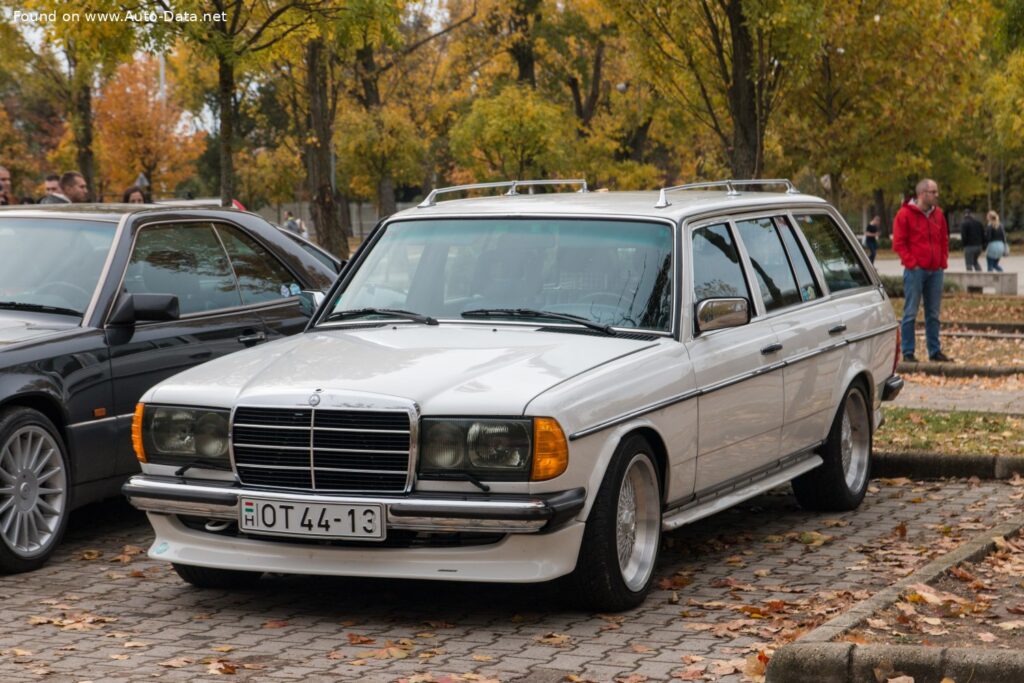
The Mercedes-Benz S123 240 TD, produced between 1977 and 1979, represents a specific variant within the broader W123 series, known for its robust diesel engine and practical station wagon (estate) body style. This model, powered by the OM 616 D 24 engine producing 65 horsepower, occupied a unique position in the W123 lineup, catering to buyers prioritizing fuel efficiency and durability over outright performance. The S123 designation specifically denotes the station wagon body style, differentiating it from the sedan (W123) and coupe (C123) versions. It was built upon the 123 platform, a significant step forward for Mercedes-Benz in terms of engineering and build quality, setting a new standard for mid-size luxury vehicles.
The 240 TD: A Focus on Practicality
The 240 TD was designed as a workhorse, appealing to families, businesses, and individuals needing a spacious and reliable vehicle for hauling cargo or traveling long distances. It wasn’t intended to be a sporty model; instead, it focused on providing a comfortable and economical driving experience. Compared to the gasoline-powered W123 variants, the 240 TD offered significantly better fuel economy, a key selling point during the late 1970s energy crisis. Within the diesel W123 range, the 240 TD was the initial offering, later joined by the more powerful 300 TD. The 240 TD’s lower horsepower and simpler mechanicals also contributed to its reputation for long-term reliability, making it a popular choice for high-mileage drivers.
Powertrain & Engine Architecture
The heart of the S123 240 TD is the OM 616 D 24 diesel engine, specifically the 616.912 variant. This is a 2.4-liter inline-four cylinder engine, known for its indirect injection system utilizing precombustion chambers. This system, common in Mercedes-Benz diesels of the era, involved injecting fuel into a small precombustion chamber connected to the main cylinder. This pre-chamber would ignite the fuel, and the resulting flame would then ignite the main charge in the cylinder. This design facilitated smoother combustion and reduced engine noise compared to direct injection systems. The engine features a naturally aspirated configuration, meaning it doesn’t employ a turbocharger or supercharger. The engine’s robust construction, with a cast iron block and head, contributed to its longevity. The 240 TD was exclusively offered with an automatic transmission, a four-speed unit that was designed to provide smooth and reliable operation. This transmission was not known for its sporty responsiveness, but rather for its durability and ease of use. The gear ratios were optimized for fuel efficiency and towing capability, rather than rapid acceleration.
Driving Characteristics
Driving the S123 240 TD is an experience defined by its relaxed pace and substantial torque. With only 65 horsepower, acceleration is modest, and overtaking requires careful planning. However, the engine produces a respectable 124 lb-ft of torque, available from relatively low engine speeds. This torque allows the vehicle to comfortably handle moderate loads and maintain steady speeds on highways. The automatic transmission contributes to a smooth driving experience, although it lacks the responsiveness of a manual gearbox. Compared to the higher-powered 300 TD, the 240 TD feels noticeably slower, particularly when accelerating from a standstill or climbing hills. The suspension, tuned for comfort, provides a smooth ride, absorbing bumps and imperfections in the road surface effectively. The steering is relatively heavy, typical of Mercedes-Benz vehicles of this era, but provides a solid and connected feel.
Equipment & Trim Levels
The S123 240 TD, even in its base form, offered a reasonable level of equipment for the late 1970s. Standard features typically included cloth upholstery, a wood-trimmed dashboard, and basic instrumentation. Power steering and air conditioning were often optional extras, significantly increasing the vehicle’s price. The interior was designed with practicality in mind, featuring durable materials and a spacious layout. The rear seats could be folded down to create a larger cargo area, enhancing the vehicle’s versatility. Optional extras included a sunroof, upgraded audio systems, and leather upholstery. Trim levels were relatively limited, with most variations stemming from the addition of optional equipment packages. The focus was on providing a well-equipped, functional vehicle rather than offering a wide range of cosmetic customization options.
Chassis & Braking
The S123 240 TD utilized a robust chassis designed to handle the weight of the vehicle and its occupants, as well as any cargo it might be carrying. The suspension system consisted of independent suspension at the front, with MacPherson struts and coil springs, and a semi-trailing arm suspension at the rear. Rear brakes were typically drum brakes, while the front brakes were disc brakes. This configuration was common for vehicles in this class during the 1970s. Stabilizer bars were fitted to both the front and rear axles to reduce body roll during cornering. The steering system was a recirculating ball system, providing a solid and reliable feel. The chassis was designed to prioritize comfort and stability over sporty handling, reflecting the vehicle’s intended purpose.
Market Reception & Comparison
The S123 240 TD was generally well-received by critics and buyers alike. It was praised for its fuel efficiency, durability, and spacious interior. However, its relatively low horsepower and modest performance were often noted. Compared to the gasoline-powered W123 models, the 240 TD offered significantly better fuel economy, making it an attractive option for drivers concerned about rising fuel costs. Compared to the later 300 TD, the 240 TD was more affordable but offered less power and refinement. The 240 TD’s simplicity and robust construction contributed to its reputation for reliability, making it a popular choice for long-term ownership. Its practicality and versatility also appealed to a wide range of buyers, from families to businesses.
Technical Specifications
| Body Type | Station Wagon (Estate) |
| Engine Model | OM 616 D 24 / 616.912 |
| Engine Type | Inline-Four Cylinder Diesel |
| Displacement | 2.4 Liters (2307 cc) |
| Power Output | 65 hp @ 3,800 rpm |
| Torque | 124 lb-ft @ 2,400 rpm |
| Fuel Injection | Precombustion Chamber Injection |
| Transmission | 4-Speed Automatic |
| Maximum Speed | 99.42 mph (160 km/h) |
| Engine Oil Capacity | 7.5 Liters (7.93 US qt / 6.6 UK qt) |
| Coolant Capacity | 10 Liters (10.57 US qt / 8.8 UK qt) |
Legacy
The S123 240 TD has earned a strong reputation for longevity and reliability. Many examples are still on the road today, a testament to the quality of engineering and construction. The OM 616 engine is particularly well-regarded for its durability, with many units exceeding 300,000 miles without major issues. In the used car market, the S123 240 TD is sought after by enthusiasts and collectors who appreciate its classic styling, practicality, and robust diesel engine. While parts availability can be a challenge, a dedicated network of suppliers and enthusiasts ensures that these vehicles can be maintained and restored. The 240 TD represents a significant chapter in Mercedes-Benz history, embodying the brand’s commitment to quality, durability, and engineering excellence. It remains a popular choice for those seeking a classic, reliable, and fuel-efficient vehicle.
