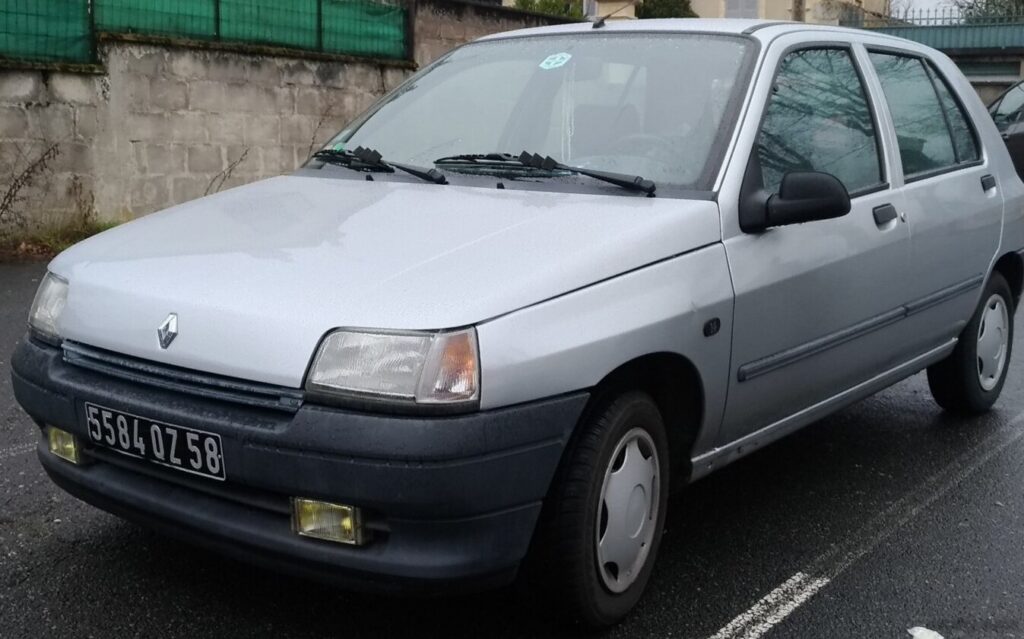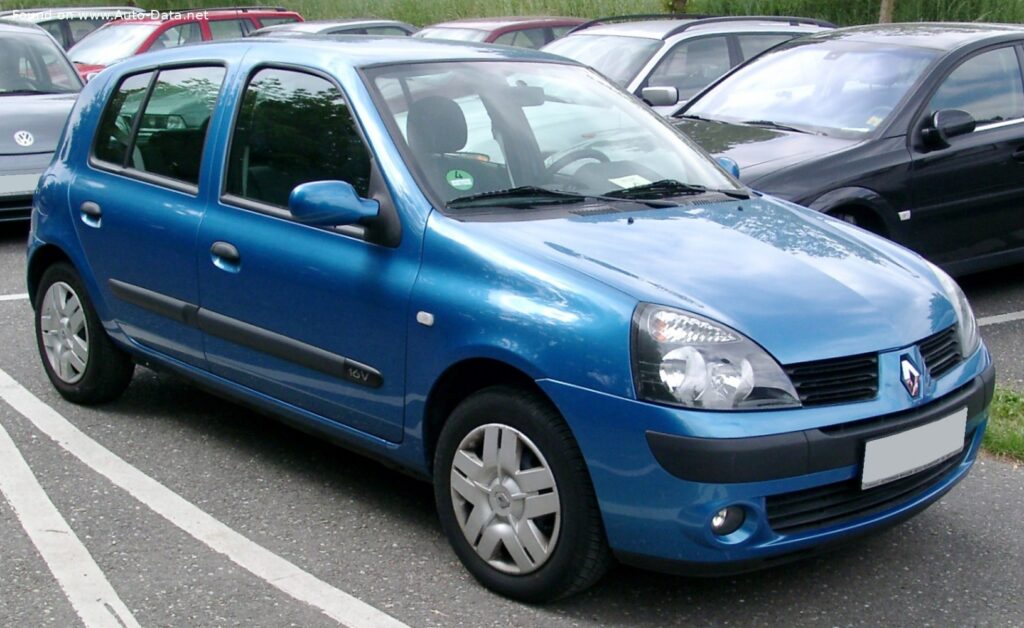
The Renault Clio II Phase III (2003-2006) 5-door 1.2 16V 75 hp variant, often equipped with the “Quickshift” automated manual transmission, represented an entry-level offering within the broader Clio II range. Introduced as part of the Phase III refresh, this model aimed to provide affordable and economical transportation for budget-conscious buyers. It occupied the lower end of the Clio II spectrum, positioned below the more powerful 1.4 16V and 1.6 16V gasoline engines, as well as the diesel options like the 1.5 dCi. The Clio II itself was built upon the 1HX0/A3 platform, shared with other Renault and Nissan models, and proved to be a popular supermini throughout Europe.
The 1.2 16V Quickshift Powertrain
The heart of this Clio variant is the D4F 750 engine, a 1.2-liter (1149 cc) inline-four cylinder gasoline engine. This engine utilizes a multi-point fuel injection system and a double overhead camshaft (DOHC) valvetrain with four valves per cylinder, contributing to its relatively efficient operation. The engine produces 75 horsepower (hp) at 5500 rpm and 105 Newton-meters (77.44 lb-ft) of torque at 3500 rpm. The compression ratio is 9.8:1. Engine oil capacity is 4 liters (4.23 US quarts), and coolant capacity is 5 liters (5.28 US quarts).
The “Quickshift” transmission, a key feature of this variant, is a 5-speed automated manual transmission. Unlike a traditional automatic transmission with a torque converter, Quickshift uses electronic controls to operate a conventional manual gearbox. This allows for quicker gear changes and improved fuel efficiency compared to older automatic designs, but it can sometimes exhibit less smoothness than a conventional automatic. The transmission operates in both fully automatic and semi-automatic modes, allowing the driver some control over gear selection. It’s important to note that this isn’t a dual-clutch transmission; it’s a single-clutch automated manual, and as such, gear changes can be noticeable.
Engine Code and Variations
The D4F engine code is common across several Renault models. While the basic engine architecture remained consistent, minor variations existed depending on the specific market and year of production. These variations primarily concerned emissions control equipment to meet differing European regulations. The D4F engine is known for its relative simplicity and robustness, though it is not without its potential issues, which will be discussed later.
Driving Characteristics
The 1.2 16V 75 hp engine, coupled with the Quickshift transmission, delivers modest performance. Acceleration from 0 to 100 km/h (0-62 mph) takes approximately 14.6 seconds, and the top speed is around 170 km/h (105.63 mph). In real-world driving, the engine feels adequate for urban and suburban commutes, but struggles when fully loaded or attempting quick overtaking maneuvers. The Quickshift transmission, while offering efficiency benefits, can sometimes feel jerky, particularly at lower speeds. Compared to the 1.4 or 1.6 liter versions, this variant feels noticeably slower and less refined. The manual transmission versions of the 1.2 16V offered slightly improved acceleration and driver engagement, but the Quickshift was marketed towards those prioritizing ease of use.
The gear ratios in the Quickshift transmission are geared towards fuel economy rather than outright performance. First gear is relatively short for quick acceleration from a standstill, but higher gears are spaced to maximize efficiency at cruising speeds. The transmission programming prioritizes smooth upshifts and downshifts, but can sometimes be hesitant to kick down when more power is needed.
Equipment & Trim Levels
The 1.2 16V Quickshift typically came with a fairly basic level of equipment, reflecting its position as an entry-level model. Standard features generally included power steering, central locking, front airbags, and an adjustable steering column. Interior upholstery was typically cloth, and the dashboard featured a simple, functional design. Air conditioning was often an optional extra, as were features like electric windows and alloy wheels. Trim levels varied slightly depending on the market, but generally followed a progressive structure, with higher trims adding more comfort and convenience features.
Optional extras commonly included metallic paint, upgraded audio systems, and a sunroof. Safety features beyond the standard airbags were also often available as options, such as ABS (Anti-lock Braking System). The interior plastics were durable but not particularly luxurious, reflecting the car’s price point.
Chassis & Braking
The Clio II’s chassis features an independent McPherson strut suspension at the front and a semi-independent beam axle with a stabilizer bar at the rear. This suspension setup provides a reasonable balance between ride comfort and handling. The 1.2 16V variant, being lighter than its higher-powered siblings, generally offered a slightly more comfortable ride. Front brakes are ventilated discs, while rear brakes are drums. ABS was often an optional extra, and its presence significantly improved braking performance. The steering is a hydraulic power steering system, providing a light and easy driving experience.
The weight distribution is fairly balanced, contributing to predictable handling characteristics. However, the relatively narrow tires (typically 175/65 R14 or 185/55 R15) limit grip in cornering situations.
Market Reception & Comparison
The Renault Clio II 1.2 16V Quickshift was generally well-received as an affordable and economical city car. Critics praised its fuel efficiency and ease of driving, but noted its lack of performance and the sometimes-jerky operation of the Quickshift transmission. Compared to the 1.4 and 1.6 liter versions, it was seen as a compromise, offering lower running costs at the expense of driving enjoyment. Fuel economy figures are around 5.8 l/100 km (40.6 US mpg) combined, and CO2 emissions are 137 g/km (Euro 3 D4 standard). The diesel variants offered even better fuel economy, but at a higher initial cost.
Reliability was generally good, although the Quickshift transmission could be prone to occasional issues, such as sensor failures or actuator problems. The D4F engine itself is relatively robust, but regular maintenance is essential to prevent problems.
Technical Specifications
| Engine Type | Inline-4, 1.2L (1149 cc) |
| Engine Code | D4F 750 |
| Power | 75 hp @ 5500 rpm |
| Torque | 105 Nm (77.44 lb-ft) @ 3500 rpm |
| Fuel Injection | Multi-point |
| Valvetrain | DOHC, 4 valves per cylinder |
| Transmission | 5-speed Automated Manual (“Quickshift”) |
| Drive Wheels | Front |
| Acceleration 0-100 km/h | 14.6 seconds |
| Top Speed | 170 km/h (105.63 mph) |
| Fuel Consumption (Combined) | 5.8 l/100 km (40.6 US mpg) |
| CO2 Emissions | 137 g/km |
| Kerb Weight | 970 kg (2138.48 lbs) |
| Fuel Tank Capacity | 50 liters (13.21 US gallons) |
| Length | 3811 mm (150.04 in) |
| Width | 1639 mm (64.53 in) |
| Height | 1417 mm (55.79 in) |
Legacy
The Renault Clio II 1.2 16V Quickshift remains a relatively common sight on European roads today, particularly as an affordable used car. The D4F engine is known for its longevity, and with regular maintenance, it can provide many years of reliable service. However, potential buyers should be aware of the potential issues with the Quickshift transmission, and it’s advisable to have the transmission thoroughly inspected before purchase. Parts availability is generally good, and the car’s simple design makes it relatively easy to repair. While not a performance car, the 1.2 16V Quickshift offers a practical and economical solution for urban transportation, and its affordability continues to make it a popular choice for first-time car buyers and those on a tight budget.