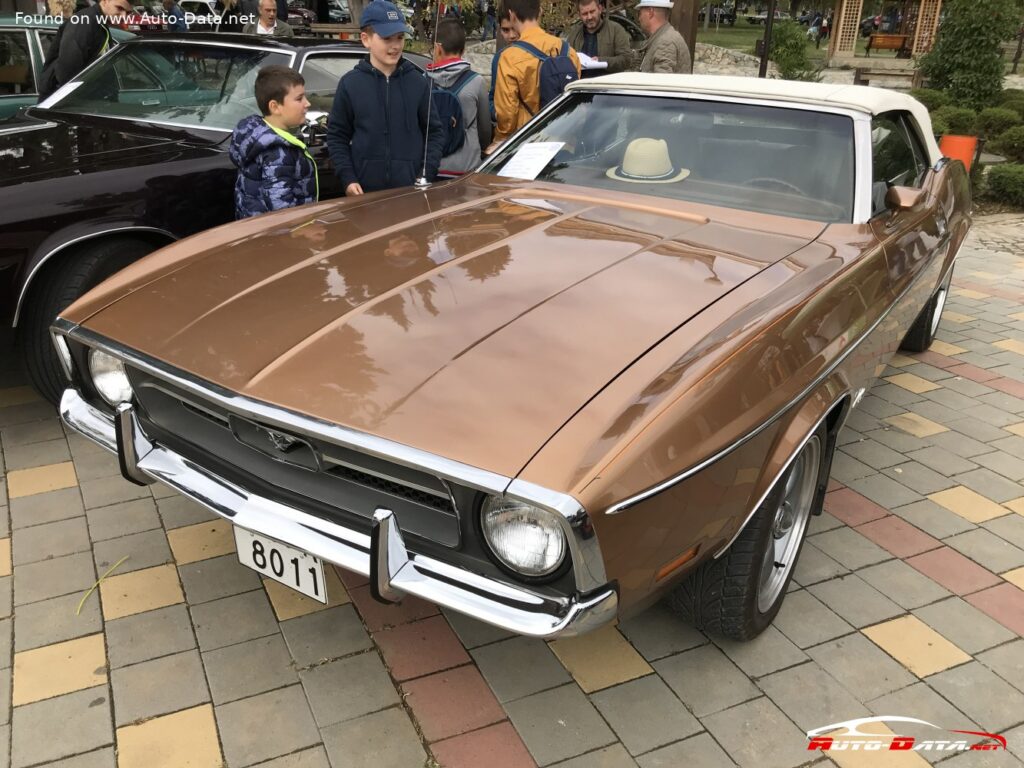
The 1970-1971 Ford Mustang Convertible, specifically equipped with the 7.0-liter Super Cobra Jet V8 engine producing 375 horsepower, represents a high-performance iteration of the first-generation Mustang. Introduced during a significant facelift of the original Mustang design, this variant aimed to deliver exhilarating performance in an open-air package. It occupied the premium performance segment of the Mustang lineup, positioned above the standard inline-six and smaller V8 options, but below any potential future high-performance specials. The 1970 model year saw substantial changes to the Mustang’s styling and dimensions, making it larger and heavier than its predecessors, and the Super Cobra Jet was intended to compensate for this increased weight.
Powertrain & Engine Architecture
The heart of this Mustang variant is the 7.0-liter (429 cubic inch) Ford FE engine, designated the Super Cobra Jet. This engine, internally coded as the 429 CJ, was a modified version of the 429 Police Interceptor engine, but with specific enhancements for performance. It featured a four-bolt main bearing block for increased rigidity, cast iron cylinder heads with larger intake and exhaust ports, and a high-rise intake manifold. The engine utilized a single Holley four-barrel carburetor, delivering fuel to the cylinders. The valvetrain employed overhead valves (OHV) with hydraulic lifters, ensuring reliable operation. Compression ratio was a robust 11.3:1, contributing to the engine’s high output.
While the engine itself is the star, the drivetrain plays a crucial role. The 1970-1971 Super Cobra Jet Mustangs were primarily equipped with a four-speed manual transmission, though a three-speed automatic transmission was also available, albeit less common. The rear wheels were driven via a standard Ford 9-inch rear axle, often equipped with a limited-slip differential to maximize traction. The engine’s longitudinal front-engine layout provided a classic muscle car weight distribution.
Engine Specifications
The 429 Super Cobra Jet engine was designed for high-RPM power delivery. Its 375 horsepower peak was achieved at 5200 rpm, while its substantial 610 Nm (449.91 lb-ft) of torque was available at 3400 rpm. This torque curve provided strong acceleration across a broad range of engine speeds. The engine’s 4.36-inch bore and 3.59-inch stroke contributed to its large displacement and impressive output.
Driving Characteristics
The 1970-1971 Mustang Convertible with the Super Cobra Jet engine offered a thrilling driving experience. The combination of a powerful V8 and a relatively lightweight convertible body resulted in brisk acceleration. While precise 0-60 mph times varied depending on testing conditions and transmission choice, contemporary road tests indicated times in the low 6-second range with the manual transmission. The four-speed manual transmission allowed drivers to fully exploit the engine’s powerband, while the optional automatic provided a more relaxed driving experience, though at the expense of some performance. The larger size of the 1970 Mustang, compared to earlier models, did result in slightly less nimble handling, but the performance more than compensated for this.
Equipment & Trim Levels
The Super Cobra Jet Mustang Convertible was generally well-equipped, though options allowed for significant customization. Standard features typically included a fully carpeted interior, color-keyed vinyl upholstery, and a woodgrain-accented dashboard. Power steering and power disc brakes were often included, enhancing the driving experience. The convertible top was manually operated, though power top options were available. Interior trim options included a variety of colors and patterns. Popular options included air conditioning, a stereo system, and upgraded interior trim packages.
Chassis & Braking
The 1970 Mustang Convertible utilized a unibody construction. The front suspension consisted of independent wishbones with a transverse stabilizer bar, providing reasonable handling characteristics. The rear suspension employed a traditional leaf spring setup with a solid axle. This configuration was cost-effective and durable, but less sophisticated than independent rear suspension systems. Braking duties were handled by power-assisted disc brakes at the front and drum brakes at the rear. While adequate for the time, the drum brakes at the rear were a limiting factor in overall braking performance.
Market Reception & Comparison
The 1970-1971 Mustang Super Cobra Jet Convertible was generally well-received by automotive enthusiasts and critics. It was praised for its powerful engine, attractive styling, and open-air driving experience. However, some critics noted the car’s increased size and weight compared to earlier Mustangs. Compared to other Mustang variants, the Super Cobra Jet offered a significant performance advantage over the inline-six and smaller V8 models. It competed with other high-performance convertibles of the era, such as the Chevrolet Camaro and Pontiac Firebird, offering a similar blend of power and style. Fuel economy was relatively poor, typical for a large-displacement V8 engine of the time, averaging around 13-15 mpg.
Technical Specifications
| Body Type | Cabriolet, 2 Doors, 4 Seats |
| Engine Type | 7.0 L V8 (429 cu in) |
| Engine Displacement | 7030 cm3 |
| Power | 375 Hp @ 5200 rpm |
| Torque | 610 Nm @ 3400 rpm (449.91 lb-ft @ 3400 rpm) |
| Compression Ratio | 11.3:1 |
| Fuel System | Carburetor |
| Transmission | 4-speed Manual (primarily), 3-speed Automatic (optional) |
| Drivetrain | Rear Wheel Drive |
| Front Suspension | Wishbone, Transverse Stabilizer |
| Rear Suspension | Rigid Axle, Leaf Spring |
| Front Brakes | Disc |
| Rear Brakes | Drum |
| Length | 4813 mm (189.49 in) |
| Width | 1882 mm (74.09 in) |
| Height | 1290 mm (50.79 in) |
| Wheelbase | 2769 mm (109.02 in) |
| Fuel Tank Capacity | 76 l (20.08 US gal, 16.72 UK gal) |
| Trunk Space | 229 l (8.09 cu ft) |
Legacy
The 1970-1971 Ford Mustang Super Cobra Jet Convertible remains a highly sought-after classic muscle car. Its combination of powerful engine, open-air driving experience, and iconic styling has ensured its enduring appeal. While the 429 CJ engine is known for its reliability when properly maintained, age and potential neglect can lead to issues such as carburetor problems, oil leaks, and cooling system failures. Original, well-preserved examples command high prices in the collector car market. The Super Cobra Jet engine is considered a landmark achievement in American V8 engine design, and the 1970-1971 Mustang Convertible represents a pinnacle of first-generation Mustang performance.
Today, these Mustangs are frequently restored and enjoyed by enthusiasts, participating in car shows and vintage racing events. The availability of reproduction parts has made restoration projects more feasible, ensuring that these iconic vehicles will continue to be appreciated for generations to come.