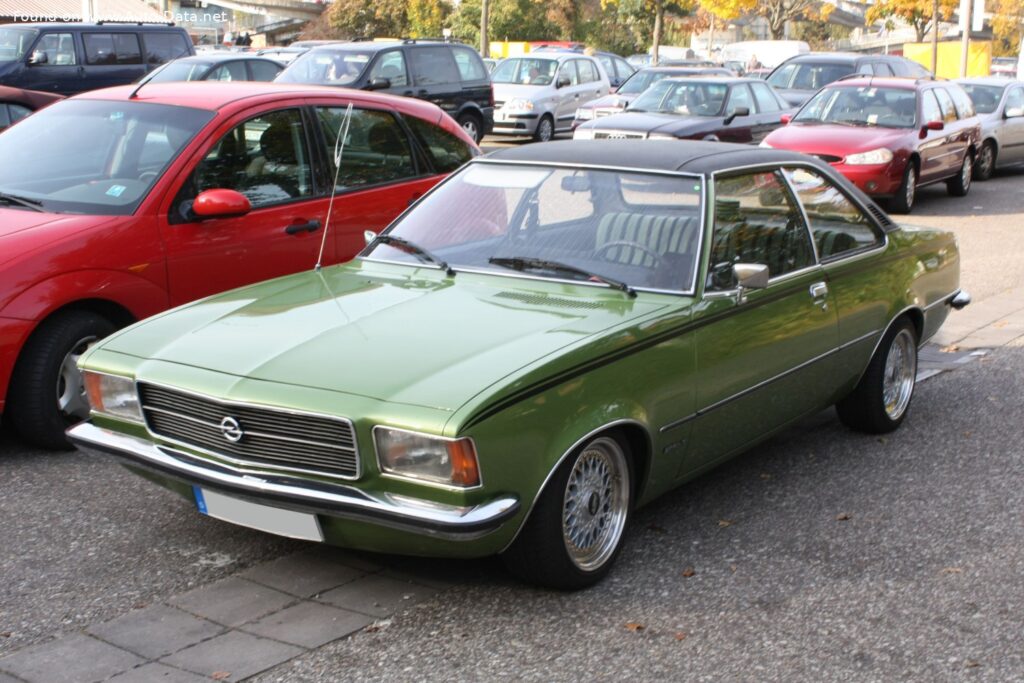
The Opel Rekord D Coupe 2.0, producing 101 horsepower, was a stylish and relatively affordable grand tourer offered between 1975 and 1977. Positioned as a more sporting alternative to the Rekord sedan, the Coupe appealed to buyers seeking a blend of practicality and aesthetic appeal. It represented a key part of Opel’s lineup during a period of significant development for the company, building upon the success of the earlier Rekord C and paving the way for the subsequent Rekord E. The D series, internally designated as the 1HX0, was a popular choice in Europe, offering a comfortable ride and a reasonably powerful engine for its time.
Opel Rekord D Coupe 2.0: Powertrain & Engine Architecture
The heart of the Rekord D Coupe 2.0 was the Opel 20N engine, a 1,979 cc (120.77 cubic inches) inline-four cylinder gasoline engine. This engine featured a cast iron block and an aluminum cylinder head, a common configuration for the era. It utilized a single overhead camshaft (SOHC) valvetrain with two valves per cylinder. Fuel delivery was managed by a Solex carburetor, a typical setup for European cars of the mid-1970s. The 20N engine produced 101 hp (75 kW) at 4,900 rpm and 180 Nm (132.76 lb-ft) of torque at 3,200 rpm. The compression ratio was 10.2:1. While not a high-revving engine, it provided adequate power for comfortable cruising and overtaking. The engine was mounted longitudinally in the front of the vehicle, driving the rear wheels.
The Rekord D Coupe 2.0 was exclusively offered with a four-speed manual transmission. This transmission was chosen to complement the engine’s torque characteristics and provide a more engaging driving experience than an automatic option, which was not available for this specific configuration. The gear ratios were tailored for a balance between acceleration and fuel economy, with a relatively tall final drive ratio to aid in highway cruising.
Engine Code and Variations
The 20N engine code specifically identifies this 2.0-liter variant. Opel offered other engine options within the Rekord D range, including smaller displacement engines with lower horsepower outputs. These included 1.6 and 1.7 liter versions. The 2.0-liter engine was considered the premium offering within the Rekord D lineup, providing a noticeable performance advantage over the smaller engines.
Driving Characteristics
The Rekord D Coupe 2.0 offered a comfortable and predictable driving experience. Acceleration from 0 to 100 km/h (0 to 62 mph) took approximately 10.7 seconds, and 0 to 60 mph was achieved in around 10.2 seconds. While these figures aren’t particularly impressive by modern standards, they were competitive for a coupe of its size and price point in the 1970s. The engine delivered its peak torque at a relatively low 3,200 rpm, providing good responsiveness in everyday driving situations. The four-speed manual transmission allowed drivers to effectively utilize the engine’s power band. The car’s relatively long wheelbase and well-tuned suspension contributed to a stable and comfortable ride, even on less-than-perfect road surfaces.
Compared to the smaller-engined Rekord models, the 2.0-liter Coupe offered a significant improvement in performance, particularly when carrying passengers or luggage. It was also more capable of maintaining higher speeds on the Autobahn or during long highway journeys. However, it didn’t possess the outright performance of more specialized sports coupes of the era.
Equipment & Trim Levels
The Rekord D Coupe 2.0 was generally well-equipped for its time, although the level of standard equipment varied depending on the market. Standard features typically included cloth upholstery, a basic instrument panel with speedometer, fuel gauge, and temperature gauge, and front and rear ashtrays. The interior design was functional and relatively uncluttered, with a focus on practicality. The Coupe’s interior space was adequate for four adults, although rear seat legroom was somewhat limited.
Optional extras included a vinyl roof, upgraded audio systems, and power-assisted steering. Higher trim levels offered more luxurious upholstery options and additional chrome trim. The dashboard configuration was relatively simple, with a focus on providing essential information to the driver. The steering wheel was typically a two-spoke design, and the seats were manually adjustable.
Chassis & Braking
The Rekord D Coupe 2.0 utilized a robust chassis with independent front suspension employing a double wishbone setup. The rear suspension was a dependent spring suspension with a transverse stabilizer, designed to provide a comfortable ride and stable handling. The front brakes were disc brakes, providing good stopping power, while the rear brakes were drum brakes. The steering system was a worm-reduction unit, which provided a relatively heavy but precise steering feel. The car rode on 185/65 R14 tires mounted on 6J x 14 inch steel wheels. The curb weight of the vehicle was 1,195 kg (2,634.52 lbs).
Market Reception & Comparison
The Opel Rekord D Coupe 2.0 was generally well-received by automotive critics. It was praised for its stylish design, comfortable ride, and relatively affordable price. However, some critics noted that the engine lacked the refinement and performance of some of its competitors. Fuel economy was reasonable for the time, with combined fuel consumption of around 8.6 l/100 km (27.4 US mpg). Reliability was generally good, although the carburetor required periodic maintenance. Compared to other coupes in its class, such as the Ford Capri, the Rekord D Coupe offered a more practical and comfortable driving experience, but lacked the same level of sporting flair.
Technical Specifications
| Brand | Opel |
| Model | Rekord |
| Generation | Rekord D Coupe |
| Type (Engine) | 2.0 (101 Hp) |
| Start of production | 1975 |
| End of production | 1977 |
| Fuel consumption (urban) | 10 l/100 km (23.5 US mpg) |
| Fuel consumption (extra urban) | 7.2 l/100 km (32.7 US mpg) |
| Fuel consumption (combined) | 8.6 l/100 km (27.4 US mpg) |
| Fuel Type | Petrol (Gasoline) |
| Acceleration 0 – 100 km/h | 10.7 sec |
| Acceleration 0 – 62 mph | 10.7 sec |
| Acceleration 0 – 60 mph | 10.2 sec |
| Maximum speed | 186 km/h (115.58 mph) |
| Power | 101 Hp @ 4900 rpm |
| Torque | 180 Nm @ 3200 rpm (132.76 lb.-ft. @ 3200 rpm) |
| Engine layout | Front, Longitudinal |
| Engine Model/Code | 20N |
| Engine displacement | 1979 cm3 (120.77 cu. in.) |
| Number of cylinders | 4 |
| Cylinder Bore | 95 mm (3.74 in.) |
| Piston Stroke | 69.8 mm (2.75 in.) |
| Compression ratio | 10.2:1 |
| Kerb Weight | 1195 kg (2634.52 lbs.) |
| Max. weight | 1845 kg (4067.53 lbs.) |
| Trunk (boot) space | 420 l (14.83 cu. ft.) |
| Length | 4420 mm (174.02 in.) |
| Width | 1680 mm (66.14 in.) |
| Height | 1680 mm (66.14 in.) |
| Wheelbase | 2670 mm (105.12 in.) |
| Number of gears | 4 |
| Gearbox type | Manual transmission |
Legacy
The Opel Rekord D Coupe 2.0 remains a popular classic car among enthusiasts. The 20N engine is known for its durability and relative simplicity, making it relatively easy to maintain. However, finding original parts can be challenging. The car’s stylish design and comfortable ride continue to appeal to collectors and drivers alike. In the used car market, well-maintained examples of the Rekord D Coupe 2.0 command a reasonable price, reflecting its status as a desirable classic. The Rekord D Coupe, particularly the 2.0-liter variant, represents a significant chapter in Opel’s history, showcasing the company’s ability to produce attractive and well-engineered vehicles that appealed to a broad range of buyers.