
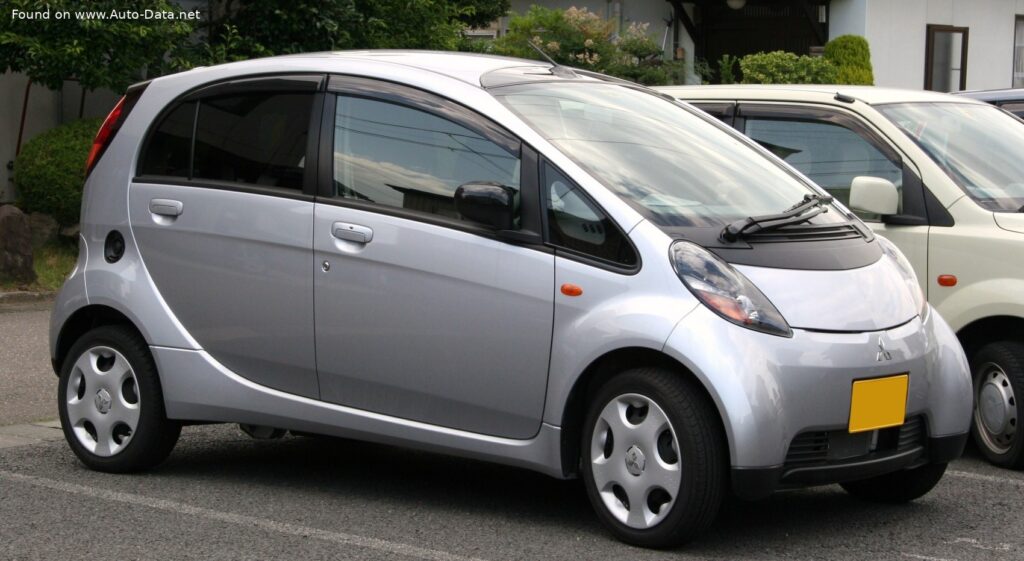
The Mitsubishi i (HA1W) was a city car produced by Mitsubishi Motors between 2005 and 2013. This generation, designated HA1W, represented a significant departure for Mitsubishi, offering a uniquely styled and compact vehicle aimed at urban environments. Among the various configurations available, the 0.7 12V (64 hp) variant with a four-speed automatic transmission occupied the entry-level position in the i lineup. It was designed to provide affordable and efficient transportation, prioritizing fuel economy and ease of use over outright performance.
The 0.7L 12V (64 hp) i: Entry Point to Mitsubishi’s City Car
The 0.7-liter engine and automatic transmission combination was the base offering for the Mitsubishi i. It was specifically targeted at buyers seeking a no-frills, economical vehicle for navigating congested city streets. This trim level served as the gateway to the i model range, offering a more accessible price point compared to higher-spec versions with larger engines or manual transmissions. While not offering the brisk acceleration of its more powerful siblings, the 0.7L automatic i provided a comfortable and convenient driving experience for its intended purpose.
Powertrain & Engine Architecture
The heart of the 0.7L i is a 659 cc (40.21 cu. in.) inline-three cylinder petrol engine, designated as a 12-valve configuration. This engine, while small in displacement, was designed for efficiency and reliability. It featured multi-port fuel injection, delivering fuel directly into the intake ports. The engine’s bore and stroke measured 65.4 mm (2.57 in) each, resulting in a compression ratio of 8.8:1. The engine produced a maximum power output of 64 hp (47.7 kW) at 6000 rpm and 94 Nm (69.33 lb-ft) of torque. The engine was transversely mounted at the rear of the vehicle, a relatively uncommon configuration for modern cars, contributing to its unique handling characteristics.
The engine was paired with a four-speed automatic transmission. This transmission was chosen for its simplicity and ease of use, catering to the target audience who prioritized convenience over sporty driving dynamics. The automatic transmission featured standard torque converter technology and was designed to provide smooth gear changes, particularly in stop-and-go city traffic. While not offering the efficiency of a continuously variable transmission (CVT), the four-speed automatic was a cost-effective and reliable solution for the base-model i.
Driving Characteristics
The 0.7L automatic i offered modest performance, reflecting its small engine displacement and focus on fuel economy. Acceleration was adequate for city driving, but merging onto highways or overtaking at higher speeds required careful planning. The four-speed automatic transmission, while smooth, lacked the responsiveness of a manual gearbox or a more modern automatic with additional gears. The rear-wheel-drive layout, combined with the lightweight chassis, provided a surprisingly nimble feel in tight corners, although the suspension setup prioritized comfort over sporty handling. The gear ratios were optimized for low-speed drivability and fuel efficiency, rather than maximizing acceleration. The engine delivered its peak torque at relatively low engine speeds, providing sufficient power for everyday driving situations.
Equipment & Trim Levels
The base-model 0.7L i typically came equipped with a relatively basic set of features. Standard equipment generally included air conditioning, power steering, central locking, and electric front windows. Interior upholstery was typically cloth, and the dashboard featured a simple, functional design. Optional extras available for this trim level included alloy wheels, a CD player, and upgraded interior trim. Safety features typically included ABS (Anti-lock Braking System) and driver and passenger airbags. The overall interior design prioritized practicality and space efficiency, maximizing the use of the limited cabin dimensions.
Chassis & Braking
The Mitsubishi i HA1W featured a lightweight chassis, contributing to its fuel efficiency and nimble handling. The front suspension utilized an independent coil spring setup, providing a comfortable ride over uneven surfaces. The rear suspension employed a dependent spring suspension with a transverse stabilizer, which helped to reduce body roll during cornering. The braking system consisted of disc brakes on the front wheels and drum brakes on the rear wheels. The ABS system helped to prevent wheel lockup during emergency braking, enhancing safety. The tires were typically sized 145/65 R15, chosen for their balance of fuel efficiency and grip.
Market Reception & Comparison
The Mitsubishi i, particularly the 0.7L automatic variant, received mixed reviews from automotive critics. While praised for its compact size, fuel efficiency, and affordability, it was often criticized for its limited performance and basic interior. Compared to other city cars on the market, the i offered a unique combination of rear-wheel drive and a small-displacement engine. Its fuel economy was competitive with other vehicles in its class, but its performance lagged behind those with larger engines. Reliability was generally considered good, with the 0.7L engine proving to be durable and relatively maintenance-free. The i’s unconventional styling also proved to be polarizing, with some appreciating its distinctive design and others finding it unattractive.
Technical Specifications
| Engine Type | Inline-3, 12-valve |
| Engine Displacement | 659 cm3 (40.21 cu. in.) |
| Power Output | 64 hp (47.7 kW) @ 6000 rpm |
| Torque Output | 94 Nm (69.33 lb-ft) |
| Fuel Injection | Multi-port |
| Compression Ratio | 8.8:1 |
| Transmission | 4-speed Automatic |
| Drivetrain | Rear-wheel drive |
| Kerb Weight | 900 kg (1984.16 lbs) |
| Fuel Tank Capacity | 35 l (9.25 US gal | 7.7 UK gal) |
| Length | 3395 mm (133.66 in) |
| Width | 1475 mm (58.07 in) |
| Height | 1600 mm (62.99 in) |
| Wheelbase | 2550 mm (100.39 in) |
| Front Track | 1310 mm (51.57 in) |
| Rear Track | 1270 mm (50 in) |
| Front Brakes | Disc |
| Rear Brakes | Drum |
| Tire Size | 145/65 R15 |
Legacy
The Mitsubishi i, while discontinued in 2013, remains a unique and interesting vehicle in the city car segment. The 0.7L automatic variant, as the entry-level model, offered an affordable and efficient transportation solution for urban dwellers. The powertrain, while not particularly powerful, proved to be reliable and relatively inexpensive to maintain. On the used car market, the 0.7L i is typically priced lower than higher-spec versions, making it an attractive option for budget-conscious buyers. Its compact size and rear-wheel-drive layout continue to appeal to those seeking a nimble and distinctive vehicle for navigating crowded city streets. While not a high-performance machine, the 0.7L automatic Mitsubishi i fulfilled its intended purpose as a practical and economical city car.
