
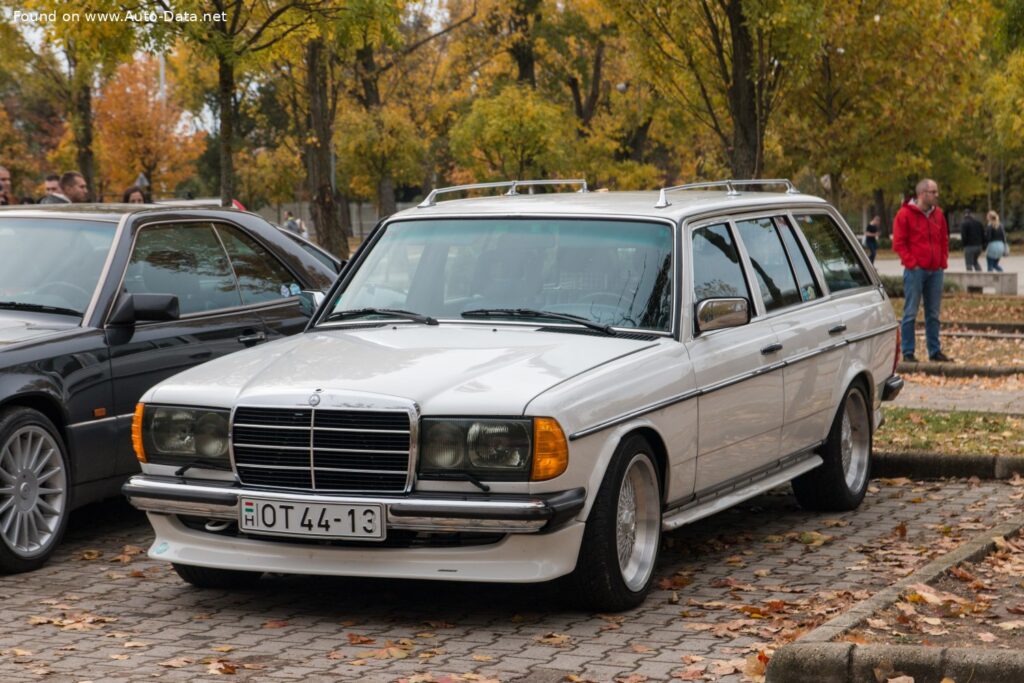
The Mercedes-Benz S123 240 TD, produced from February 1978 to January 1986, was a diesel-powered station wagon (estate) variant of the popular W123 series. Representing a practical and durable option within the W123 lineup, the 240 TD occupied a middle ground, offering a balance between fuel economy, load-carrying capacity, and affordability. It was positioned below the more luxurious gasoline-powered models and above the base-level 200 D, appealing to families and those requiring a robust vehicle for work or leisure. The S123 chassis designation specifically denotes the estate body style, differentiating it from the sedan and coupe versions of the W123.
Powertrain & Engine Architecture
The heart of the S123 240 TD was the OM 616 D 24 engine, a 2.4-liter inline-four cylinder diesel. This engine, identified by the code 616.912, was renowned for its longevity and reliability. It featured a robust cast iron block and head, contributing to its exceptional durability. The OM 616 utilized a multi-port manifold injection system, a relatively advanced fuel delivery method for its time, improving combustion efficiency and reducing emissions compared to earlier indirect injection diesels. The engine employed a single overhead camshaft (SOHC) valvetrain operating two valves per cylinder.
The 240 TD was exclusively paired with a five-speed manual transmission. This gearbox was chosen to optimize the engine’s torque delivery and improve fuel economy. The transmission’s gear ratios were tailored to provide adequate acceleration while maintaining comfortable cruising speeds on the highway. The drivetrain configuration was rear-wheel drive, a standard feature for Mercedes-Benz passenger cars of this era. The engine was mounted longitudinally in the front of the vehicle.
Engine Specifications
The OM 616 D 24 produced 72 horsepower at 4400 rpm and 137 Nm (101.05 lb-ft) of torque at 2400 rpm. While not a performance-oriented engine, its torque output provided sufficient power for hauling loads and navigating varied terrain. The engine’s bore and stroke measured 90.9 mm (3.58 in) and 92.4 mm (3.64 in) respectively, resulting in a displacement of 2399 cm³ (146.4 cu. in). The compression ratio was a high 21.5:1, typical for diesel engines, contributing to their efficiency.
Driving Characteristics
The S123 240 TD offered a driving experience focused on practicality and comfort rather than outright speed. Acceleration was modest, with a 0-100 km/h (0-62 mph) time of approximately 23.2 seconds. However, the engine’s strong low-end torque made it well-suited for everyday driving and towing. The five-speed manual transmission allowed drivers to keep the engine in its optimal power band, maximizing efficiency and responsiveness. Compared to the gasoline-powered W123 models, the 240 TD offered significantly better fuel economy, making it an attractive option for those covering long distances. The manual transmission provided a more engaging driving experience than the optional automatic transmissions available on other W123 variants.
The 240 TD’s handling was predictable and stable, typical of Mercedes-Benz vehicles of the period. The rear-wheel drive configuration provided good traction in most conditions, and the suspension system offered a comfortable ride, even when fully loaded.
Equipment & Trim Levels
The S123 240 TD was generally equipped with a practical, yet functional interior. Standard features included cloth upholstery, a basic instrument cluster, and manually adjustable seats. While not as lavishly appointed as the higher-end W123 models, the 240 TD offered a comfortable and durable cabin. Optional extras included power windows, a sunroof, upgraded audio systems, and leather upholstery. The dashboard layout was typical of the W123 series, featuring a straightforward design with clearly labeled controls. The estate body style provided a generous cargo area, making the 240 TD a versatile vehicle for families and those needing to transport large items.
Chassis & Braking
The S123 240 TD utilized a double wishbone suspension at the front and a trailing arm suspension at the rear. This suspension setup provided a good balance between ride comfort and handling. The braking system consisted of disc brakes on all four wheels, offering adequate stopping power for the vehicle’s weight. The steering system was a cone worm with recirculation balls, providing precise and responsive steering feel. Hydraulic power steering was standard, making maneuvering easier, especially at low speeds. The vehicle was equipped with 195/70 R14 tires on 6J x 14 inch steel wheels.
Market Reception & Comparison
The S123 240 TD was well-received by critics and buyers alike. It was praised for its fuel efficiency, reliability, and practicality. Compared to the gasoline-powered W123 models, the 240 TD offered significantly lower running costs, making it an attractive option for budget-conscious buyers. However, its performance was noticeably slower, and its diesel engine was louder and less refined than its gasoline counterparts. Compared to the 200 D, the 240 TD offered a noticeable power increase, making it a more capable vehicle for highway driving and hauling loads. The 240 TD’s manual transmission was favored by enthusiasts who preferred a more engaging driving experience.
Fuel consumption figures were impressive for the time, achieving approximately 9.5 l/100 km (24.8 US mpg) in urban driving and 6.3 l/100 km (37.3 US mpg) on the open road.
Technical Specifications
| Brand | Mercedes-Benz |
| Model | W123 |
| Generation | S123 |
| Type (Engine) | 240 TD (72 Hp) Manual 5-speed |
| Start of production | February, 1978 |
| End of production | January, 1986 |
| Powertrain Architecture | Internal Combustion engine |
| Body type | Station wagon (estate) |
| Seats | 5 |
| Doors | 5 |
| Fuel consumption (urban) | 9.5 l/100 km (24.8 US mpg) |
| Fuel consumption (extra urban) | 6.3 l/100 km (37.3 US mpg) |
| Fuel Type | Diesel |
| Acceleration 0 – 100 km/h | 23.2 sec |
| Acceleration 0 – 62 mph | 23.2 sec |
| Acceleration 0 – 60 mph | 22 sec |
| Maximum speed | 143 km/h (88.86 mph) |
| Weight-to-power ratio | 21 kg/Hp |
| Weight-to-torque ratio | 11.1 kg/Nm |
| Power | 72 Hp @ 4400 rpm |
| Torque | 137 Nm @ 2400 rpm (101.05 lb.-ft. @ 2400 rpm) |
| Engine layout | Front, Longitudinal |
| Engine Model/Code | OM 616 D 24 / 616.912 |
| Engine displacement | 2399 cm3 (146.4 cu. in.) |
| Number of cylinders | 4 |
| Engine configuration | Inline |
| Cylinder Bore | 90.9 mm (3.58 in.) |
| Piston Stroke | 92.4 mm (3.64 in.) |
| Compression ratio | 21.5:1 |
| Number of valves per cylinder | 2 |
| Fuel injection system | Multi-port manifold injection |
| Engine aspiration | Naturally aspirated |
| Valvetrain | SOHC |
| Engine oil capacity | 8 l (8.45 US qt | 7.04 UK qt) |
| Coolant capacity | 10 l (10.57 US qt | 8.8 UK qt) |
| Kerb Weight | 1515 kg (3340 lbs.) |
| Max. weight | 2135 kg (4706.87 lbs.) |
| Max load | 620 kg (1366.87 lbs.) |
| Fuel tank capacity | 70 l (18.49 US gal | 15.4 UK gal) |
| Length | 4725 mm (186.02 in.) |
| Width | 1786 mm (70.31 in.) |
| Height | 1470 mm (57.87 in.) |
| Wheelbase | 2795 mm (110.04 in.) |
| Front track | 1488 mm (58.58 in.) |
| Rear track | 1453 mm (57.2 in.) |
| Drivetrain Architecture | Rear wheel drive |
| Number of gears | 5 |
| Gearbox type | Manual transmission |
Legacy
The Mercedes-Benz S123 240 TD, and the OM 616 engine it housed, have earned a reputation for exceptional durability and longevity. Many examples remain on the road today, a testament to their robust construction and reliable engineering. The OM 616 is considered by many to be one of the most reliable diesel engines ever produced. In the used car market, the S123 240 TD is sought after by enthusiasts and those seeking a classic Mercedes-Benz with low running costs. While maintenance can be more involved due to the vehicle’s age, parts availability is generally good, and the engine’s simplicity makes it relatively easy to repair. The S123 240 TD represents a significant chapter in Mercedes-Benz history, embodying the brand’s commitment to quality, durability, and practicality.
