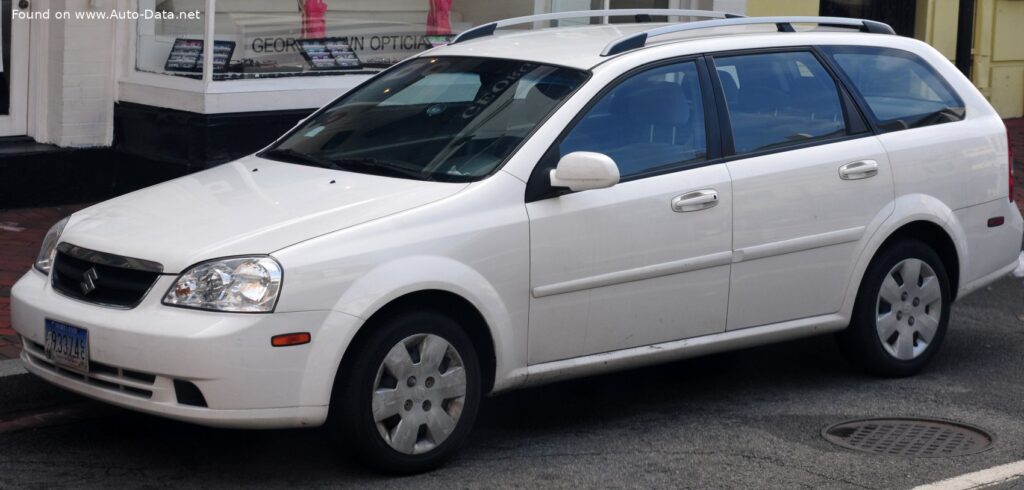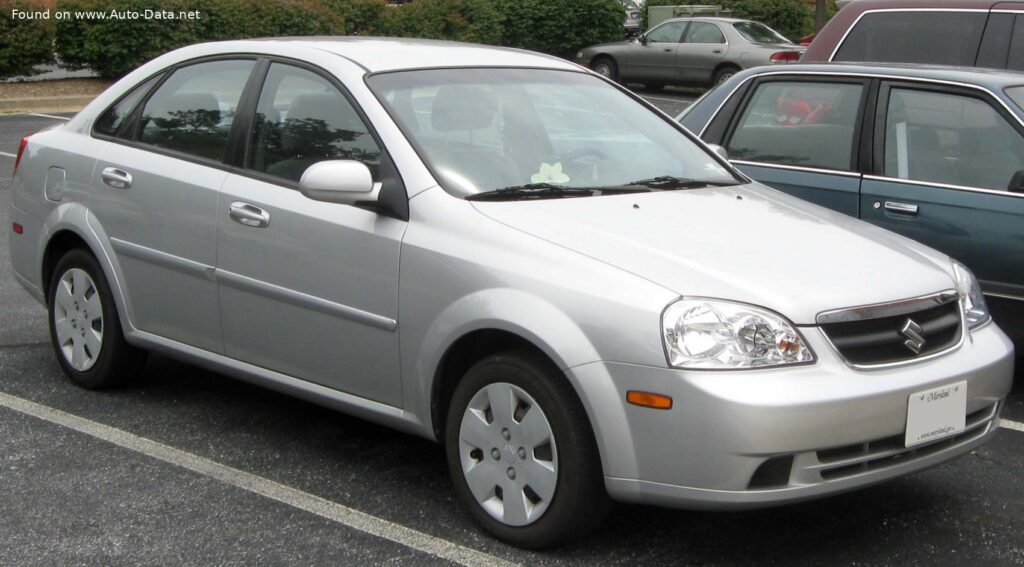
The Suzuki Forenza 2.0, equipped with a 120 horsepower engine and an automatic transmission, was a compact sedan produced by Suzuki from 2003 to 2006. It represented Suzuki’s attempt to gain a foothold in the North American compact car market, leveraging a partnership with Daewoo (later GM Daewoo) who originally designed and manufactured the vehicle. The Forenza was positioned as an affordable and practical option, aiming to compete with established players like the Honda Civic, Toyota Corolla, and Mazda3. The 2.0-liter automatic variant occupied the upper end of the Forenza lineup, offering more power than the base 1.8-liter engine, but at a slightly higher price point.
Suzuki Forenza 2.0 Automatic: Overview and Positioning
The Forenza was part of a broader effort by Suzuki to expand its presence in the United States. The vehicle was based on the GM Daewoo Nubira platform (J200), and shared many components with that model. The 2.0-liter engine and automatic transmission combination was intended to appeal to buyers who desired a bit more performance and convenience than the base model offered, without the added cost of a larger or more complex vehicle. It was marketed towards families and commuters seeking a reliable and economical sedan.
Powertrain & Engine Architecture
The heart of the Forenza 2.0 was the J20A inline-four cylinder engine, a 1998cc (2.0-liter) naturally aspirated gasoline engine. This engine produced 120 horsepower at 5600 rpm and 130 lb-ft of torque at 3600 rpm. The engine utilized a multi-point fuel injection system and a single overhead camshaft (SOHC) valvetrain with two valves per cylinder. While not a particularly advanced engine design, it was known for its relative simplicity and durability. The engine block was constructed from cast iron, contributing to its robustness.
The engine was paired with a four-speed automatic transmission. This transmission, while providing ease of use, was a point of criticism for some reviewers, who found it to be somewhat dated and lacking the smoothness of more modern automatic gearboxes. The transmission was electronically controlled, offering adaptive shifting based on driving conditions. The gear ratios were tuned for fuel efficiency and comfortable cruising, rather than outright performance. First gear was relatively short for quick acceleration from a standstill, while higher gears were spaced to reduce engine speed at highway speeds.
Driving Characteristics
The driving experience in the Forenza 2.0 Automatic was generally considered adequate, but not particularly exciting. The 120 horsepower engine provided sufficient power for everyday driving, including merging onto highways and passing slower vehicles. However, acceleration was not brisk, and the engine could feel strained when climbing hills or carrying a full load of passengers. The four-speed automatic transmission contributed to this feeling, as it lacked the close gear ratios of more modern transmissions.
Compared to the 1.8-liter Forenza, the 2.0-liter model offered noticeably improved acceleration and overall responsiveness. The 2.0-liter engine had more torque available at lower engine speeds, making it easier to drive in urban traffic. However, the difference in performance was not dramatic. Compared to competitors like the Honda Civic or Toyota Corolla, the Forenza 2.0 Automatic generally felt less refined and less engaging to drive.
Equipment & Trim Levels
The Forenza 2.0 Automatic was typically offered in a single, well-equipped trim level. Standard features included air conditioning, power windows and locks, a CD player, and an anti-theft system. Higher trim levels, if available, might have added features such as alloy wheels, a sunroof, and upgraded audio systems. Interior upholstery was typically cloth, with a relatively simple and functional design. The dashboard layout was straightforward, with easy-to-read gauges and controls. Optional extras included side airbags and a premium sound system.
Chassis & Braking
The Forenza 2.0 Automatic utilized a front-wheel-drive layout with a MacPherson strut front suspension and a multi-link rear suspension. This suspension setup provided a reasonably comfortable ride, although it was not particularly sporty. The front brakes were disc brakes, while the rear brakes were drum brakes. This configuration was typical for vehicles in this price range at the time. Anti-lock braking system (ABS) was standard, enhancing safety by preventing wheel lockup during hard braking. The steering was hydraulic power steering, providing a light and easy steering feel. Tire size was typically 195/55R15.
Market Reception & Comparison
The Suzuki Forenza 2.0 Automatic received mixed reviews from automotive critics. While praised for its affordability and practicality, it was often criticized for its dated design, lackluster performance, and somewhat unrefined driving experience. Fuel economy was generally considered average for its class, with EPA estimates of around 26 mpg city and 31 mpg highway. Reliability was generally good, although some owners reported minor issues with the automatic transmission.
Compared to other trims in the Forenza lineup, the 2.0-liter automatic offered a noticeable improvement in performance, but at a slightly higher price. The 1.8-liter manual transmission model was more fuel-efficient and offered a more engaging driving experience, but it lacked the convenience of an automatic transmission. Overall, the Forenza 2.0 Automatic was a decent value for buyers seeking an affordable and practical sedan, but it did not stand out in a crowded market.
Technical Specifications
| Body Type | Sedan, 4 Doors, 5 Seats |
| Engine Type | 2.0L Inline-4 Gasoline |
| Horsepower | 120 hp |
| Torque | 130 lb-ft |
| Transmission | 4-Speed Automatic |
| Drivetrain | Front Wheel Drive |
| Fuel Consumption (City) | 9.1 l/100 km (25.8 US mpg) |
| Fuel Consumption (Highway) | 7.6 l/100 km (30.9 US mpg) |
| Maximum Speed | 175 km/h (108.74 mph) |
| Curb Weight | 1250 kg (2755.78 lbs) |
| Gross Vehicle Weight | 1695 kg (3736.84 lbs) |
| Trunk Space (Min) | 405 l (14.3 cu ft) |
| Trunk Space (Max) | 454 l (16.03 cu ft) |
| Fuel Tank Capacity | 55 l (14.53 US gal) |
| Length | 4500 mm (177.17 in) |
| Width | 1725 mm (67.91 in) |
| Height | 1445 mm (56.89 in) |
| Wheelbase | 2600 mm (102.36 in) |
| Tire Size | 195/55R15 |
Legacy
The Suzuki Forenza, including the 2.0-liter automatic variant, has largely faded into obscurity. While not known for any major reliability issues, it did not achieve significant popularity or establish a strong following. In the used car market, Forenzas are typically found at very low prices, appealing to budget-conscious buyers. The J20A engine is generally considered durable, but the four-speed automatic transmission can be a potential source of problems as it ages. Parts availability can be limited, as Suzuki discontinued sales in the United States in 2012. Despite its shortcomings, the Forenza 2.0 Automatic remains a functional and affordable transportation option for those seeking a basic, no-frills sedan.