
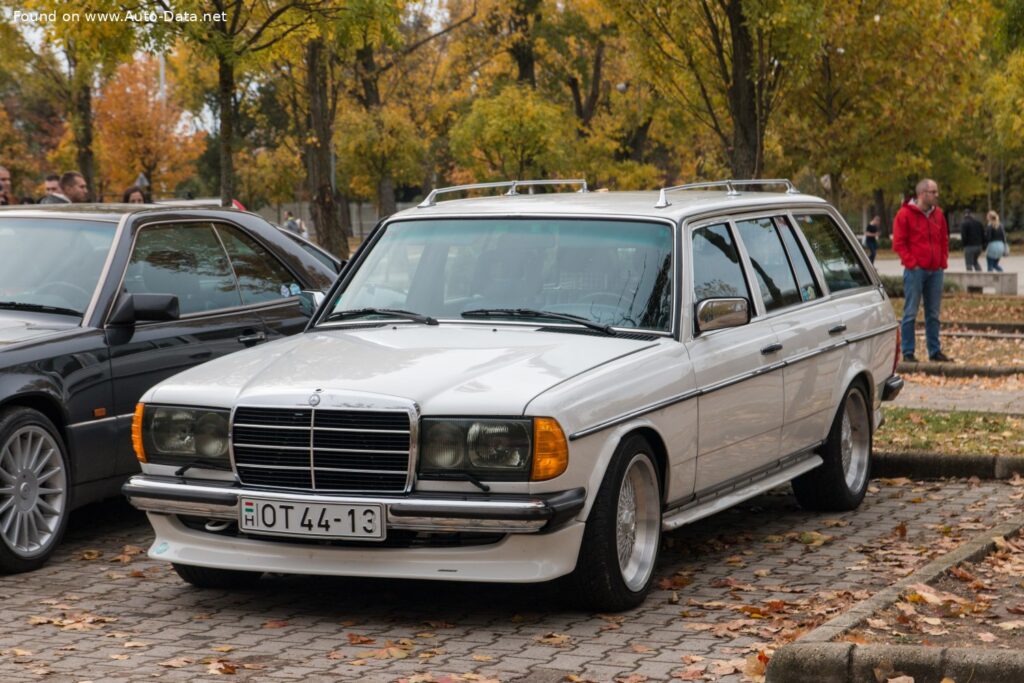
The Mercedes-Benz S123 250 T, produced between September 1977 and September 1979, was a variant of the popular W123 series, specifically the T-Modell (estate or station wagon) body style. Positioned as a mid-range offering within the W123 lineup, the 250 T provided a balance between performance, practicality, and luxury. It occupied a space between the more economical 200 T and the higher-performance 280 TE models. The S123 designation refers to the estate version of the W123, and the “250” indicates the engine displacement. This model was built on the 123 platform, known for its robust engineering and longevity, and represented a significant step forward in estate car design for Mercedes-Benz.
Powertrain & Engine Architecture
The heart of the S123 250 T was the M 123 V 25 engine, a 2.5-liter inline-six cylinder gasoline engine. This engine, identified by the code 123.920, produced 129 horsepower at 5500 rpm and 196 Nm (144.56 lb-ft) of torque at 3500 rpm. The engine featured a single overhead camshaft (SOHC) valvetrain with two valves per cylinder. Unlike later Mercedes-Benz engines, the M123 utilized a carburetor – specifically, a Solex 44 PHH – for fuel delivery, rather than fuel injection. This carburetor system, while reliable, was less efficient and offered less precise fuel control compared to contemporary fuel injection systems. The engine’s bore and stroke measured 86 mm (3.39 in) and 72.45 mm (2.85 in) respectively, resulting in a compression ratio of 8.7:1. The engine required 7.5 liters (7.93 US quarts) of engine oil, specified to Mercedes-Benz standards. The engine was mounted longitudinally in the front of the vehicle.
Transmission
The S123 250 T was primarily equipped with a 4-speed manual transmission. While an automatic transmission was available as an option, the manual was the more common configuration. The manual gearbox provided a direct connection to the engine, enhancing driver control and contributing to slightly improved fuel economy. The automatic transmission, when specified, was a 4-speed unit, offering convenience but at the expense of some performance and efficiency. The gear ratios were tailored to provide a balance between acceleration and cruising ability, though the 250 T was not designed for particularly sporty driving.
Driving Characteristics
The driving experience in the S123 250 T was characterized by smooth, refined operation. The inline-six engine delivered power linearly, providing adequate acceleration for everyday driving. Acceleration from 0 to 100 km/h (0-62 mph) took approximately 11.9 seconds, while 0-60 mph was achieved in around 11.3 seconds. Top speed was rated at 185 km/h (114.95 mph). The manual transmission allowed for precise gear selection, while the optional automatic provided effortless cruising. The car’s weight of 1510 kg (3328.98 lbs) did impact performance, making it feel less nimble than smaller, lighter vehicles. However, the emphasis was on comfort and stability rather than outright speed. The longitudinal engine placement and rear-wheel drive configuration contributed to balanced handling, though understeer was present at the limit.
Equipment & Trim Levels
The S123 250 T came reasonably well-equipped for its time, reflecting Mercedes-Benz’s commitment to quality and comfort. Standard features included comfortable cloth upholstery, a wood-trimmed dashboard, and power-assisted steering. The interior was spacious and practical, with ample room for passengers and cargo. Optional extras included leather upholstery, air conditioning, a sunroof, and upgraded audio systems. The T-Modell’s defining feature was its large cargo area, accessible through a rear tailgate. The rear seats could be folded down to further increase cargo capacity. Trim levels were relatively simple, with most variations stemming from the addition of optional equipment. The overall aesthetic was one of understated elegance, typical of Mercedes-Benz designs of the era.
Chassis & Braking
The S123 250 T utilized a robust chassis designed for comfort and durability. The front suspension employed a double wishbone setup, while the rear suspension featured a trailing arm design. This configuration provided a smooth ride and good handling characteristics. Braking was accomplished via disc brakes on all four wheels, offering reliable stopping power. The steering system was a cone worm with recirculation balls, providing a relatively direct feel. The car rode on 195/70 R14 tires mounted on 6J x 14 inch steel wheels. The curb weight of 1510 kg (3328.98 lbs) and a maximum load capacity of 620 kg (1366.87 lbs) highlighted the vehicle’s practicality and ability to carry substantial loads.
Market Reception & Comparison
The S123 250 T was generally well-received by automotive critics. It was praised for its comfortable ride, spacious interior, and build quality. However, some critics noted that the carburetor-equipped engine was less refined and fuel-efficient than contemporary fuel-injected engines. Compared to the 200 T, the 250 T offered significantly more power and performance. In contrast to the 280 TE, which featured fuel injection and a larger engine, the 250 T was more affordable and offered a better balance between performance and economy. Fuel consumption was rated at 16.4 l/100 km (14.3 US mpg) in urban conditions and 9.8 l/100 km (24 US mpg) on the open road. Reliability was generally good, though carburetor maintenance could be required over time. The 250 T appealed to buyers who needed a practical, comfortable, and reliable estate car with a touch of luxury.
Technical Specifications
| Brand | Mercedes-Benz |
| Model | W123 |
| Generation | S123 |
| Type (Engine) | 250 T (129 Hp) |
| Start of production | September, 1977 |
| End of production | September, 1979 |
| Powertrain Architecture | Internal Combustion engine |
| Body type | Station wagon (estate) |
| Seats | 5 |
| Doors | 5 |
| Fuel consumption (urban) | 16.4 l/100 km (14.3 US mpg) |
| Fuel consumption (extra urban) | 9.8 l/100 km (24 US mpg) |
| Fuel Type | Petrol (Gasoline) |
| Acceleration 0 – 100 km/h | 11.9 sec |
| Acceleration 0 – 62 mph | 11.9 sec |
| Acceleration 0 – 60 mph | 11.3 sec |
| Maximum speed | 185 km/h (114.95 mph) |
| Weight-to-power ratio | 11.7 kg/Hp |
| Power | 129 Hp @ 5500 rpm |
| Torque | 196 Nm @ 3500 rpm (144.56 lb.-ft. @ 3500 rpm) |
| Engine layout | Front, Longitudinal |
| Engine Model/Code | M 123 V 25 / 123.920 |
| Engine displacement | 2525 cm3 (154.08 cu. in.) |
| Number of cylinders | 6 |
| Engine configuration | Inline |
| Cylinder Bore | 86 mm (3.39 in.) |
| Piston Stroke | 72.45 mm (2.85 in.) |
| Compression ratio | 8.7:1 |
| Number of valves per cylinder | 2 |
| Fuel injection system | Carburettor |
| Engine aspiration | Naturally aspirated |
| Engine oil capacity | 7.5 l (7.93 US qt | 6.6 UK qt) |
| Coolant capacity | 10 l (10.57 US qt | 8.8 UK qt) |
| Kerb Weight | 1510 kg (3328.98 lbs.) |
| Max. weight | 2130 kg (4695.85 lbs.) |
| Max load | 620 kg (1366.87 lbs.) |
| Fuel tank capacity | 70 l (18.49 US gal | 15.4 UK gal) |
| Length | 4725 mm (186.02 in.) |
| Width | 1786 mm (70.31 in.) |
| Height | 1470 mm (57.87 in.) |
| Wheelbase | 2795 mm (110.04 in.) |
| Front track | 1488 mm (58.58 in.) |
| Rear track | 1453 mm (57.2 in.) |
| Drivetrain Architecture | Rear wheel drive |
| Number of gears | 4 |
| Gearbox type | Manual |
| Front suspension | Double wishbone |
| Rear suspension | Trailing arm |
| Front brakes | Disc |
| Rear brakes | Disc |
| Steering type | Cone worm with recirculation balls |
| Power steering | Hydraulic |
| Tires size | 195/70 R14 |
| Wheel rims size | 6J x 14 |
Legacy
The M 123 engine, found in the S123 250 T, is known for its durability and longevity. While the carburetor system can require periodic maintenance, the engine itself is generally reliable. Today, the S123 250 T is a sought-after classic car, appreciated by enthusiasts for its build quality, comfortable ride, and timeless design. Values have been steadily increasing in recent years, particularly for well-maintained examples. The availability of spare parts is generally good, though some specific components may be difficult to find. The 250 T represents a significant chapter in Mercedes-Benz’s history, showcasing the brand’s commitment to engineering excellence and its pioneering role in the development of the modern estate car.
