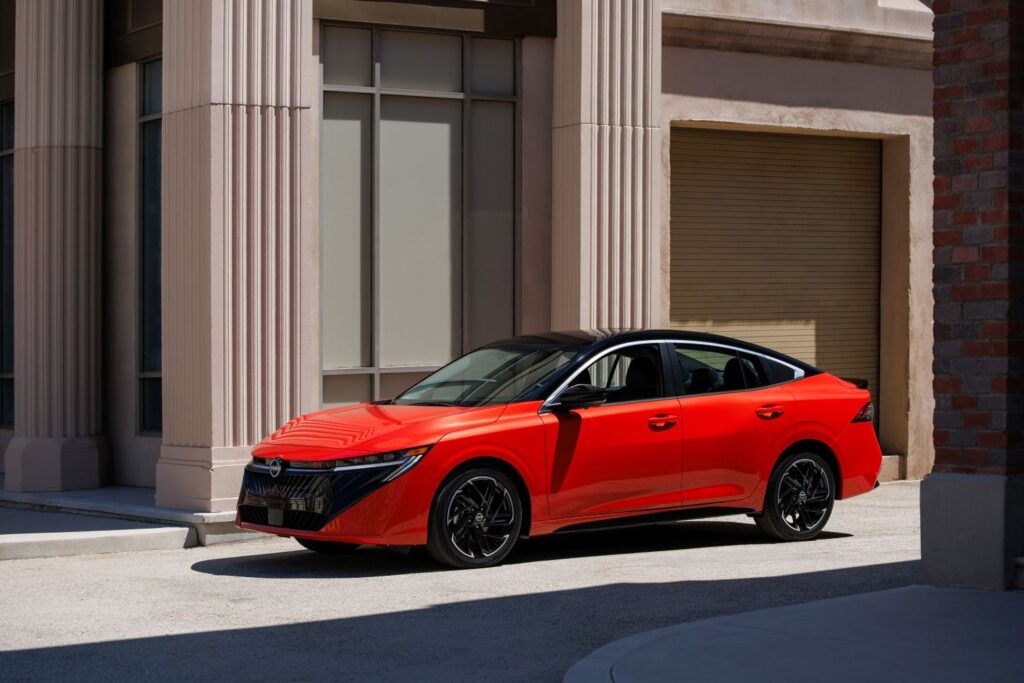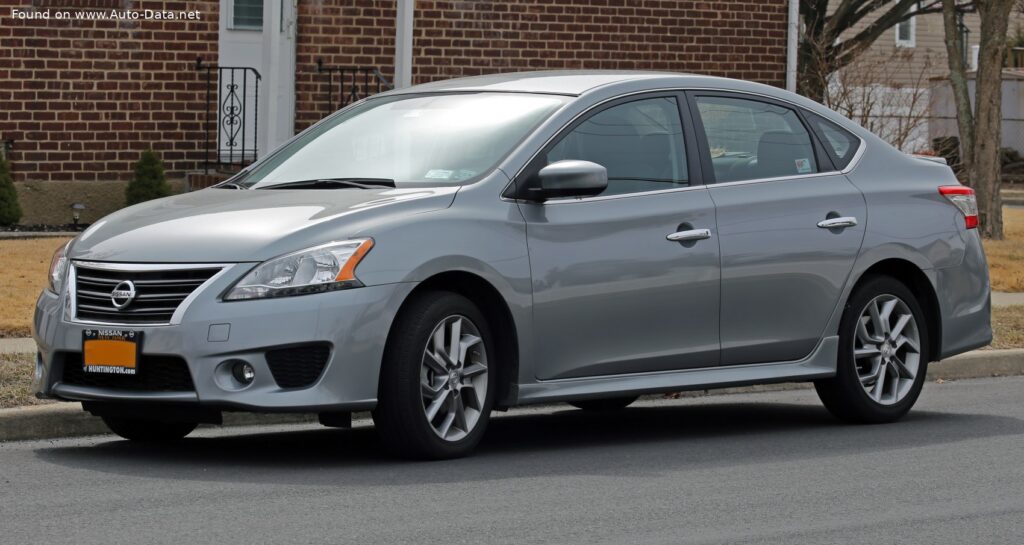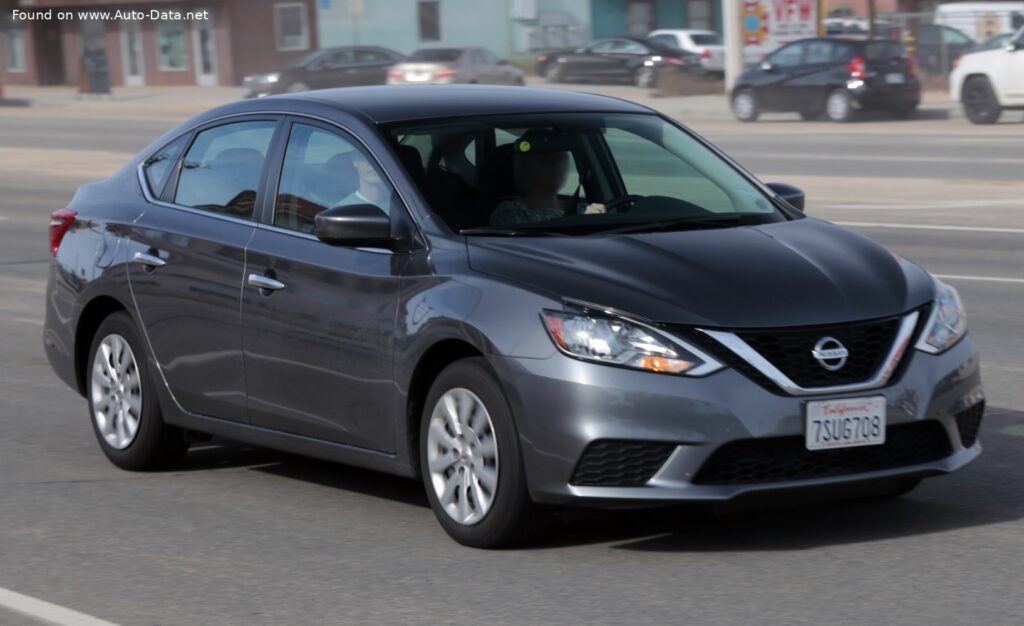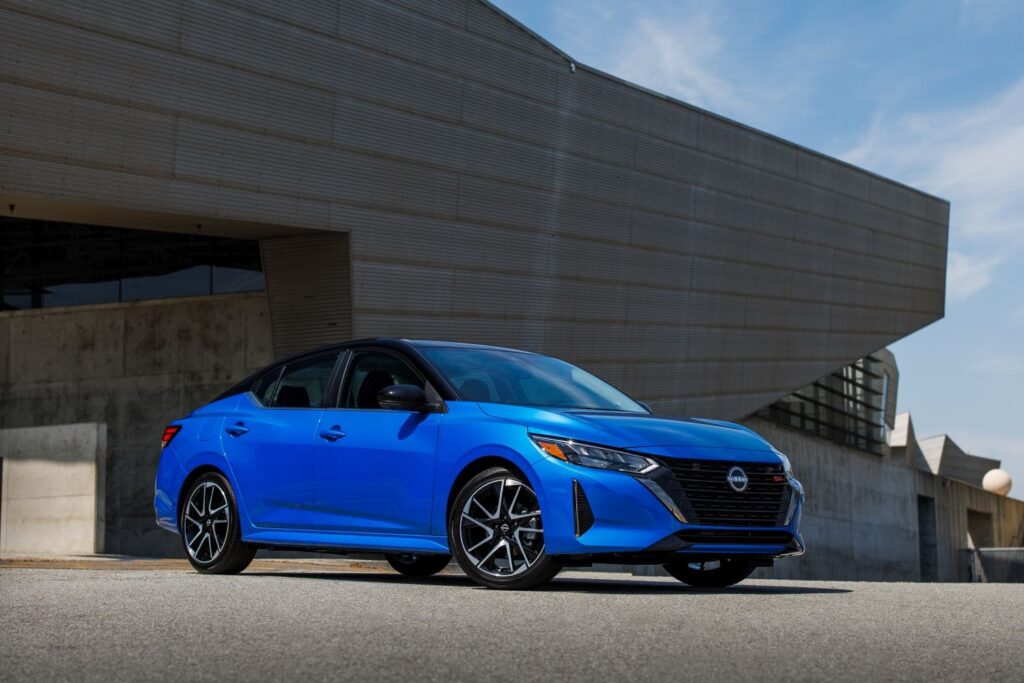
The Nissan Sentra VIII, specifically the B18 facelift introduced in June 2023, represents a significant evolution of Nissan’s compact sedan. The 2.0-liter (149 hp) Xtronic variant occupied a central position within the refreshed Sentra lineup, serving as the primary offering for buyers seeking a balance of fuel efficiency, modern features, and comfortable driving dynamics. Produced through 2025, this version built upon the foundation of the B18 platform, also known as the A3 platform in some markets, offering a compelling alternative to competitors like the Honda Civic and Toyota Corolla.
The 2.0L Xtronic Sentra: Positioning and Overview
The 2.0L Xtronic model was designed to appeal to a broad customer base. It wasn’t positioned as the outright performance leader (that role was less defined in the B18 Sentra), nor was it the absolute entry-level option. Instead, it aimed for the sweet spot – a well-equipped, comfortable, and efficient sedan suitable for daily commuting, family use, and longer road trips. Compared to the base model (if offered), the 2.0L Xtronic typically included more standard features and a more refined driving experience. It differed from potential future or past higher-performance trims by prioritizing fuel economy and smooth operation over outright acceleration.
Powertrain & Engine Architecture
At the heart of the 2023-2025 Nissan Sentra 2.0 Xtronic lies the MR20DD engine, a 1.997-liter (121.86 cubic inches) inline-four cylinder gasoline engine. This engine utilizes direct fuel injection, a technology that improves fuel efficiency and power output by injecting fuel directly into the combustion chamber. The engine also features Nissan’s Continuously Variable Valve Timing Control (CVVTC) system, which optimizes valve timing for improved performance and reduced emissions across a wider range of engine speeds. The MR20DD produces 149 horsepower at 6000 rpm and 198 Nm (146.04 lb-ft) of torque at 4000 rpm. The engine’s compression ratio is 10.6:1, contributing to its efficiency.
The “Xtronic” designation refers to Nissan’s Continuously Variable Transmission (CVT). Unlike traditional automatic transmissions with fixed gear ratios, a CVT uses a belt and pulley system to provide a virtually infinite number of gear ratios within its operating range. This allows the engine to operate at its most efficient rpm for any given speed, maximizing fuel economy. The CVT in the Sentra is tuned for smooth acceleration and responsive performance, though it may lack the distinct gear changes of a conventional automatic. The CVT is a key component in achieving the Sentra’s fuel efficiency targets.
Driving Characteristics
The driving experience in the 2.0L Xtronic Sentra is characterized by smoothness and refinement. The CVT contributes to seamless acceleration, avoiding the sometimes-noticeable shifts of a traditional automatic. While not a sports sedan, the 149 hp engine provides adequate power for everyday driving situations, including merging onto highways and passing other vehicles. The CVT is programmed to mimic stepped gear changes under hard acceleration, providing a more familiar feel for drivers accustomed to conventional automatics. The weight-to-power ratio of 9.2 kg/hp (108.2 hp/tonne) reflects the car’s focus on efficiency rather than outright performance. The CVT’s programming prioritizes fuel economy, meaning that aggressive acceleration will result in the engine revving to its higher limits, but without the immediate surge of a traditional gearbox.
Equipment & Trim Levels
The 2.0L Xtronic trim level typically included a comprehensive suite of standard features. These generally included air conditioning, power windows and locks, a touchscreen infotainment system with Apple CarPlay and Android Auto compatibility, and a suite of safety features such as automatic emergency braking, lane departure warning, and blind-spot monitoring. Interior upholstery was typically cloth, though higher sub-trims within the 2.0L Xtronic range may have offered optional leather seating. Dashboard configurations were consistent across the 2.0L Xtronic models, featuring a modern design with integrated infotainment display and digital instrument cluster. Optional extras often included a premium audio system, sunroof, and upgraded alloy wheels.
Chassis & Braking
The 2023-2025 Sentra 2.0 Xtronic utilizes an independent coil spring suspension in the front, coupled with a transverse stabilizer bar to reduce body roll during cornering. The rear suspension is an independent multi-link setup, also with a transverse stabilizer bar, providing a comfortable ride and improved handling. Braking duties are handled by ventilated discs on all four wheels – 279.4×22.86 mm at the front and 259.08×7.87 mm at the rear. The vehicle is equipped with an Anti-lock Braking System (ABS) as standard, enhancing safety during emergency braking situations. The electric power steering provides light and precise steering feel, making it easy to maneuver in urban environments. Tire sizes varied depending on the specific sub-trim, ranging from 205/60 R16 to 215/50 R17 and 215/45 R18.
Market Reception & Comparison
Critics generally praised the 2023-2025 Nissan Sentra 2.0 Xtronic for its comfortable ride, spacious interior, and comprehensive suite of standard features. The CVT transmission received mixed reviews, with some appreciating its smoothness and fuel efficiency, while others found it lacking in responsiveness. Fuel economy was consistently cited as a strong point, with the Sentra achieving LEV3-ULEV 125 emission standards. Compared to other trims in the Sentra lineup, the 2.0L Xtronic offered a compelling balance of value and features. It was generally considered more refined and enjoyable to drive than any potential base model, while remaining more affordable and fuel-efficient than any potential higher-performance variants. Against competitors like the Honda Civic and Toyota Corolla, the Sentra 2.0 Xtronic held its own, offering a competitive package with a focus on comfort and technology.
Technical Specifications
| Brand | Nissan |
| Model | Sentra |
| Generation | Sentra VIII (B18, facelift 2023) |
| Type (Engine) | 2.0 (149 Hp) Xtronic |
| Start of production | June, 2023 |
| End of production | 2025 |
| Powertrain Architecture | Internal Combustion engine |
| Body type | Sedan |
| Seats | 5 |
| Doors | 4 |
| Fuel Type | Petrol (Gasoline) |
| Emission standard | LEV3-ULEV 125 |
| Weight-to-power ratio | 9.2 kg/Hp, 108.2 Hp/tonne |
| Weight-to-torque ratio | 7 kg/Nm, 143.8 Nm/tonne |
| Power | 149 Hp @ 6000 rpm |
| Power per litre | 74.6 Hp/l |
| Torque | 198 Nm @ 4000 rpm (146.04 lb.-ft. @ 4000 rpm) |
| Maximum engine speed | 6600 rpm |
| Engine layout | Front, Transverse |
| Engine Model/Code | MR20DD |
| Engine displacement | 1997 cm3 (121.86 cu. in.) |
| Number of cylinders | 4 |
| Engine configuration | Inline |
| Cylinder Bore | 84 mm (3.31 in.) |
| Piston Stroke | 90.1 mm (3.55 in.) |
| Compression ratio | 10.6:1 |
| Number of valves per cylinder | 4 |
| Fuel injection system | Direct injection |
| Engine aspiration | Naturally aspirated engine |
| Valvetrain | DOHC, CVVTC |
| Engine oil capacity | 4.3 l (4.54 US qt | 3.78 UK qt) |
| Coolant | 7.2 l (7.61 US qt | 6.34 UK qt) |
| Kerb Weight | 1377-1399 kg (3035.77 – 3084.27 lbs.) |
| Max. weight | 1815 kg (4001.39 lbs.) |
| Max load | 416-438 kg (917.12 – 965.62 lbs.) |
| Trunk (boot) space – minimum | 405 l (14.3 cu. ft.) |
| Fuel tank capacity | 47 l (12.42 US gal | 10.34 UK gal) |
| Length | 4646 mm (182.91 in.) |
| Width | 1816 mm (71.5 in.) |
| Height | 1445-1448 mm (56.89 – 57.01 in.) |
| Wheelbase | 2708 mm (106.61 in.) |
| Front track | 1572-1588 mm (61.89 – 62.52 in.) |
| Rear (Back) track | 1570-1585 mm (61.81 – 62.4 in.) |
| Ride height (ground clearance) | 119-122 mm (4.69 – 4.8 in.) |
| Drag coefficient (Cd) | 0.299 |
| Minimum turning circle (turning diameter) | 11.6 m (38.06 ft.) |
| Drivetrain Architecture | The Internal combustion engine (ICE) drives the front wheels of the vehicle. |
| Drive wheel | Front wheel drive |
| Number of gears and type of gearbox | automatic transmission Xtronic CVT |
| Front suspension | Independent coil spring, Transverse stabilizer |
| Rear suspension | Independent multi-link suspension, Transverse stabilizer |
| Front brakes | Ventilated discs, 279.4×22.86 mm |
| Rear brakes | Ventilated discs, 259.08×7.87 mm |
| Assisting systems | ABS (Anti-lock braking system) |
| Steering type | Steering rack and pinion |
| Power steering | Electric Steering |
| Tires size | 205/60 R16; 215/50 R17; 215/45 R18 |
| Wheel rims size | 6.5J x 16; 6.5J x 17; 6.5J x 18 |
Legacy
The Nissan Sentra 2.0L Xtronic (B18 facelift) powertrain has proven to be generally reliable, with few widespread mechanical issues reported. The MR20DD engine is known for its durability, and the Xtronic CVT, while sometimes criticized for its driving feel, has demonstrated reasonable longevity with proper maintenance. In the used car market, these Sentras represent a good value proposition, offering a comfortable and well-equipped sedan at an affordable price point. Regular maintenance, including CVT fluid changes, is crucial for ensuring the long-term health of the powertrain. As with any used vehicle, a thorough inspection by a qualified mechanic is recommended before purchase.