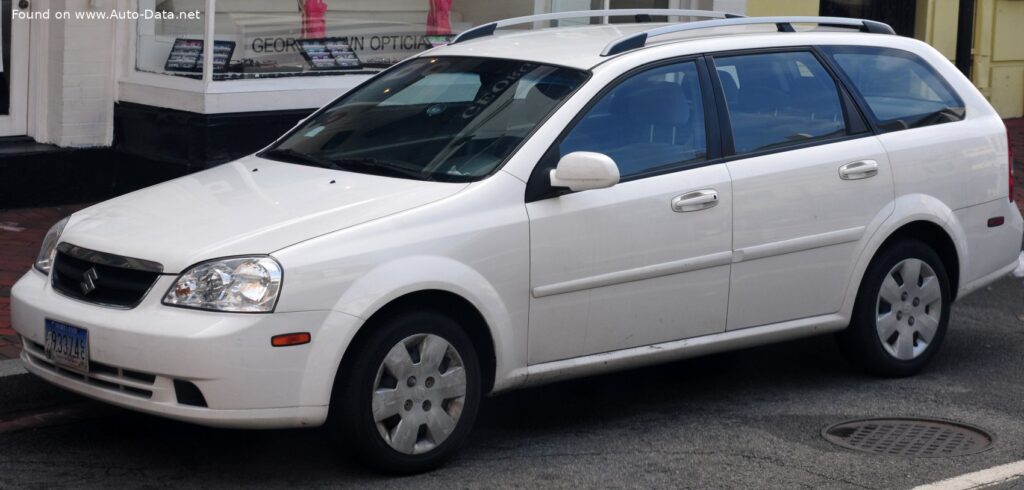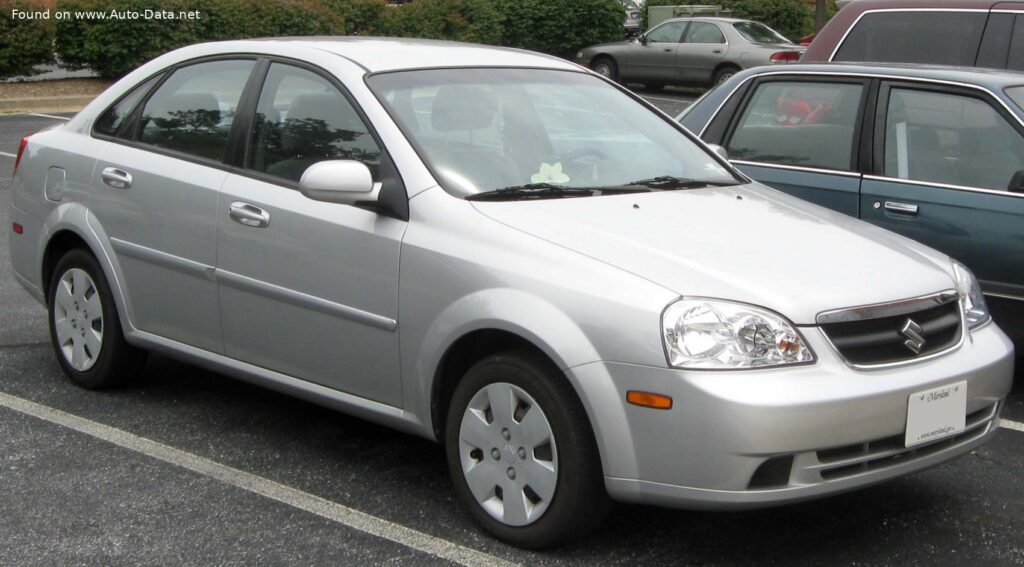
The Suzuki Forenza 2.0, produced between 2006 and 2008, represented a significant offering in Suzuki’s North American sedan lineup. Positioned as a compact, affordable vehicle, the Forenza aimed to compete with established players like the Honda Civic and Toyota Corolla. The 2.0-liter variant, generating 127 horsepower, was a key component of this strategy, offering a balance between fuel economy and acceptable performance for everyday driving. The Forenza itself was a rebadged version of the Daewoo Nubira, a result of Suzuki’s acquisition of Daewoo Motors in 2002. This model year range represents the final iteration of the Forenza before its discontinuation in the North American market.
Suzuki Forenza 2.0: An Overview
The 2006-2008 Suzuki Forenza 2.0 was a four-door sedan designed to provide practical transportation for small families or individuals. It was available with either a five-speed manual transmission or a four-speed automatic transmission. The 2.0-liter engine was the top-tier engine option for the Forenza, with the earlier models offering a smaller 1.8-liter engine. The Forenza aimed to provide a value proposition, offering a relatively spacious interior and a decent list of standard features at a competitive price point. It was built on a front-wheel-drive platform and shared many components with other vehicles within the General Motors portfolio, due to the Daewoo origins.
Powertrain & Engine Architecture
The heart of the Forenza 2.0 is its 2.0-liter inline four-cylinder engine, designated as the J20A. This engine is a naturally aspirated powerplant, meaning it does not utilize forced induction like a turbocharger or supercharger. It features a single overhead camshaft (SOHC) design with two valves per cylinder. Fuel delivery is managed by a multi-point fuel injection system, providing a reasonable balance between fuel efficiency and performance. The engine’s displacement is 1998cc (2.0 liters or 122.05 cubic inches). The engine oil capacity is 4 liters (4.23 US quarts or 3.52 UK quarts), and the coolant capacity is 7.4 liters (7.82 US quarts or 6.51 UK quarts). The J20A engine is known for its relatively simple design, which contributes to its overall reliability, though it isn’t a particularly high-performance engine.
The four-speed automatic transmission paired with the 2.0-liter engine was a conventional hydraulic automatic. It wasn’t known for particularly quick or smooth shifts, but it provided convenient operation for drivers prioritizing ease of use over sporty driving dynamics. The transmission’s gear ratios were geared towards fuel economy and comfortable cruising rather than rapid acceleration. The manual transmission, a five-speed unit, offered drivers more control and slightly improved fuel efficiency.
Driving Characteristics
The Suzuki Forenza 2.0 with the automatic transmission delivers modest performance. Acceleration from a standstill is adequate for merging onto highways and navigating city traffic, but it’s not a particularly quick vehicle. The 127 horsepower and 129 lb-ft of torque provide sufficient power for everyday driving situations, but passing maneuvers at highway speeds require careful planning. The automatic transmission’s shift points are programmed for fuel efficiency, which can sometimes result in the engine feeling strained during acceleration. The manual transmission version offers a more engaging driving experience and allows drivers to better utilize the engine’s power band.
The Forenza’s suspension is tuned for comfort rather than sporty handling. The ride quality is generally smooth, absorbing bumps and imperfections in the road reasonably well. However, the car exhibits noticeable body roll during cornering. Steering feel is light and lacks precision. Overall, the driving experience is geared towards practicality and comfort rather than excitement.
Equipment & Trim Levels
The 2006-2008 Suzuki Forenza 2.0 was typically offered in a single, well-equipped trim level. Standard features included air conditioning, power windows and locks, a CD player with an auxiliary input jack, and anti-lock brakes (ABS). The interior featured cloth upholstery and a relatively simple dashboard layout. Optional extras were limited, but could include a sunroof and upgraded audio system. Safety features included dual front airbags and side airbags. The interior materials were generally of average quality for the price point, prioritizing durability over luxury.
Chassis & Braking
The Forenza 2.0 utilizes a MacPherson strut front suspension and a multi-link rear suspension. This setup provides a reasonable balance between ride comfort and handling. The front brakes are ventilated discs, providing adequate stopping power. The rear brakes are drum brakes, which were a cost-saving measure. The ABS system helps to prevent wheel lockup during hard braking, improving stability and control. The Forenza’s chassis is relatively lightweight, which contributes to its fuel efficiency. Stabilizer bars were included on both the front and rear axles to reduce body roll during cornering, though their effectiveness was limited.
Market Reception & Comparison
The Suzuki Forenza 2.0 received mixed reviews from automotive critics. While praised for its affordability and spacious interior, it was often criticized for its lackluster performance, unrefined automatic transmission, and somewhat bland styling. Compared to its competitors, such as the Honda Civic and Toyota Corolla, the Forenza offered a lower price point but lacked the same level of refinement and driving enjoyment. Fuel economy was generally considered average for its class, achieving around 24 mpg in the city and 32 mpg on the highway. Reliability was generally good, with few major issues reported. However, the Forenza’s resale value was relatively low due to the Suzuki brand’s limited presence in the North American market.
Compared to the 1.8-liter Forenza, the 2.0-liter version offered a noticeable improvement in performance, making it a more suitable choice for drivers who frequently drive on highways or carry passengers. The 2.0-liter engine also provided a slightly more refined driving experience. However, the 2.0-liter version was typically priced slightly higher than the 1.8-liter model.
Technical Specifications
| Engine Type | 2.0L Inline-4 |
| Engine Code | J20A |
| Displacement | 1998 cc (2.0 L / 122.05 cu in) |
| Horsepower | 127 hp @ 5800 rpm |
| Torque | 129 lb-ft @ 3800 rpm |
| Fuel System | Multi-point Fuel Injection |
| Valvetrain | SOHC, 2 valves per cylinder |
| Transmission | 4-speed Automatic or 5-speed Manual |
| Drivetrain | Front-Wheel Drive |
| Front Brakes | Ventilated Discs |
| Rear Brakes | Drums |
| Curb Weight | 2,730 lbs (approx.) |
| Fuel Economy (City/Highway) | 24/32 mpg (approx.) |
Legacy
The Suzuki Forenza 2.0, while not a groundbreaking vehicle, served as an affordable and practical option for budget-conscious buyers. The J20A engine proved to be reasonably reliable, and many examples are still on the road today. However, due to Suzuki’s eventual withdrawal from the North American market, parts availability can be a concern. On the used car market, the Forenza 2.0 typically commands a low price, making it an attractive option for those seeking a basic and inexpensive mode of transportation. Its simplicity and relatively low maintenance costs contribute to its continued appeal among those looking for a dependable, if unexciting, vehicle.