
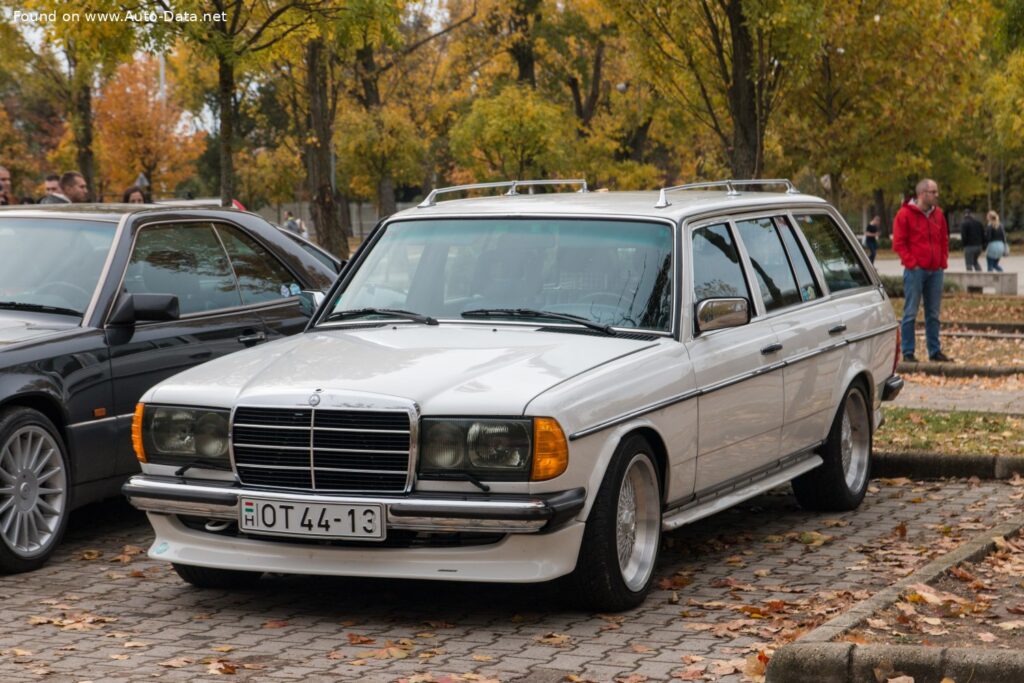
The Mercedes-Benz S123 250 T, produced between September 1977 and September 1979, represents a significant iteration within the W123 series, specifically the T-Modell (estate/station wagon) variant. This model occupied a mid-range position in the 123 lineup, offering a balance between performance, practicality, and luxury. The S123 chassis, internally designated as the 123 series, was a pivotal design for Mercedes-Benz, known for its robust engineering and enduring quality. The 250 T, powered by a 2.5-liter inline-six engine paired with an automatic transmission, catered to buyers seeking a comfortable and capable family vehicle with the prestige of the Mercedes-Benz brand.
Powertrain & Engine Architecture
The heart of the S123 250 T is the M 123 V 25 engine, a 2.5-liter (2525 cc) inline-six cylinder gasoline engine. This engine, bearing the code 123.920, produced 129 horsepower at 5500 rpm and 196 Nm (144.56 lb-ft) of torque at 3500 rpm. The engine featured a single overhead camshaft (SOHC) valvetrain with two valves per cylinder. Crucially, it employed Bosch K-Jetronic multi-port fuel injection, a sophisticated system for its time that contributed to improved fuel efficiency and smoother operation compared to carbureted engines. The engine’s bore and stroke measured 86 mm x 72.45 mm, respectively, resulting in a compression ratio of 8.7:1. Engine oil capacity was 7.5 liters (7.93 US quarts / 6.6 UK quarts), and the recommended coolant capacity was 10 liters (10.57 US quarts / 8.8 UK quarts).
The 250 T was exclusively offered with a four-speed automatic transmission. This transmission, while providing convenience, was not known for its sportiness. It was designed for smooth, comfortable shifts rather than aggressive acceleration. The automatic transmission’s gear ratios were optimized for cruising and everyday driving, prioritizing fuel economy and refinement over outright performance.
Driving Characteristics
The driving experience in the S123 250 T was characterized by comfort and stability. The 129 hp engine, while not exceptionally powerful, provided adequate performance for typical driving conditions. Acceleration from 0 to 100 km/h (0-62 mph) took approximately 12.9 seconds, and 0 to 60 mph was achieved in around 12.3 seconds. Top speed was rated at 180 km/h (111.85 mph). The automatic transmission contributed to a relaxed driving style, but it also meant that the car felt less responsive than its manual transmission counterparts. The weight-to-power ratio of 11.7 kg/hp and weight-to-torque ratio of 7.7 kg/Nm reflected the car’s substantial weight (1510 kg / 3328.98 lbs) and its focus on comfortable cruising rather than sporty handling. Compared to the higher-performance 280E models, the 250 T offered a more economical and accessible entry point into the W123 range.
Equipment & Trim Levels
The S123 250 T came reasonably well-equipped for its era, reflecting Mercedes-Benz’s commitment to quality and comfort. Standard features typically included cloth upholstery, power steering, front disc brakes, and a comprehensive instrument panel. The interior design was functional and elegant, with a focus on durability. Optional extras included leather upholstery, air conditioning, a sunroof, and upgraded audio systems. The T-Modell specifically featured a large cargo area accessible through a rear tailgate, making it a practical choice for families and those needing to transport larger items. Trim levels were relatively limited; the 250 T represented a step up from the base 230 T, offering the larger engine and automatic transmission as standard equipment.
Chassis & Braking
The S123 250 T utilized a robust chassis featuring a double wishbone suspension at the front and a trailing arm suspension at the rear. This suspension setup provided a comfortable ride and good handling characteristics. The car was equipped with disc brakes on all four wheels, offering reliable stopping power. The steering system was a cone worm with recirculation balls, providing a stable and predictable steering feel. Standard tire size was 195/70 R14, mounted on 6J x 14 inch steel wheels. The car’s relatively heavy weight necessitated a well-engineered braking system and suspension to ensure safe and comfortable operation.
Market Reception & Comparison
The S123 250 T was generally well-received by automotive critics. It was praised for its build quality, comfortable ride, and spacious interior. However, some reviewers noted that the automatic transmission detracted from the driving experience, and the engine, while adequate, wasn’t particularly exciting. Fuel consumption was a concern for some, with urban fuel economy rated at 14.5 l/100 km (16.2 US mpg / 19.5 UK mpg) and extra-urban consumption at 9.5 l/100 km (24.8 US mpg / 29.7 UK mpg). Compared to the 230 T, the 250 T offered more power and a smoother driving experience, justifying its higher price. Compared to the 280E, it provided a more affordable option, albeit with less performance. The 250 T’s reliability was generally considered good, typical of Mercedes-Benz vehicles of this era, although maintenance costs could be significant due to the complexity of the K-Jetronic fuel injection system.
Technical Specifications
| Brand | Mercedes-Benz |
| Model | W123 |
| Generation | S123 |
| Type | 250 T (129 Hp) Automatic |
| Start of production | September, 1977 |
| End of production | September, 1979 |
| Engine Model/Code | M 123 V 25 / 123.920 |
| Engine displacement | 2525 cm3 (154.08 cu. in.) |
| Number of cylinders | 6 (Inline) |
| Power | 129 Hp @ 5500 rpm |
| Torque | 196 Nm @ 3500 rpm (144.56 lb.-ft. @ 3500 rpm) |
| Fuel Type | Petrol (Gasoline) |
| Acceleration 0 – 100 km/h | 12.9 sec |
| Acceleration 0 – 60 mph | 12.3 sec |
| Maximum speed | 180 km/h (111.85 mph) |
| Kerb Weight | 1510 kg (3328.98 lbs) |
| Max. weight | 2130 kg (4695.85 lbs) |
| Fuel tank capacity | 70 l (18.49 US gal | 15.4 UK gal) |
| Length | 4725 mm (186.02 in) |
| Width | 1786 mm (70.31 in) |
| Height | 1470 mm (57.87 in) |
| Wheelbase | 2795 mm (110.04 in) |
| Number of gears and type of gearbox | 4 gears, automatic transmission |
Legacy
The S123 250 T, and the W123 series as a whole, has earned a reputation for exceptional durability and longevity. Many examples are still on the road today, a testament to Mercedes-Benz’s engineering prowess. The M 123 engine, while not without its quirks (particularly related to the K-Jetronic fuel injection system), is generally considered a reliable powerplant when properly maintained. In the used car market, the S123 250 T is sought after by enthusiasts and collectors who appreciate its classic styling, comfortable ride, and practical station wagon body style. Parts availability is generally good, although some specific components can be difficult to find. The 250 T represents a sweet spot in the W123 range, offering a good balance of performance, comfort, and affordability, making it a desirable classic Mercedes-Benz for those seeking a well-built and enduring vehicle.
