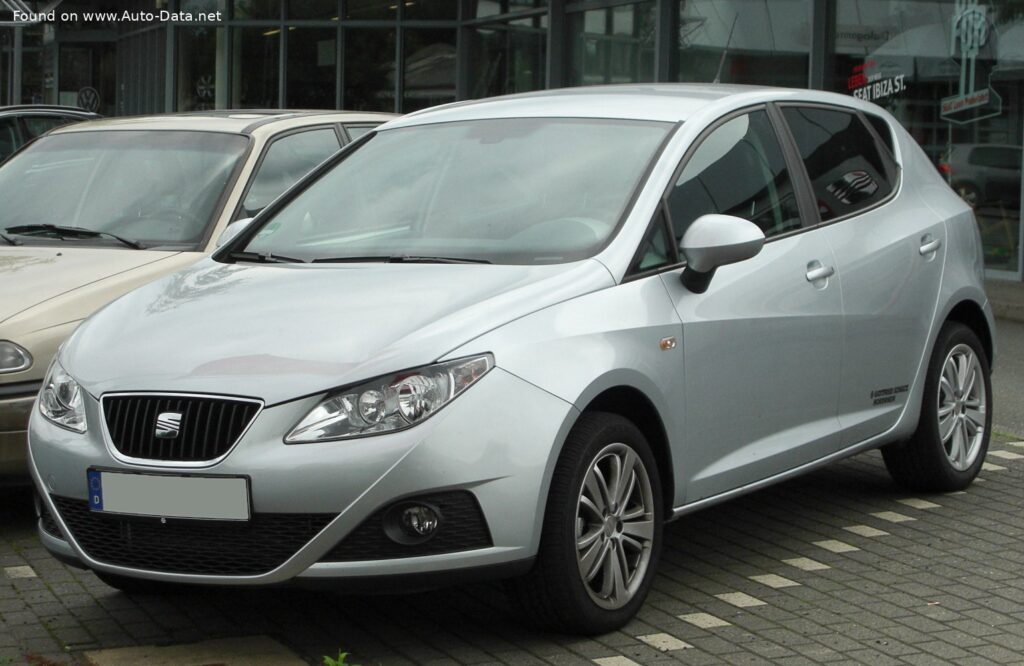
The Seat Ibiza IV 1.2 (60 hp) was a subcompact hatchback produced between 2009 and 2012, representing the entry-level powertrain option for the fourth generation of the popular Ibiza model. Positioned as the most affordable variant, it served as an accessible and economical choice within the Ibiza IV range, which also included more powerful 1.4, 1.6, and 2.0-liter gasoline engines, as well as diesel options. The Ibiza IV itself was based on the Volkswagen Group’s PQ25 platform, also known as the A3 platform, shared with models like the Volkswagen Polo and Škoda Fabia. This 1.2-liter engine was intended for buyers prioritizing fuel efficiency and low running costs over outright performance.
Powertrain & Engine Architecture
The Ibiza 1.2 (60 hp) was powered by the CGPB engine code, a 1.2-liter inline three-cylinder gasoline engine. This engine was part of Volkswagen Group’s EA111 family, known for its compact size and relatively simple design. The CGPB featured multi-point fuel injection, delivering fuel directly into the intake ports. The engine employed a double overhead camshaft (DOHC) valvetrain with four valves per cylinder, contributing to improved breathing and efficiency. Despite its small displacement, the engine utilized a compression ratio of 10.5:1 to maximize energy extraction from the fuel.
Unlike many of its siblings, the 1.2-liter engine was exclusively offered with a five-speed manual transmission. There was no automatic transmission option available for this specific engine configuration. The transmission was a standard front-wheel-drive setup, typical for vehicles in this class. The gearbox was chosen to optimize fuel economy and provide adequate, though not sporty, acceleration. The engine’s relatively low output meant that the transmission didn’t need to be overly robust, contributing to its lightweight design.
Engine Specifications
The CGPB engine produced a maximum power output of 60 horsepower (44 kW) at 5200 rpm and a peak torque of 108 Newton-meters (79.66 lb-ft) at 3000 rpm. This resulted in a power-to-liter ratio of 50.1 hp/liter. The engine’s design prioritized low-end torque to provide reasonable drivability in urban environments, but its limited horsepower meant that performance suffered at higher speeds and when carrying a full load.
Driving Characteristics
The driving experience in the Ibiza 1.2 (60 hp) was characterized by its economy-focused nature. Acceleration was modest, taking approximately 15.9 seconds to reach 100 km/h (62 mph) and 15.1 seconds to reach 60 mph. The engine felt strained when pushed hard, particularly when overtaking or climbing hills. The five-speed manual transmission required frequent shifting to maintain momentum, and the gear ratios were optimized for fuel efficiency rather than performance.
Compared to the more powerful Ibiza variants, such as the 1.6-liter models, the 1.2-liter engine felt significantly underpowered. The 1.6-liter offered a more relaxed driving experience with noticeably quicker acceleration and better high-speed cruising ability. However, the 1.2-liter’s lighter weight and simpler engine design contributed to its superior fuel economy. The steering was light and precise, making it easy to maneuver in city traffic, but lacked the feedback desired by more enthusiastic drivers.
Equipment & Trim Levels
The Ibiza 1.2 (60 hp) typically came with a basic level of equipment, reflecting its position as the entry-level model. Standard features generally included power steering, central locking, front airbags, and an anti-lock braking system (ABS). Interior upholstery was typically cloth, and the dashboard featured a simple, functional design. Air conditioning was often an optional extra, as were features like alloy wheels, electric windows, and a radio/CD player.
Trim levels varied slightly depending on the market, but generally followed a progressive structure. Higher trim levels added features like body-colored bumpers, door handles, and mirrors, as well as upgraded interior trim and additional comfort features. The base model was intentionally spartan to keep the price point low, appealing to first-time car buyers or those on a tight budget.
Chassis & Braking
The Ibiza 1.2 (60 hp) utilized a McPherson strut front suspension with a coil spring and anti-roll bar. The rear suspension employed a semi-independent torsion beam setup, which was a cost-effective solution for maintaining a reasonable level of ride comfort and handling. The front brakes were ventilated discs, providing adequate stopping power for the vehicle’s weight and performance. However, the rear brakes were drum brakes, a cost-saving measure that reduced braking performance compared to disc brakes on higher-spec models.
The steering system was a rack and pinion type with electric power assistance. The electric power steering provided light and easy steering, particularly at low speeds, but lacked the feel and feedback of a hydraulic system. Tire sizes varied depending on the trim level, ranging from 175/70 R14 to 215/40 R17. The smaller tire sizes offered better fuel economy and ride comfort, while the larger sizes provided improved grip and handling.
Market Reception & Comparison
The Seat Ibiza 1.2 (60 hp) received mixed reviews from automotive critics. While praised for its fuel efficiency and low running costs, it was often criticized for its lack of power and underwhelming performance. Critics noted that the engine felt strained when pushed hard and that the car struggled on inclines or when fully loaded. However, the Ibiza’s attractive styling, comfortable interior, and competitive price point helped it to gain a foothold in the subcompact hatchback segment.
Compared to rivals like the Ford Fiesta, Volkswagen Polo, and Renault Clio, the Ibiza 1.2 (60 hp) offered a similar level of fuel economy but generally lagged behind in terms of performance and refinement. The Fiesta and Polo, in particular, offered more powerful engine options and a more sophisticated driving experience. However, the Ibiza often undercut its rivals on price, making it an attractive option for budget-conscious buyers. Reliability was generally considered to be average, with some reports of minor issues with the engine and electrical systems.
Technical Specifications
| Brand | Seat |
| Model | Ibiza |
| Generation | Ibiza IV |
| Type (Engine) | 1.2 (60 Hp) |
| Start of production | July, 2009 |
| End of production | 2012 |
| Fuel consumption (urban) | 7.3 l/100 km (32.2 US mpg) |
| Fuel consumption (extra urban) | 4.5 l/100 km (52.3 US mpg) |
| Fuel consumption (combined) | 5.5 l/100 km (42.8 US mpg) |
| CO2 emissions | 128 g/km |
| Fuel Type | Petrol (Gasoline) |
| Acceleration 0 – 100 km/h | 15.9 sec |
| Acceleration 0 – 62 mph | 15.9 sec |
| Maximum speed | 155 km/h (96.31 mph) |
| Weight-to-power ratio | 16.2 kg/Hp |
| Power | 60 Hp @ 5200 rpm |
| Torque | 108 Nm @ 3000 rpm (79.66 lb.-ft. @ 3000 rpm) |
| Engine layout | Front, Transverse |
| Engine Model/Code | CGPB |
| Engine displacement | 1198 cm3 (73.11 cu. in.) |
| Number of cylinders | 3 |
| Cylinder Bore | 76.5 mm (3.01 in.) |
| Piston Stroke | 86.9 mm (3.42 in.) |
| Compression ratio | 10.5:1 |
| Engine oil capacity | 3 l (3.17 US qt | 2.64 UK qt) |
| Kerb Weight | 974 kg (2147.3 lbs.) |
| Max. weight | 1475 kg (3251.82 lbs.) |
| Trunk (boot) space – minimum | 292 l (10.31 cu. ft.) |
| Fuel tank capacity | 45 l (11.89 US gal | 9.9 UK gal) |
| Length | 4052 mm (159.53 in.) |
| Width | 1693 mm (66.65 in.) |
| Height | 1445 mm (56.89 in.) |
| Wheelbase | 2469 mm (97.2 in.) |
| Number of gears and type of gearbox | 5 gears, manual transmission |
Legacy
The Seat Ibiza IV 1.2 (60 hp) powertrain, while not known for its performance, proved to be relatively reliable and economical. The CGPB engine, despite its small displacement, was generally durable and capable of covering high mileages with proper maintenance. Today, these vehicles are readily available on the used car market at very affordable prices. However, potential buyers should be aware of the engine’s limited power and the potential for age-related issues with the suspension and braking systems. The 1.2-liter Ibiza remains a viable option for those seeking a cheap and cheerful city car, prioritizing fuel efficiency and low running costs over driving excitement. Its simplicity and relatively low maintenance requirements make it an appealing choice for budget-conscious drivers.