
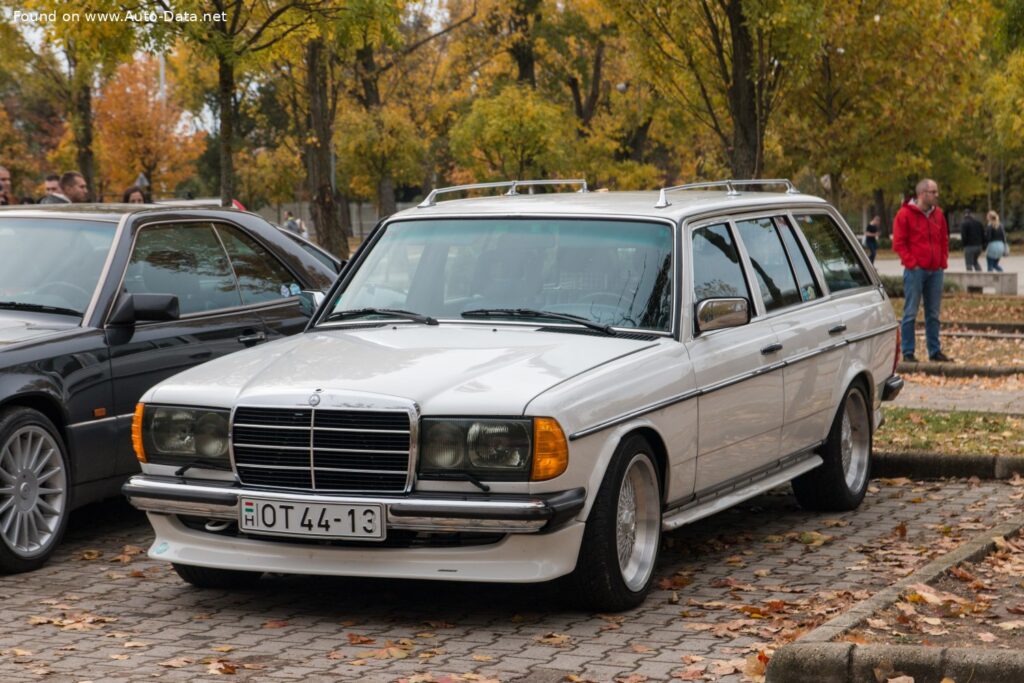
The Mercedes-Benz S123 250 T, produced between September 1979 and August 1982, was a variant of the popular W123 series, specifically the T-Modell (estate or station wagon) body style. Positioned as a mid-range offering within the 123 lineup, the 250 T combined a comfortable ride with practical cargo space, appealing to families and those requiring versatility. It represented a significant step up from the base 200 T models, offering increased performance and a more refined driving experience, while remaining more accessible than the top-of-the-line 300 T. The S123 chassis code designates the estate version of the W123, built upon the 123 platform.
Powertrain & Engine Architecture
The heart of the S123 250 T was the M123 V 25 engine, a 2.5-liter inline-six cylinder gasoline engine. This engine, designated with the code 123.921, produced 140 horsepower at 5500 rpm and 200 Nm (147.51 lb-ft) of torque at 3500 rpm. The engine featured a single overhead camshaft (SOHC) valvetrain with two valves per cylinder. Unlike later Mercedes-Benz engines that transitioned to fuel injection, the 250 T utilized a twin-barrel Solex carburetor for fuel delivery. This carburetor system, while reliable, was less efficient and offered less precise fuel control compared to modern fuel injection systems.
The engine’s bore and stroke measured 86 mm (3.39 in) and 72.45 mm (2.85 in) respectively, resulting in a displacement of 2525 cm³ (154.08 cu. in). The compression ratio was set at 9:1. The engine was mounted longitudinally in the front of the vehicle, driving the rear wheels. The 250 T was equipped with a 4-speed manual transmission as standard, although an optional 4-speed automatic transmission was available, impacting performance and fuel economy.
Fuel Injection and Valvetrain Details
The carburetor system, while common for the era, was a point of criticism compared to the fuel-injected engines offered in other markets and in later Mercedes-Benz models. The Solex carburetor required periodic adjustment and was more susceptible to issues related to altitude and temperature changes. The SOHC valvetrain, while simple and robust, limited the engine’s potential for high-revving performance. The engine oil capacity was 7.5 liters (7.93 US qt | 6.6 UK qt), and the recommended oil specification was specific to Mercedes-Benz standards of the time.
Driving Characteristics
The S123 250 T offered a comfortable and refined driving experience, typical of Mercedes-Benz vehicles of the period. With 140 hp, acceleration was adequate but not particularly sporty. Zero to 100 km/h (0-62 mph) took approximately 11.9 seconds, while 0-60 mph was achieved in around 11.3 seconds. The top speed was rated at 185 km/h (114.95 mph). The manual transmission allowed for more driver control and slightly improved acceleration, while the optional automatic transmission prioritized convenience and ease of use. The automatic transmission, while smooth, did result in a noticeable decrease in performance and increased fuel consumption.
The inline-six engine provided a smooth and relatively quiet operation. The torque curve was relatively flat, providing decent pulling power at lower engine speeds, making it suitable for everyday driving and hauling loads. However, the carburetor system meant that throttle response wasn’t as crisp as fuel-injected counterparts.
Equipment & Trim Levels
The S123 250 T came standard with a respectable level of equipment for its time. Interior features typically included cloth upholstery, although leather was available as an option. The dashboard layout was functional and straightforward, with clearly marked gauges and controls. Standard features included power-assisted steering, front disc brakes, and a rear window wiper. Optional extras included air conditioning, a sunroof, power windows, and upgraded audio systems. The T-Modell also featured a self-leveling rear suspension to maintain ride height when carrying heavy loads.
Trim levels were relatively limited, with most variations stemming from optional equipment packages. The 250 T was generally considered a well-equipped vehicle, even in its base form, offering a comfortable and practical interior.
Chassis & Braking
The S123 250 T utilized a double wishbone suspension at the front and a trailing arm suspension at the rear. This suspension setup provided a comfortable ride and good handling characteristics. The car was equipped with disc brakes on all four wheels, providing adequate stopping power. The steering system was a cone worm with recirculation balls, offering a relatively direct steering feel. The standard tire size was 195/70 R14, mounted on 6J x 14 inch steel wheels. Wheel size and tire options could vary depending on the market and optional equipment packages.
Market Reception & Comparison
The S123 250 T was generally well-received by automotive critics. It was praised for its comfortable ride, spacious interior, and practical cargo capacity. However, the carburetor system and relatively modest performance were points of criticism, particularly when compared to fuel-injected models and competitors. Fuel consumption was also considered relatively high, with urban fuel economy rated at 14.8 l/100 km (15.9 US mpg / 19.1 UK mpg) and extra-urban fuel economy at 9 l/100 km (26.1 US mpg / 31.4 UK mpg). Compared to the 200 T, the 250 T offered a noticeable performance improvement, while the 300 T provided even more power but at a higher price point. The 250 T struck a balance between performance, comfort, and affordability, making it a popular choice for families and those seeking a versatile vehicle.
Technical Specifications
| Brand | Mercedes-Benz |
| Model | W123 |
| Generation | S123 |
| Type (Engine) | 250 T (140 Hp) |
| Start of production | September, 1979 |
| End of production | August, 1982 |
| Powertrain Architecture | Internal Combustion engine |
| Body type | Station wagon (estate) |
| Seats | 5 |
| Doors | 5 |
| Fuel consumption (urban) | 14.8 l/100 km (15.9 US mpg / 19.1 UK mpg) |
| Fuel consumption (extra urban) | 9 l/100 km (26.1 US mpg / 31.4 UK mpg) |
| Fuel Type | Petrol (Gasoline) |
| Acceleration 0 – 100 km/h | 11.9 sec |
| Acceleration 0 – 62 mph | 11.9 sec |
| Acceleration 0 – 60 mph | 11.3 sec |
| Maximum speed | 185 km/h (114.95 mph) |
| Weight-to-power ratio | 10.8 kg/Hp |
| Weight-to-torque ratio | 7.6 kg/Nm |
| Power | 140 Hp @ 5500 rpm |
| Torque | 200 Nm @ 3500 rpm (147.51 lb.-ft. @ 3500 rpm) |
| Engine layout | Front, Longitudinal |
| Engine Model/Code | M 123 V 25 / 123.921 |
| Engine displacement | 2525 cm3 (154.08 cu. in.) |
| Number of cylinders | 6 |
| Engine configuration | Inline |
| Cylinder Bore | 86 mm (3.39 in.) |
| Piston Stroke | 72.45 mm (2.85 in.) |
| Compression ratio | 9:1 |
| Number of valves per cylinder | 2 |
| Fuel injection system | Carburettor |
| Engine aspiration | Naturally aspirated engine |
| Valvetrain | SOHC |
| Engine oil capacity | 7.5 l (7.93 US qt | 6.6 UK qt) |
| Coolant | 10 l (10.57 US qt | 8.8 UK qt) |
| Kerb Weight | 1510 kg (3328.98 lbs.) |
| Max. weight | 2130 kg (4695.85 lbs.) |
| Max load | 620 kg (1366.87 lbs.) |
| Fuel tank capacity | 70 l (18.49 US gal | 15.4 UK gal) |
| Length | 4725 mm (186.02 in.) |
| Width | 1786 mm (70.31 in.) |
| Height | 1470 mm (57.87 in.) |
| Wheelbase | 2795 mm (110.04 in.) |
| Front track | 1488 mm (58.58 in.) |
| Rear track | 1453 mm (57.2 in.) |
| Drivetrain Architecture | Rear wheel drive |
| Number of gears | 4 |
| Type of gearbox | Manual transmission |
Legacy
The S123 250 T, like other W123 models, has developed a strong following among classic Mercedes-Benz enthusiasts. The M123 engine, while not known for its outright performance, is generally considered to be a durable and reliable powerplant. However, the carburetor system can require periodic maintenance and adjustment. Rust is a common issue with these vehicles, particularly in areas exposed to road salt. Well-maintained examples of the 250 T are increasingly sought after by collectors and enthusiasts, commanding respectable prices in the used car market. The combination of classic Mercedes-Benz styling, comfortable ride, and practical wagon body style continues to appeal to a dedicated group of owners.
