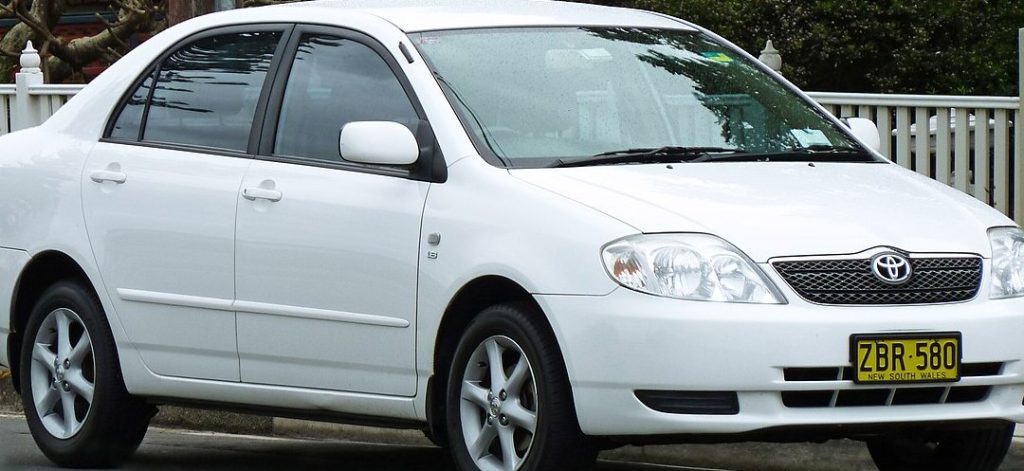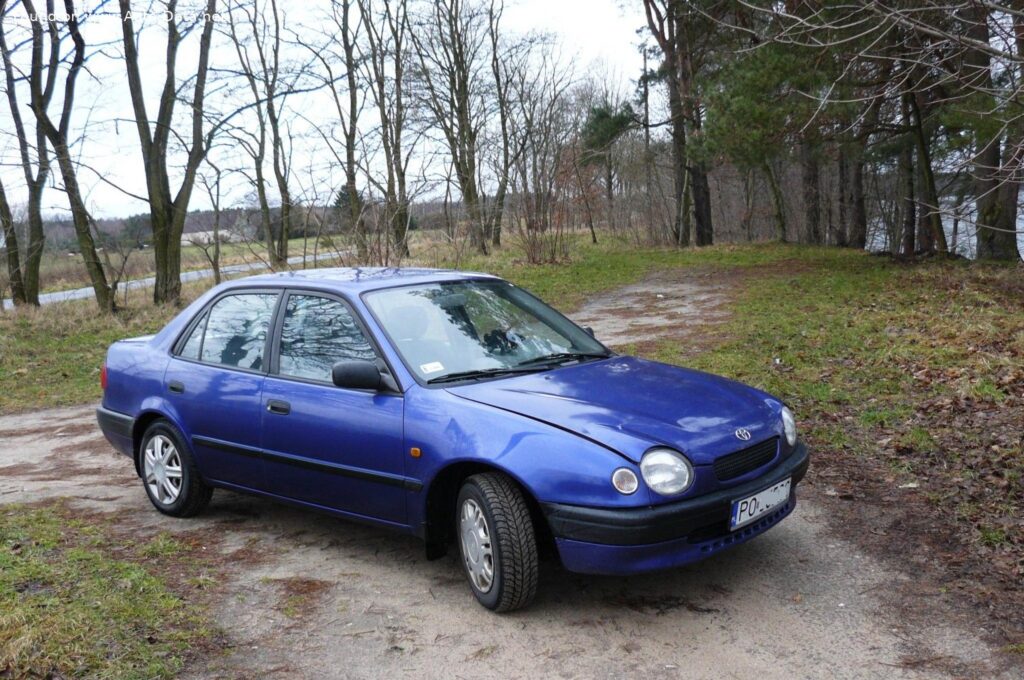
The Toyota Corolla E110, produced between 1997 and 2000, represented the eighth generation of Toyota’s globally successful Corolla compact car. Within the E110 range, the 1.6 i 16V variant, producing 110 horsepower, occupied a crucial mid-range position. It served as a step up from the base 1.6L models, offering increased performance without the higher price point of the more powerful options. This model was primarily aimed at buyers seeking a balance of fuel efficiency, reliability, and reasonable performance for daily commuting and family use. The E110 generation was built on the T platform, shared with other Toyota models of the era, and was available in various body styles including sedan, hatchback, and wagon, though this article will focus specifically on the 1.6 i 16V sedan.
1.6 i 16V: Powertrain & Engine Architecture
The heart of the Corolla 1.6 i 16V is the 4A-FE engine, a 1.6-liter (1587 cc) inline-four cylinder gasoline engine. This engine is a naturally aspirated design, meaning it does not utilize forced induction like a turbocharger or supercharger. The “16V” designation indicates the engine features four valves per cylinder, contributing to improved breathing and higher power output. The 4A-FE engine utilizes a multi-port fuel injection system, delivering fuel directly into the intake ports just before the intake valves. This system, controlled by an electronic control unit (ECU), optimizes fuel delivery for efficient combustion and reduced emissions.
The engine’s valvetrain employs a double overhead camshaft (DOHC) configuration, further enhancing valve control and allowing for higher engine speeds. Bore and stroke dimensions are 81 mm x 77 mm, resulting in a compression ratio of 9.5:1. The engine produces a maximum power output of 110 hp at 6000 rpm and 145 Nm (106.95 lb-ft) of torque at 4800 rpm. The engine oil capacity is 3.2 liters (3.38 US quarts), and the cooling system requires 6 liters (6.34 US quarts) of coolant. The 4A-FE is known for its durability and relatively simple design, making it a popular choice for engine swaps and modifications, even today.
Transmission
While a 5-speed manual transmission was available, the 1.6 i 16V was frequently paired with a 4-speed automatic transmission. This automatic transmission was a conventional hydraulic control unit design, offering smooth shifts but lacking the efficiency and responsiveness of more modern automatic gearboxes. The gear ratios were optimized for fuel economy and comfortable cruising, rather than outright performance. First gear was relatively short for quick acceleration from a standstill, while higher gears were geared for lower engine speeds at highway speeds.
Driving Characteristics
The Corolla 1.6 i 16V automatic offered a comfortable and predictable driving experience. Acceleration from 0 to 60 mph took approximately 9.7 seconds, and 0-100 km/h in 10.2 seconds, making it competitive with other compact sedans of the time. However, it was noticeably slower than the manual transmission version or higher-powered Corolla variants. The automatic transmission, while convenient, did detract from the engine’s potential, resulting in a slight loss of responsiveness. The power delivery was linear, with peak torque available at a relatively accessible 4800 rpm. This made it easy to drive in everyday traffic conditions, but overtaking maneuvers required careful planning.
The suspension was tuned for comfort, providing a smooth ride over most road surfaces. However, this came at the expense of handling precision. The car exhibited noticeable body roll in corners, and the steering lacked the feedback found in more sporty vehicles. Overall, the driving experience was geared towards practicality and ease of use, rather than enthusiast-level performance.
Equipment & Trim Levels
The 1.6 i 16V trim level typically included standard features such as power steering, air conditioning, central locking, and power windows. Interior upholstery was usually cloth, with a relatively simple dashboard layout. Depending on the market and optional packages, features like alloy wheels, a CD player, and upgraded sound systems were available. Safety features included anti-lock brakes (ABS) as standard equipment, a significant advancement for the time. The interior design was functional and durable, prioritizing practicality over luxury. The trim level sat between the base models and the more upscale versions, offering a good balance of features for the price.
Chassis & Braking
The Corolla E110 utilized a front-engine, front-wheel-drive layout. The front suspension consisted of wishbone suspension, providing a comfortable ride and reasonable handling. The rear suspension employed a spring strut design, which was cost-effective but less sophisticated than independent rear suspension systems. The braking system featured ventilated discs on the front wheels and solid discs on the rear wheels. The ABS system helped to prevent wheel lockup during hard braking, improving stability and control. The curb weight of the 1.6 i 16V sedan was approximately 1080 kg (2380.99 lbs), contributing to its relatively modest performance.
Market Reception & Comparison
The Corolla 1.6 i 16V was generally well-received by automotive critics as a reliable and practical compact sedan. It was praised for its fuel efficiency, comfortable ride, and Toyota’s reputation for durability. However, it was often criticized for its lack of excitement and relatively bland styling. Compared to the base 1.6L models, the 16V version offered a noticeable improvement in performance, making it a more appealing option for drivers who occasionally needed extra power. Compared to the higher-powered Corolla variants, such as those equipped with larger engines, the 1.6 i 16V was less expensive to purchase and maintain, but it lacked the same level of performance. Fuel economy was rated at approximately 10.3 l/100 km (22.8 US mpg) in urban driving and 6.4 l/100 km (36.8 US mpg) in extra-urban driving.
Technical Specifications
| Engine Model/Code | 4A-FE |
| Engine Displacement | 1587 cm3 (96.84 cu. in.) |
| Number of Cylinders | 4, Inline |
| Engine Configuration | Inline |
| Cylinder Bore | 81 mm (3.19 in.) |
| Piston Stroke | 77 mm (3.03 in.) |
| Compression Ratio | 9.5:1 |
| Number of Valves per Cylinder | 4 |
| Fuel Injection System | Multi-port manifold injection |
| Engine Aspiration | Naturally aspirated |
| Maximum Power | 110 Hp @ 6000 rpm |
| Maximum Torque | 145 Nm (106.95 lb.-ft.) @ 4800 rpm |
| Engine Oil Capacity | 3.2 l (3.38 US qt | 2.82 UK qt) |
| Coolant Capacity | 6 l (6.34 US qt | 5.28 UK qt) |
| Kerb Weight | 1080 kg (2380.99 lbs.) |
| Max. Weight | 1615 kg (3560.47 lbs.) |
| Trunk (boot) space – minimum | 390 l (13.77 cu. ft.) |
| Fuel Tank Capacity | 50 l (13.21 US gal | 11 UK gal) |
| Length | 4295 mm (169.09 in.) |
| Width | 1690 mm (66.54 in.) |
| Height | 1385 mm (54.53 in.) |
| Wheelbase | 2465 mm (97.05 in.) |
| 0-100 km/h | 10.2 sec |
| 0-60 mph | 9.7 sec |
| Maximum Speed | 195 km/h (121.17 mph) |
Legacy
The 4A-FE engine, found in the Corolla 1.6 i 16V, has proven to be remarkably durable and reliable over the years. Many examples are still on the road today, often with high mileage. The engine’s simple design and readily available parts contribute to its longevity and ease of maintenance. In the used car market, the E110 Corolla 1.6 i 16V is often sought after as an affordable and dependable transportation option. While not a particularly exciting vehicle, its reputation for reliability and low running costs makes it a popular choice for budget-conscious buyers. The automatic transmission, while less desirable than the manual, remains functional in many examples, though it may require more frequent servicing as it ages. Overall, the Corolla 1.6 i 16V represents a solid and dependable compact sedan from a bygone era.