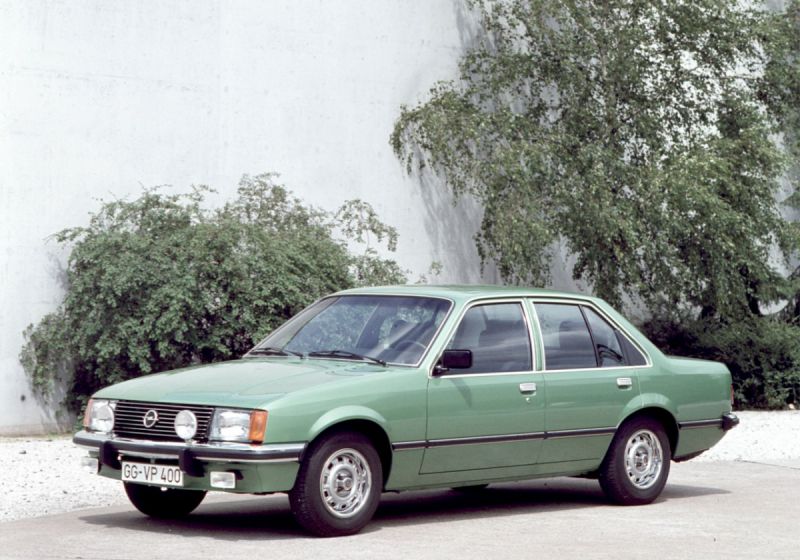
The Opel Rekord E 2.0 (90 hp) was a variant of the Rekord E produced between 1977 and 1982. Positioned as a mid-range offering within the Rekord E lineup, it provided a balance between affordability and performance, appealing to families and drivers seeking a comfortable and reliable sedan. The Rekord E itself was a significant model for Opel, built on the 1HX0/A3 platform, and represented a substantial redesign compared to its predecessor, the Rekord D. This generation focused on improved safety, comfort, and fuel efficiency, though the 2.0-liter 90 hp version didn’t necessarily excel in the latter.
The 2.0-Liter Engine and Automatic Transmission
The heart of the Rekord E 2.0 (90 hp) was the 20N engine, a 1,979 cc (120.77 cubic inches) inline-four cylinder gasoline engine. This engine featured a single overhead camshaft (SOHC) valvetrain with two valves per cylinder. Unlike some of its contemporaries, the 20N utilized a carburetor for fuel delivery, rather than fuel injection, which was a cost-saving measure. The engine produced 90 horsepower at 5,200 rpm and 142 Nm (104.73 lb-ft) of torque between 3,000 and 3,800 rpm. The compression ratio was 8:1.
While a four-speed manual transmission was available, the variant discussed here was equipped with a three-speed automatic transmission. This automatic gearbox was a General Motors-sourced unit, reflecting Opel’s relationship with GM at the time. The automatic transmission was chosen to provide ease of driving, particularly in urban environments, and broaden the Rekord E’s appeal to a wider demographic. However, it came at the cost of acceleration and fuel economy compared to the manual version.
Powertrain Characteristics and Performance
The combination of the 2.0-liter engine and the three-speed automatic transmission resulted in a driving experience focused on smooth, predictable power delivery rather than outright performance. Acceleration from 0 to 100 km/h (0-62 mph) took approximately 14 seconds, and 0 to 60 mph was achieved in around 13.3 seconds. The top speed was 165 km/h (102.53 mph). The automatic transmission’s gear ratios were geared towards comfortable cruising, with a relatively tall final drive. This meant that while the car was capable on the highway, it felt somewhat sluggish when attempting quick overtaking maneuvers or climbing hills. Compared to the more powerful Rekord E variants, such as those equipped with the 2.1-liter or 2.2-liter engines, the 2.0-liter automatic was noticeably less responsive.
Equipment and Trim Levels
The Rekord E 2.0 (90 hp) typically came with a reasonable level of standard equipment for its time. Interior appointments generally included cloth upholstery, though vinyl options were available. The dashboard layout was functional and straightforward, featuring analog gauges for speed, fuel level, coolant temperature, and battery voltage. Power steering was often included, but air conditioning and electric windows were typically optional extras. The Rekord E offered a spacious interior for passengers, and the 540-liter (19.07 cubic feet) trunk provided ample luggage capacity.
Trim levels varied depending on the market, but generally, the 2.0-liter automatic model was positioned as a step up from the base models, offering features like upgraded interior trim, a better sound system, and potentially some exterior enhancements like chrome trim or wheel covers. Optional extras could include a sunroof, upgraded seats, and a more sophisticated radio.
Chassis and Braking
The Rekord E 2.0 (90 hp) utilized a rear-wheel-drive layout. The front suspension consisted of independent coil springs and wishbones, while the rear suspension employed a live axle with leaf springs. This suspension setup provided a comfortable ride, but it wasn’t particularly sporty. The car’s kerb weight of 1,100 kg (2,425.08 lbs) contributed to its somewhat ponderous handling characteristics.
Braking was accomplished via ventilated discs on the front wheels and drum brakes on the rear. While adequate for normal driving conditions, the braking system lacked the stopping power and modulation of more modern systems. The car’s weight distribution also meant that braking performance could be affected by load and road conditions.
Market Reception and Comparison
The Opel Rekord E 2.0 (90 hp) automatic was generally well-received as a practical and reliable family sedan. Critics acknowledged its comfortable ride and spacious interior, but often noted its lack of performance compared to other models in the Rekord E range, and competitors like the Ford Taunus. The automatic transmission, while convenient, was seen as detracting from the car’s overall driving experience. Fuel consumption, at 10.4 l/100 km (22.6 US mpg), was considered average for the time, but not particularly impressive.
Compared to the manual transmission version of the 2.0-liter Rekord E, the automatic suffered a noticeable performance penalty. The more powerful Rekord E variants, such as the 2.2-liter, offered significantly better acceleration and overall driving enjoyment, but came at a higher price point. The 1.9-liter diesel Rekord E offered superior fuel economy, but lacked the power of the 2.0-liter gasoline engine.
Technical Specifications
| Brand | Opel |
| Model | Rekord |
| Generation | Rekord E |
| Type (Engine) | 2.0 (90 Hp) |
| Start of production | 1977 |
| End of production | 1982 |
| Engine Model/Code | 20N |
| Engine displacement | 1979 cm3 (120.77 cu. in.) |
| Number of cylinders | 4 |
| Engine configuration | Inline |
| Cylinder Bore | 95 mm (3.74 in.) |
| Piston Stroke | 69.8 mm (2.75 in.) |
| Compression ratio | 8:1 |
| Number of valves per cylinder | 2 |
| Fuel injection system | Carburettor |
| Engine aspiration | Naturally aspirated |
| Valvetrain | SOHC |
| Power | 90 Hp @ 5200 rpm |
| Torque | 142 Nm @ 3000-3800 rpm (104.73 lb.-ft. @ 3000-3800 rpm) |
| Fuel consumption (combined) | 10.4 l/100 km (22.6 US mpg, 27.2 UK mpg, 9.6 km/l) |
| Acceleration 0 – 100 km/h | 14 sec |
| Acceleration 0 – 62 mph | 14 sec |
| Acceleration 0 – 60 mph | 13.3 sec |
| Maximum speed | 165 km/h (102.53 mph) |
| Kerb Weight | 1100 kg (2425.08 lbs) |
| Max. weight | 1600 kg (3527.4 lbs) |
| Fuel tank capacity | 65 l (17.17 US gal | 14.3 UK gal) |
| Trunk (boot) space – minimum | 540 l (19.07 cu. ft.) |
| Length | 4593 mm (180.83 in.) |
| Width | 1726 mm (67.95 in.) |
| Height | 1420 mm (55.91 in.) |
Legacy
The Opel Rekord E 2.0 (90 hp) automatic, while not the most exciting variant of the Rekord E, remains a relatively common sight in the classic car market. The 20N engine is known for its durability and relative simplicity, making it relatively easy to maintain. However, carburetor issues can arise with age, requiring periodic cleaning or rebuilding. The automatic transmission, while reliable, can be prone to wear and tear over time. Today, these cars are appreciated for their classic styling, comfortable ride, and affordability, making them a popular choice for enthusiasts and collectors seeking a piece of 1970s and early 1980s automotive history. Parts availability is generally good, though some specific trim pieces can be difficult to find.