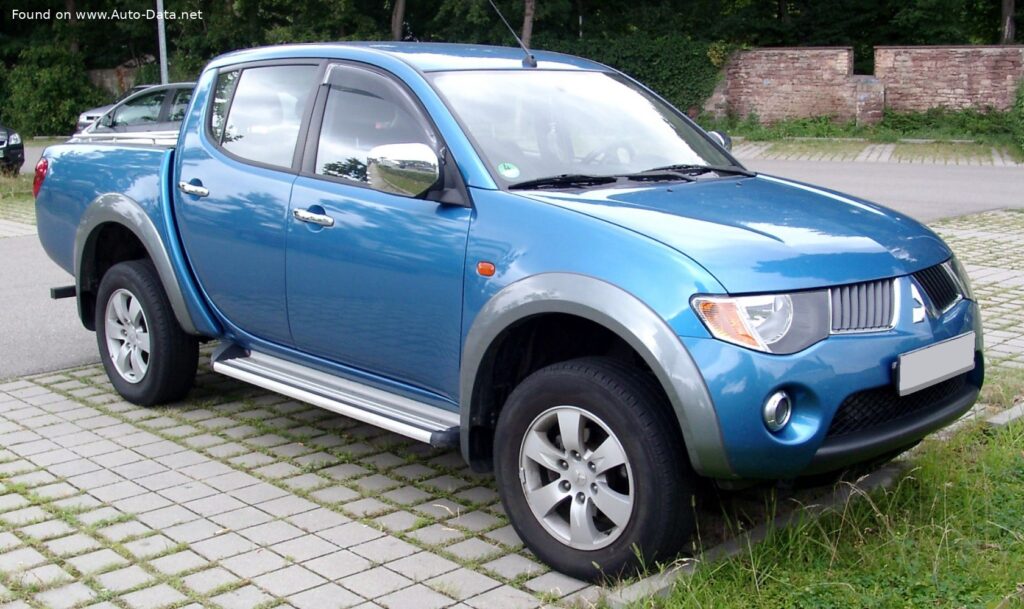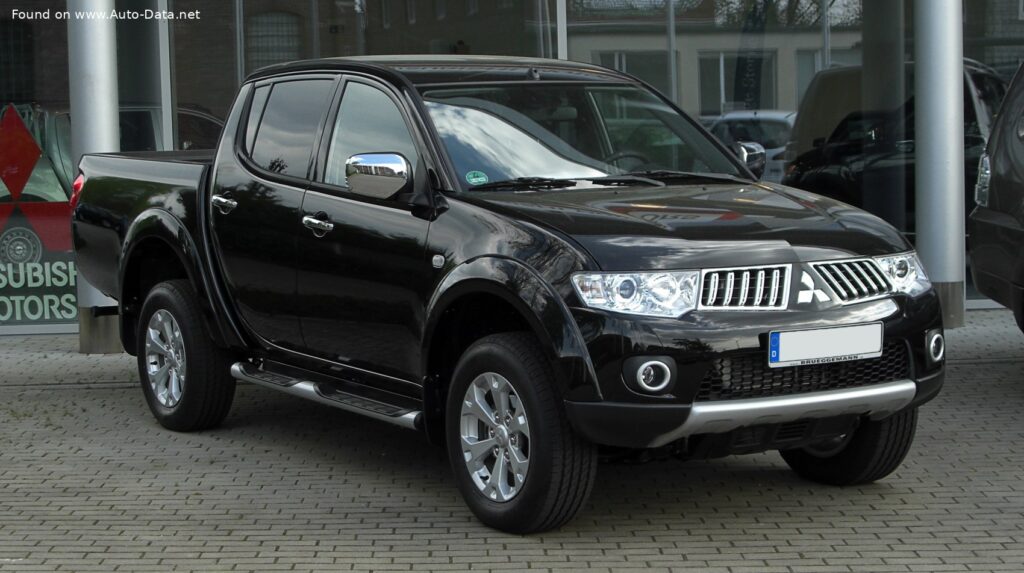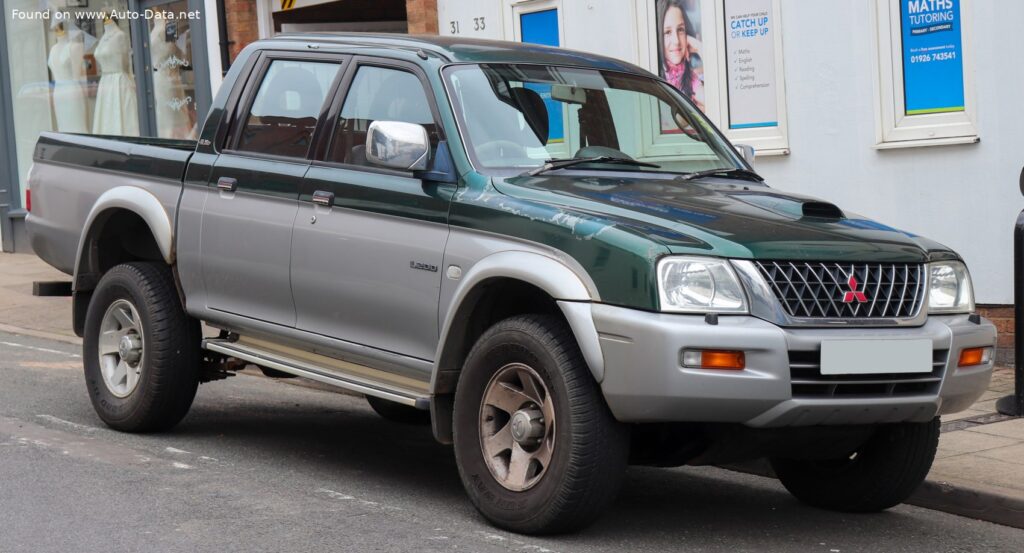
The Mitsubishi L200 III Double Cab 2.5 TD (100 hp) 4WD, produced between 1996 and 2006, represents a significant iteration of Mitsubishi’s popular pickup truck. This variant occupied a middle ground within the L200 III range, offering a balance between work capability, passenger comfort, and affordability. It was built on the robust platform of the third-generation L200 (often referred to internally as the MJ series), designed to compete in the increasingly popular double-cab pickup segment. This model aimed to provide a practical vehicle for both commercial use and family transport, particularly in markets where pickup trucks were commonly used as everyday vehicles.
The 2.5 TD Powertrain & Engine Architecture
At the heart of the L200 III Double Cab 2.5 TD (100 hp) 4WD lies the 4D56-TD 2.5-liter inline-four diesel engine. This engine is a turbocharged diesel, utilizing precombustion chamber injection – a system common in diesel engines of this era. The 4D56-TD engine displaced 2,477 cubic centimeters (151.16 cubic inches) and produced 100 horsepower at 4,000 rpm and 240 Nm (177.01 lb-ft) of torque at 2,000 rpm. The engine featured a single overhead camshaft (SOHC) valvetrain with two valves per cylinder. The turbocharger and intercooler were crucial components, enhancing power output and improving combustion efficiency. The compression ratio was relatively high at 21:1, typical for indirect injection diesel engines. Engine oil capacity was 6.5 liters (6.87 US quarts / 5.72 UK quarts), and the recommended oil specification varied by market.
The engine was longitudinally mounted in the chassis. While a five-speed manual transmission was standard, an optional four-speed automatic transmission was available, though less common. The automatic transmission was designed for durability and ease of use, prioritizing functionality over outright performance. The 4WD system was part-time, allowing the driver to switch between two-wheel drive and four-wheel drive as needed, with a low-range gear for enhanced off-road capability.
Driving Characteristics
The 100 hp 2.5 TD engine, paired with either the manual or automatic transmission, delivered adequate, but not exceptional, performance. The vehicle’s curb weight of 1,730 kg (3,814 lbs) meant the power-to-weight ratio was modest. Acceleration was leisurely, and overtaking required careful planning. The automatic transmission, while convenient, further reduced performance due to its less efficient power transfer and fewer gear ratios. However, the engine’s strong low-end torque made it well-suited for hauling loads and navigating challenging terrain. The manual transmission offered a more engaging driving experience and slightly improved fuel economy. The suspension, tuned for both on-road comfort and off-road capability, provided a reasonably compliant ride, even when carrying a load. The vehicle’s maximum speed was approximately 142 km/h (88.23 mph).
Equipment & Trim Levels
The L200 III Double Cab 2.5 TD (100 hp) 4WD typically came with a relatively basic level of equipment, reflecting its positioning as a work-oriented vehicle. Standard features generally included power steering, a vinyl or cloth interior, and basic instrumentation. Air conditioning was often an optional extra, as were power windows and central locking. The Double Cab configuration offered seating for five passengers, with a rear bench seat providing additional practicality. Trim levels varied depending on the market, but generally progressed from a base model with minimal features to more upscale versions with additional comfort and convenience items. The interior design was functional and durable, prioritizing practicality over luxury. The dashboard layout was straightforward, with easy-to-read gauges and logically placed controls.
Chassis & Braking
The L200 III Double Cab utilized a body-on-frame construction, providing a robust and durable chassis. The front suspension consisted of double wishbones, while the rear suspension employed leaf springs – a common setup for pickup trucks designed to carry heavy loads. The braking system featured ventilated discs on the front wheels (222 mm diameter) and drum brakes on the rear wheels (270 mm diameter). Hydraulic power steering was standard, providing assistance for maneuvering the vehicle, particularly at low speeds. Tire size was typically 205/80 R16, mounted on 6J x 16 inch steel or alloy wheels. The ride height (ground clearance) was a substantial 215 mm (8.46 inches), enhancing off-road capability.
Market Reception & Comparison
The Mitsubishi L200 III Double Cab 2.5 TD (100 hp) 4WD was generally well-received in markets where pickup trucks were popular. Critics praised its robust construction, practicality, and off-road capability. However, the 100 hp engine was often considered underpowered, particularly when compared to higher-output versions of the L200, such as those equipped with the 2.8 TD engine. The 2.8 TD offered significantly more power and torque, resulting in improved performance. The 1.8 gasoline engine was also available, but it lacked the low-end torque of the diesel and was less fuel-efficient. Fuel economy for the 2.5 TD was reasonable for a vehicle of its size and type, typically ranging from 8 to 10 liters per 100 kilometers (26 to 31 mpg). Reliability was generally good, although the precombustion chamber diesel injection system could require maintenance over time. Compared to competitors like the Toyota Hilux and Nissan Navara, the L200 offered a competitive package in terms of price, features, and capability.
Technical Specifications
| Brand | Mitsubishi |
| Model | L200 |
| Generation | L200 III Double Cab |
| Type (Engine) | 2.5 TD (100 Hp) 4WD |
| Start of production | 1996 year |
| End of production | 2006 year |
| Powertrain Architecture | Internal Combustion engine |
| Body type | Pick-up |
| Seats | 5 |
| Doors | 4 |
| Fuel Type | Diesel |
| Maximum speed | 142 km/h (88.23 mph) |
| Weight-to-power ratio | 17.3 kg/Hp |
| Weight-to-torque ratio | 7.2 kg/Nm |
| Power | 100 Hp @ 4000 rpm |
| Torque | 240 Nm @ 2000 rpm (177.01 lb.-ft. @ 2000 rpm) |
| Engine layout | Front, Longitudinal |
| Engine Model/Code | 4D56-TD |
| Engine displacement | 2477 cm3 (151.16 cu. in.) |
| Number of cylinders | 4 |
| Engine configuration | Inline |
| Cylinder Bore | 91.1 mm (3.59 in.) |
| Piston Stroke | 95 mm (3.74 in.) |
| Compression ratio | 21:1 |
| Number of valves per cylinder | 2 |
| Fuel injection system | Precombustion chamber injection |
| Engine aspiration | Turbocharger, Intercooler |
| Valvetrain | SOHC |
| Engine oil capacity | 6.5 l (6.87 US qt | 5.72 UK qt) |
| Coolant | 7.8 l (8.24 US qt | 6.86 UK qt) |
| Kerb Weight | 1730 kg (3814 lbs.) |
| Max. weight | 2830 kg (6239.08 lbs.) |
| Max load | 1100 kg (2425.08 lbs.) |
| Fuel tank capacity | 75 l (19.81 US gal | 16.5 UK gal) |
| Permitted trailer load with brakes (12%) | 2200 kg (4850.17 lbs.) |
| Permitted trailer load without brakes | 500 kg (1102.31 lbs.) |
| Permitted towbar download | 100 kg (220.46 lbs.) |
| Length | 4935 mm (194.29 in.) |
| Width | 1695 mm (66.73 in.) |
| Height | 1780 mm (70.08 in.) |
| Wheelbase | 2960 mm (116.54 in.) |
| Front track | 1420 mm (55.91 in.) |
| Rear (Back) track | 1435 mm (56.5 in.) |
| Front overhang | 765 mm (30.12 in.) |
| Rear overhang | 1210 mm (47.64 in.) |
| Ride height (ground clearance) | 215 mm (8.46 in.) |
| Drivetrain Architecture | All wheel drive (4×4) |
| Number of gears and type of gearbox | 5 gears, manual transmission |
| Front suspension | Double wishbone |
| Rear suspension | Leaf spring |
| Front brakes | Ventilated discs, 222 mm |
| Rear brakes | Drum, 270 mm |
| Power steering | Hydraulic Steering |
| Tires size | 205/80 R16 |
| Wheel rims size | 6J x 16 |
Legacy
The Mitsubishi L200 III Double Cab 2.5 TD (100 hp) 4WD remains a relatively common sight on used car markets, particularly in regions where pickup trucks are popular. While not the most powerful or refined version of the L200 III, its robust construction and relatively simple mechanicals contribute to its longevity. The 4D56-TD engine, while capable of high mileage, can require maintenance related to the precombustion chamber injection system. However, parts availability is generally good, and the vehicle’s straightforward design makes it relatively easy to repair. Today, these vehicles are often sought after as affordable and practical work vehicles or as a base for off-road modifications. The 2.5 TD engine, while not known for blistering performance, provides a reliable and fuel-efficient power source for everyday use.