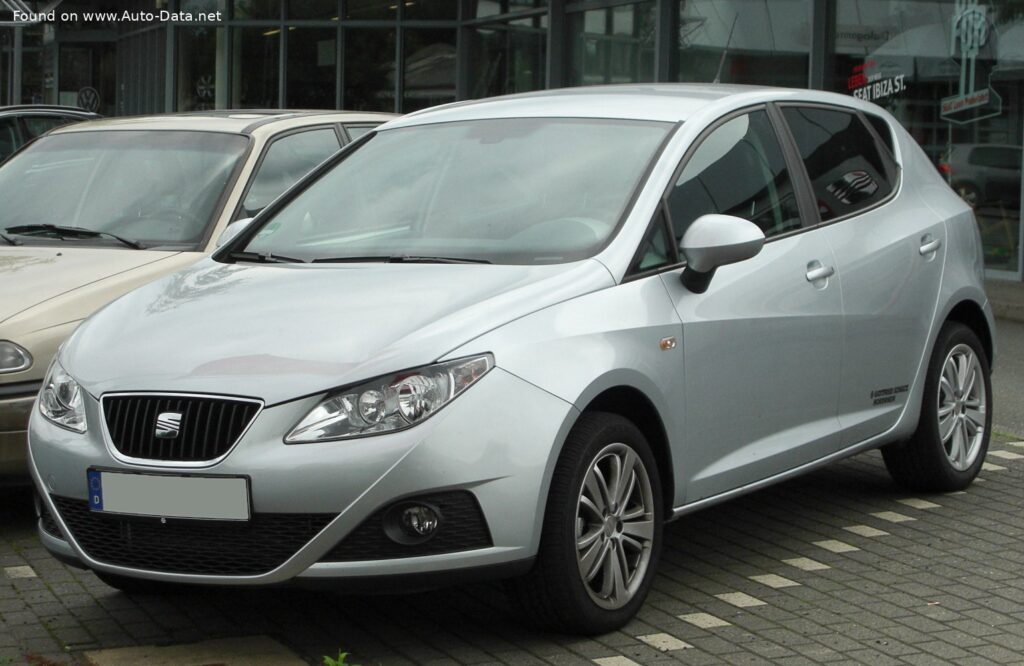
The Seat Ibiza IV 1.2 (70 hp) was a subcompact hatchback produced between 2008 and 2012, representing an entry-level offering within the fourth generation (Ibiza IV) of the popular Seat Ibiza model. Positioned as the most economical variant in the lineup, it catered to buyers prioritizing fuel efficiency and affordability over outright performance. The Ibiza IV, built on the Volkswagen Group’s PQ25 platform (also known as the 1HX0/A3 platform), aimed to provide a modern and practical small car for the European market. This 1.2-liter engine option was a key component of Seat’s strategy to offer a broad range of choices to potential customers.
Powertrain & Engine Architecture
The heart of the Ibiza 1.2 (70 hp) is the Volkswagen Group’s 1.2-liter, three-cylinder, naturally aspirated gasoline engine. Engine codes for this variant include BZG, CGPA, and CJLB, depending on the specific year and market. This engine is characterized by its compact size and lightweight construction, contributing to the Ibiza’s overall efficiency. The engine utilizes a multi-port fuel injection system, delivering fuel directly into the intake manifold. The valvetrain features a double overhead camshaft (DOHC) configuration with four valves per cylinder, optimizing gas flow for improved combustion.
While a five-speed manual transmission was the most common pairing, a six-speed automatic transmission was also available, though less frequently specified. The automatic transmission, a conventional torque-converter type, was designed to provide smooth and comfortable shifting, appealing to drivers seeking convenience. The engine’s relatively low output meant the automatic transmission didn’t suffer from the same performance compromises often seen with larger engines paired with automatics. The engine produces a maximum torque of 112 Nm (82.61 lb-ft) at 3000 rpm, and its power output of 70 hp (52 kW) is reached at 5400 rpm. The compression ratio is set at 10:1, a typical value for naturally aspirated gasoline engines of this era.
Engine Specifications
The 1.2-liter engine’s inline-three configuration contributes to its inherent balance issues, mitigated by a balance shaft within the engine block. This helps to reduce vibrations and improve refinement. The engine’s displacement of 1198 cm³ (73.11 cubic inches) is relatively small, emphasizing fuel economy. The cylinder bore measures 76.5 mm (3.01 inches), and the piston stroke is 86.9 mm (3.42 inches). The engine requires 3 liters (3.17 US quarts) of engine oil, typically meeting specifications outlined by Volkswagen Group standards.
Driving Characteristics
The Seat Ibiza 1.2 (70 hp) offers a driving experience focused on practicality and economy rather than performance. Acceleration from 0 to 100 km/h (0 to 62 mph) takes approximately 14.4 seconds, and 0 to 60 mph is achieved in around 13.7 seconds. The top speed is limited to 165 km/h (102.53 mph). The engine’s power delivery is relatively linear, but it requires the driver to utilize the full rev range to extract maximum performance. The five-speed manual transmission provides adequate control, while the optional six-speed automatic offers convenience at the expense of some responsiveness.
Compared to higher-output Ibiza variants, such as the 1.6-liter or the TDI diesel models, the 1.2-liter engine feels noticeably underpowered, particularly when fully loaded or tackling steep inclines. However, for urban driving and shorter commutes, the engine provides sufficient power and a comfortable driving experience. The automatic transmission, while smooth, doesn’t offer the sporty feel of a manual gearbox or the efficiency of more modern automatic transmissions. The gear ratios are tuned for fuel economy, prioritizing lower engine speeds at cruising speeds.
Equipment & Trim Levels
The Ibiza 1.2 (70 hp) typically came equipped with a basic level of standard features, reflecting its position as the entry-level model. Standard equipment generally included power steering, central locking, electric front windows, and an ABS anti-lock braking system. Interior upholstery was typically cloth, with a functional and durable design. The dashboard layout was straightforward and user-friendly, with clearly labeled controls.
Optional extras included air conditioning, alloy wheels, a CD player with MP3 compatibility, and electric rear windows. Higher trim levels, such as the “Style” or “Sport” variants, added features like upgraded interior trim, fog lights, and a leather-wrapped steering wheel. The availability of optional equipment varied depending on the market and the year of production. Safety features were generally limited to the standard ABS and driver/passenger airbags.
Chassis & Braking
The Seat Ibiza IV utilizes an independent McPherson strut suspension system at the front, providing a comfortable ride and predictable handling. The rear suspension employs a semi-dependent torsion beam setup, which is cost-effective and space-efficient. The front suspension incorporates a stabilizer bar to reduce body roll during cornering. The braking system consists of ventilated discs at the front and drum brakes at the rear. The drum brakes on the rear were a cost-saving measure typical of entry-level models. The electric power steering provides light and easy steering, making it ideal for urban driving.
The curb weight of the Ibiza 1.2 (70 hp) is approximately 974 kg (2147.3 lbs), contributing to its relatively nimble handling. The weight distribution is generally balanced, enhancing stability and cornering performance. Tire sizes varied depending on the trim level, ranging from 175/70 R14 to 215/40 R17.
Market Reception & Comparison
The Seat Ibiza 1.2 (70 hp) was generally well-received as an affordable and fuel-efficient small car. Critics praised its practicality, comfortable ride, and low running costs. However, the engine’s lack of power was a common criticism, particularly when compared to competitors offering more powerful engines. Fuel economy figures averaged around 5.9 l/100 km (39.9 US mpg), making it one of the most economical options in its class.
Compared to other Ibiza trims, the 1.2-liter model offered a significant price advantage, but at the expense of performance and refinement. The 1.6-liter engine provided noticeably more power, while the TDI diesel models offered superior fuel economy and torque. In terms of reliability, the 1.2-liter engine proved to be generally reliable, although some owners reported issues with the timing chain. The automatic transmission, while smooth, was not as durable as some of its competitors.
Technical Specifications
| Body Type | Hatchback, 5 Doors, 5 Seats |
| Fuel Economy (Combined) | 5.9 l/100 km (39.9 US mpg, 47.9 UK mpg, 16.9 km/l) |
| Maximum Speed | 165 km/h (102.53 mph) |
| Acceleration 0-100 km/h | 14.4 sec |
| Power | 70 Hp @ 5400 rpm |
| Torque | 112 Nm @ 3000 rpm (82.61 lb.-ft. @ 3000 rpm) |
| Engine Layout | Front, Transverse |
| Engine Model/Code | BZG, CGPA, CJLB |
| Engine Displacement | 1198 cm3 (73.11 cu. in.) |
| Number of Cylinders | 3, Inline |
| Cylinder Bore | 76.5 mm (3.01 in.) |
| Piston Stroke | 86.9 mm (3.42 in.) |
| Compression Ratio | 10:1 |
| Fuel Injection System | Multi-port manifold injection |
| Kerb Weight | 974 kg (2147.3 lbs.) |
| Max. Weight | 1501 kg (3309.14 lbs.) |
| Trunk (boot) space (minimum) | 292 l (10.31 cu. ft.) |
| Fuel Tank Capacity | 45 l (11.89 US gal, 9.9 UK gal) |
| Length | 4052 mm (159.53 in.) |
| Width | 1693 mm (66.65 in.) |
| Height | 1445 mm (56.89 in.) |
| Wheelbase | 2469 mm (97.2 in.) |
| Number of Gears | 5 (Manual) / 6 (Automatic) |
Legacy
The Seat Ibiza IV 1.2 (70 hp) remains a relatively common sight on used car markets today. Its affordability and fuel efficiency continue to appeal to budget-conscious buyers. The 1.2-liter engine, while not particularly powerful, has proven to be reasonably durable, provided it has been properly maintained. Regular oil changes and timely replacement of the timing chain are crucial for long-term reliability. The automatic transmission, however, may require more frequent servicing and is more prone to failure than the manual gearbox. Overall, the Ibiza 1.2 (70 hp) represents a practical and economical choice for those seeking a small, reliable hatchback.