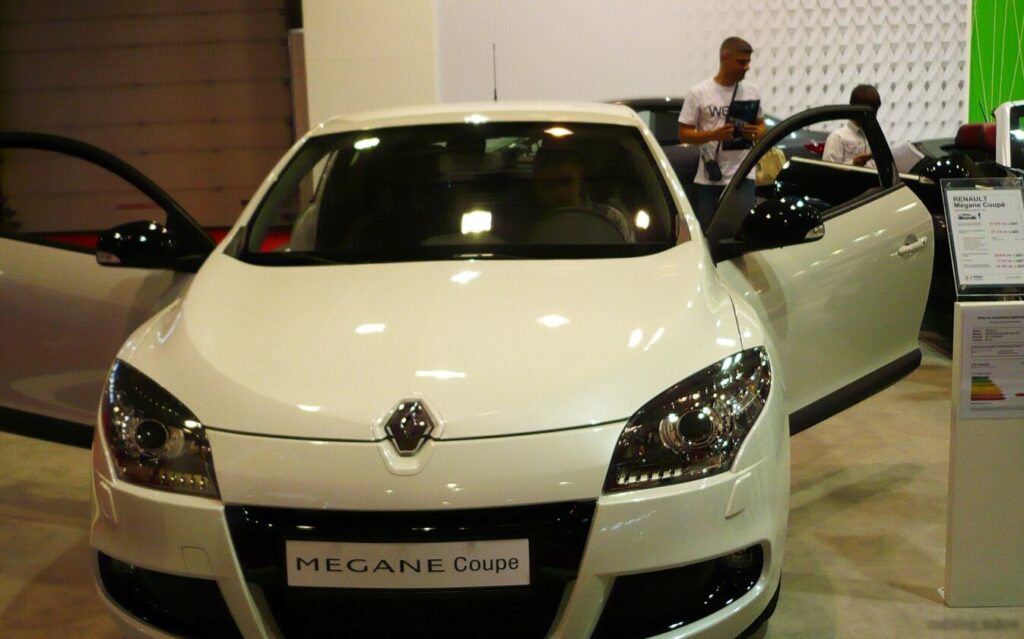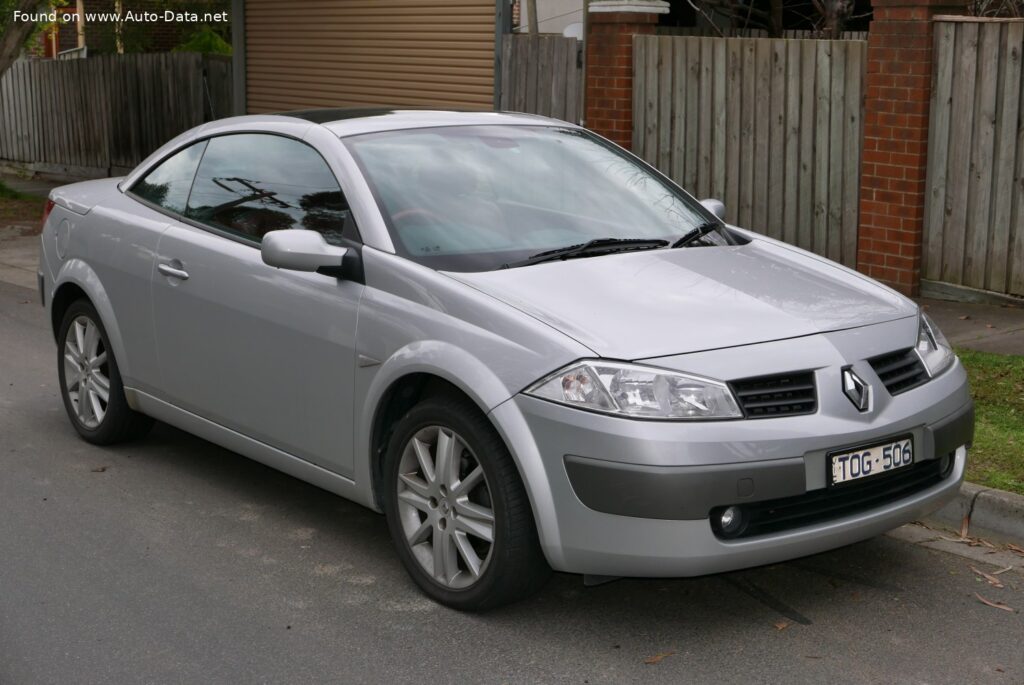
The Renault Megane II Coupe-Cabriolet (CC) 1.9 dCi 130 Hp FAP was a variant of the second-generation Megane CC, produced primarily during the 2005 model year. This model combined a diesel engine with a particulate filter (FAP) and a six-speed manual transmission, offering a blend of fuel efficiency and reasonable performance within the Megane CC range. It occupied a mid-range position in the lineup, appealing to buyers seeking a more economical alternative to the gasoline-powered versions while offering more power than the base diesel options.
Renault Megane II CC 1.9 dCi (130 Hp) FAP: Overview
The Megane II CC, launched in 2003, represented Renault’s entry into the increasingly popular coupe-cabriolet segment. Based on the Megane II hatchback (part of the Renault 1HX0/A3 platform), the CC featured a folding hardtop roof, providing the security and weather protection of a coupe with the open-air experience of a convertible. The 1.9 dCi 130 Hp FAP variant was designed to cater to European markets prioritizing fuel economy and lower emissions, particularly with the increasing adoption of stricter environmental regulations. The FAP (Filtre à Particules) was a diesel particulate filter designed to trap soot emissions, reducing harmful pollutants.
Powertrain & Engine Architecture
The heart of the Megane II CC 1.9 dCi 130 was the F9Q engine, a 1.9-liter inline-four cylinder diesel engine. This engine was a common sight in Renault and Nissan vehicles of the era, known for its robustness and relatively simple design. The F9Q engine utilized a common rail direct injection system, delivering fuel directly into the combustion chamber at extremely high pressure. This system, supplied by Delphi, allowed for precise fuel metering and optimized combustion, contributing to both power and efficiency. The engine featured an overhead camshaft (OHC) valvetrain with two valves per cylinder. A turbocharger with an intercooler was employed to increase power output by forcing more air into the engine. The intercooler cooled the compressed air, further enhancing performance. The engine produced 130 horsepower (Hp) at 4000 rpm and 300 Newton-meters (221.27 lb-ft) of torque at 2000 rpm. This torque output provided good low-end and mid-range acceleration, making it suitable for everyday driving. The engine’s displacement was 1870 cm3 (114.11 cu. in.) with a compression ratio of 19:1.
Driving Characteristics
The 1.9 dCi 130 Hp FAP-equipped Megane II CC offered a distinctly different driving experience compared to the gasoline-powered variants. While not as outright quick as the higher-horsepower petrol engines, the diesel provided a strong surge of torque from low engine speeds. This made it particularly well-suited for relaxed cruising and overtaking maneuvers. The six-speed manual transmission allowed drivers to keep the engine within its optimal power band. Acceleration from 0 to 100 km/h (0-62 mph) took approximately 9.6 seconds, and the car had a top speed of 203 km/h (126.14 mph). Compared to the 1.6L gasoline engine, the 1.9 dCi offered significantly more torque, resulting in better in-gear acceleration. However, the diesel engine was noticeably louder and less refined than the gasoline alternatives. The FAP system, while effective at reducing emissions, could occasionally require regeneration cycles, which slightly impacted fuel economy during those periods.
Equipment & Trim Levels
The Megane II CC 1.9 dCi 130 Hp FAP typically came with a reasonable level of standard equipment. This included air conditioning, power windows, central locking, and an audio system. Safety features such as ABS (Anti-lock Braking System) and front airbags were also standard. Interior upholstery was typically cloth, although leather options were available as an upgrade. Trim levels varied depending on the market, but common options included alloy wheels, automatic climate control, rain-sensing wipers, and a panoramic sunroof. The dashboard layout was typical of the Megane II, with a functional and user-friendly design. Optional extras often included a navigation system and upgraded audio systems.
Chassis & Braking
The Megane II CC utilized an independent McPherson strut suspension at the front and a torsion beam suspension at the rear. This setup provided a good balance between ride comfort and handling. The front suspension featured a stabilizer bar to reduce body roll during cornering. The braking system consisted of ventilated discs at the front and solid discs at the rear. ABS was standard, providing enhanced braking control. The steering was a power-assisted rack and pinion system, offering precise and responsive steering feel. The car rode on 205/55 R16 tires mounted on 6.5J x 16 alloy wheels. The curb weight of the vehicle was 1425 kg (3141.59 lbs), which contributed to its relatively stable handling characteristics.
Market Reception & Comparison
The Renault Megane II CC 1.9 dCi 130 Hp FAP was generally well-received by automotive critics. It was praised for its fuel efficiency, strong torque, and comfortable ride. However, some critics noted the engine’s lack of refinement compared to gasoline alternatives. Fuel economy figures were impressive, with combined fuel consumption averaging around 5.8 l/100 km (40.6 US mpg, 48.7 UK mpg). Compared to the 1.6L gasoline version, the 1.9 dCi offered significantly better fuel economy and lower CO2 emissions (154 g/km). Reliability was generally good, although the FAP system could occasionally require maintenance or replacement. The 1.9 dCi was considered a more practical choice for drivers covering long distances, while the gasoline engines appealed to those prioritizing driving enjoyment.
Technical Specifications
| Brand | Renault |
| Model | Megane |
| Generation | Megane II CC |
| Type (Engine) | 1.9 dCi (130 Hp) FAP |
| Start of production | 2005 |
| End of production | 2005 |
| Engine Model/Code | F9Q |
| Engine displacement | 1870 cm3 (114.11 cu. in.) |
| Number of cylinders | 4 |
| Engine configuration | Inline |
| Power | 130 Hp @ 4000 rpm |
| Torque | 300 Nm @ 2000 rpm (221.27 lb.-ft. @ 2000 rpm) |
| Fuel Type | Diesel |
| Acceleration 0 – 100 km/h | 9.6 sec |
| Acceleration 0 – 62 mph | 9.6 sec |
| Maximum speed | 203 km/h (126.14 mph) |
| Fuel consumption (urban) | 7.4 l/100 km (31.8 US mpg) |
| Fuel consumption (extra urban) | 4.9 l/100 km (48 US mpg) |
| Fuel consumption (combined) | 5.8 l/100 km (40.6 US mpg) |
| Kerb Weight | 1425 kg (3141.59 lbs) |
| Fuel tank capacity | 60 l (15.85 US gal) |
Legacy
The Renault Megane II CC 1.9 dCi 130 Hp FAP remains a relatively common sight on the used car market. The F9Q engine is known for its durability, and well-maintained examples can still provide reliable service. However, potential buyers should be aware of the potential maintenance costs associated with the FAP system. The car’s fuel efficiency and comfortable ride continue to make it an attractive option for those seeking an affordable and practical coupe-cabriolet. While newer models offer more advanced technology and features, the Megane II CC 1.9 dCi 130 Hp FAP represents a solid and dependable choice in its segment.