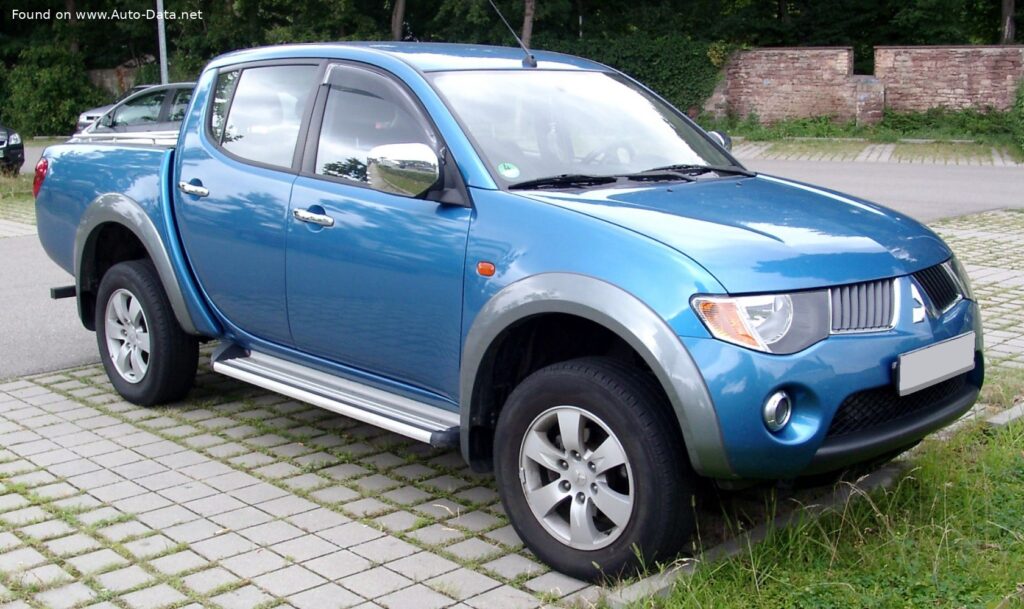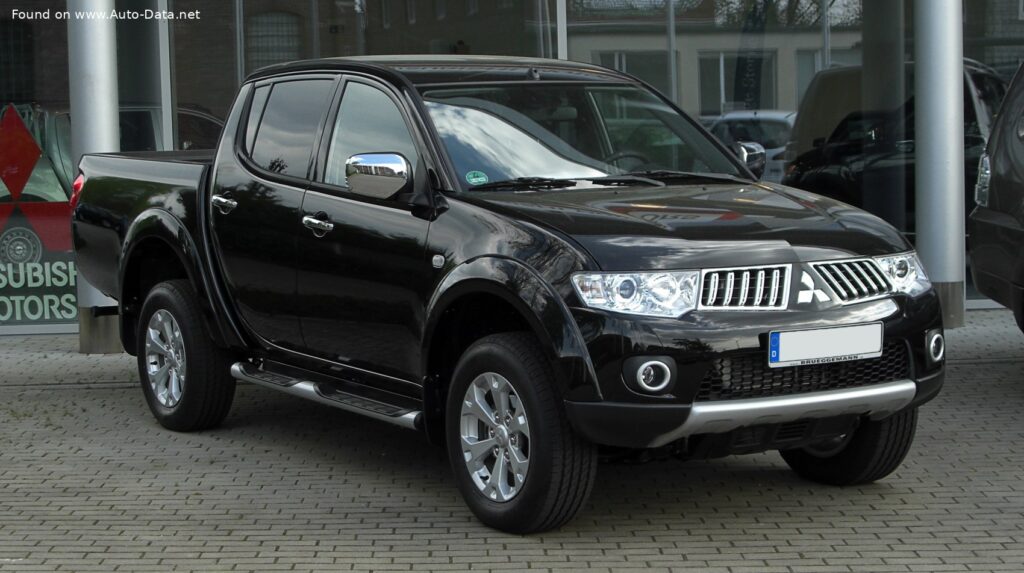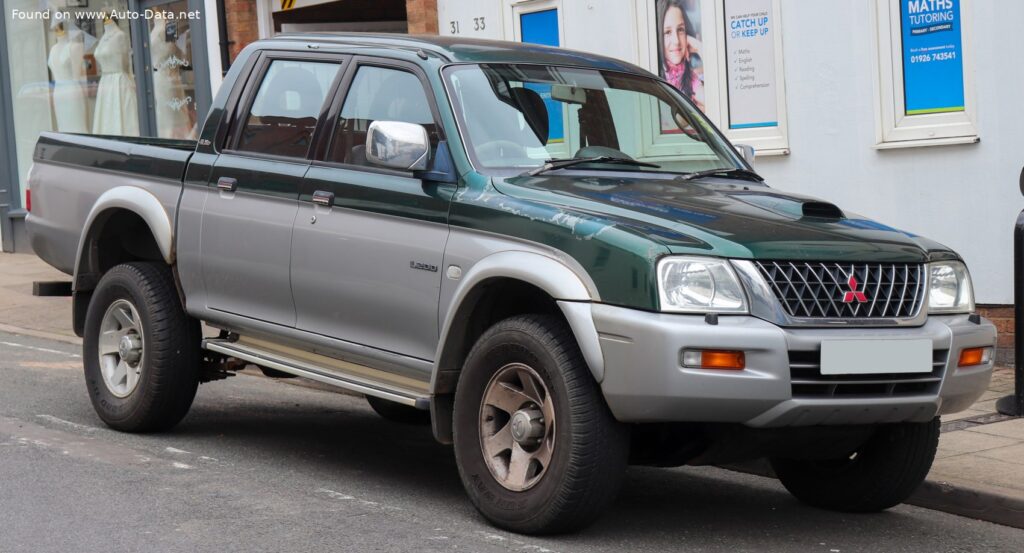
The Mitsubishi L200 III Double Cab 2.5 TD (100 hp) 4WD Automatic, produced between 1996 and 2006, represents a significant iteration of Mitsubishi’s popular pickup truck. This variant occupied a middle ground within the L200 III range, offering a balance between capability, comfort, and affordability. Built on the robust platform of the third-generation L200 (internally designated as the L200 III Double Cab), it catered to buyers seeking a versatile vehicle suitable for both work and family use, with the convenience of an automatic transmission and four-wheel drive. This model aimed to bridge the gap between the more basic, work-oriented trims and the higher-specification, comfort-focused versions.
Powertrain & Engine Architecture
At the heart of the L200 III Double Cab 2.5 TD (100 hp) lies the 4D56-TD 2.5-liter inline-four diesel engine. This engine, a mainstay in Mitsubishi’s commercial vehicle lineup, utilizes a precombustion chamber injection system. This system, common in diesel engines of the era, involves injecting fuel into a precombustion chamber connected to the main cylinder, promoting more complete combustion and reducing noise. The engine is turbocharged and intercooled, enhancing power output and efficiency. The turbocharger forces more air into the cylinders, while the intercooler cools the compressed air, increasing its density and further improving combustion. The engine features a single overhead camshaft (SOHC) valvetrain, operating two valves per cylinder.
The 4D56-TD produces 100 horsepower at 4000 rpm and 240 Nm (177.01 lb-ft) of torque at 2000 rpm. This torque figure is particularly important for a pickup truck, providing ample pulling power for towing and hauling. The engine has a displacement of 2477 cm³ (151.16 cu. in.), a bore of 91.1 mm (3.59 in.), a stroke of 95 mm (3.74 in.), and a compression ratio of 21:1. The engine requires 6.5 liters (6.87 US qt, 5.72 UK qt) of engine oil and 7.8 liters (8.24 US qt, 6.86 UK qt) of coolant.
Paired with the 4D56-TD engine is a four-speed automatic transmission. This transmission was chosen to provide ease of use, particularly appealing to buyers who preferred the convenience of automatic operation over a manual gearbox. While not offering the most modern gear ratios, it was a reliable unit for its time, designed to handle the engine’s torque output and the demands of off-road driving and load carrying.
Driving Characteristics
The 100 hp and 240 Nm of torque delivered by the 2.5 TD engine, when coupled with the four-speed automatic transmission, resulted in a driving experience focused on practicality rather than outright performance. Acceleration was modest, with the vehicle prioritizing low-end torque for hauling and towing. The automatic transmission, while convenient, did contribute to some power loss compared to the available manual transmission options. The gear ratios were spaced to provide adequate performance in everyday driving situations, but overtaking maneuvers required careful planning.
The four-wheel drive system, selectable via a transfer case, provided enhanced traction in challenging conditions. The system allowed the driver to switch between two-wheel drive (rear-wheel drive) for normal road conditions and four-wheel drive for off-road or slippery surfaces. The automatic transmission, combined with the 4WD system, made the L200 a capable vehicle for navigating rough terrain and inclement weather. Compared to the higher-output engine options available in the L200 III range, such as the 2.8 TD, this variant offered a more relaxed and fuel-efficient driving experience, albeit at the expense of outright speed and responsiveness.
Equipment & Trim Levels
The L200 III Double Cab 2.5 TD (100 hp) 4WD Automatic typically came equipped with a reasonable level of standard features. These generally included power steering, air conditioning, and basic instrumentation. The interior typically featured cloth upholstery and a functional, if somewhat spartan, dashboard layout. The “Double Cab” configuration provided seating for five passengers, making it a practical choice for families or crews.
Optional extras varied depending on the market, but could include features such as alloy wheels, upgraded audio systems, and power windows. The trim level often dictated the availability of these options. While not as luxurious as some of the higher-end trims, the 2.5 TD Automatic offered a comfortable and practical interior for its target audience. The focus was on durability and functionality rather than lavish appointments.
Chassis & Braking
The L200 III Double Cab utilized a robust chassis designed to withstand the rigors of pickup truck use. The front suspension consisted of a double wishbone setup, providing a reasonable level of ride comfort and handling. The rear suspension employed leaf springs, a traditional design choice for pickup trucks known for its load-carrying capacity and durability.
The braking system featured ventilated discs on the front wheels (222 mm diameter) and drum brakes on the rear wheels (270 mm diameter). Hydraulic power steering was standard, providing assistance for maneuvering the vehicle, particularly at low speeds. The tires were typically 205/80 R16, mounted on 6J x 16 inch wheel rims. The suspension and braking systems were tuned to provide a balance between ride comfort, handling, and braking performance, considering the vehicle’s weight and intended use.
Market Reception & Comparison
The Mitsubishi L200 III Double Cab 2.5 TD (100 hp) 4WD Automatic was generally well-received in the market as a practical and versatile pickup truck. Critics praised its robust construction, comfortable ride (for a pickup), and the convenience of the automatic transmission. However, some reviewers noted that the 100 hp engine felt underpowered, particularly when fully loaded or towing.
Compared to other trims in the L200 III lineup, such as the 2.8 TD, the 2.5 TD Automatic offered better fuel economy but less performance. It also tended to be more affordable than the higher-specification models. In terms of reliability, the 4D56-TD engine was generally considered to be a durable and dependable unit, although regular maintenance was essential. Compared to competitors like the Toyota Hilux and Nissan Navara, the L200 offered a competitive package in terms of price, features, and capability.
Technical Specifications
| Brand | Mitsubishi |
| Model | L200 |
| Generation | L200 III Double Cab |
| Type | 2.5 TD (100 Hp) 4WD Automatic |
| Start of production | 1996 |
| End of production | 2006 |
| Engine | 4D56-TD 2.5L Inline-4 Diesel |
| Power | 100 hp @ 4000 rpm |
| Torque | 240 Nm @ 2000 rpm (177.01 lb-ft) |
| Engine Displacement | 2477 cm³ (151.16 cu. in.) |
| Compression Ratio | 21:1 |
| Fuel Injection | Precombustion Chamber Injection |
| Transmission | 4-speed Automatic |
| Drivetrain | 4WD (Selectable) |
| Kerb Weight | 1735 kg (3825.02 lbs) |
| Max. Weight | 2830 kg (6239.08 lbs) |
| Fuel Tank Capacity | 75 l (19.81 US gal, 16.5 UK gal) |
| Dimensions (L x W x H) | 4935 mm x 1695 mm x 1780 mm (194.29 in x 66.73 in x 70.08 in) |
Legacy
The Mitsubishi L200 III Double Cab 2.5 TD (100 hp) 4WD Automatic has proven to be a relatively reliable and durable vehicle over the long term. The 4D56-TD engine, when properly maintained, is known for its longevity. Today, these vehicles can still be found in use, often as work trucks or in rural areas.
On the used car market, this variant typically commands a lower price than the higher-specification trims or those equipped with more powerful engines. However, its affordability and practicality make it an attractive option for buyers seeking a capable and dependable pickup truck. While the automatic transmission may not be as desirable as a manual gearbox to some enthusiasts, it remains a popular choice for those prioritizing ease of use. The L200 III Double Cab 2.5 TD Automatic represents a solid and dependable workhorse from a bygone era of pickup truck design.