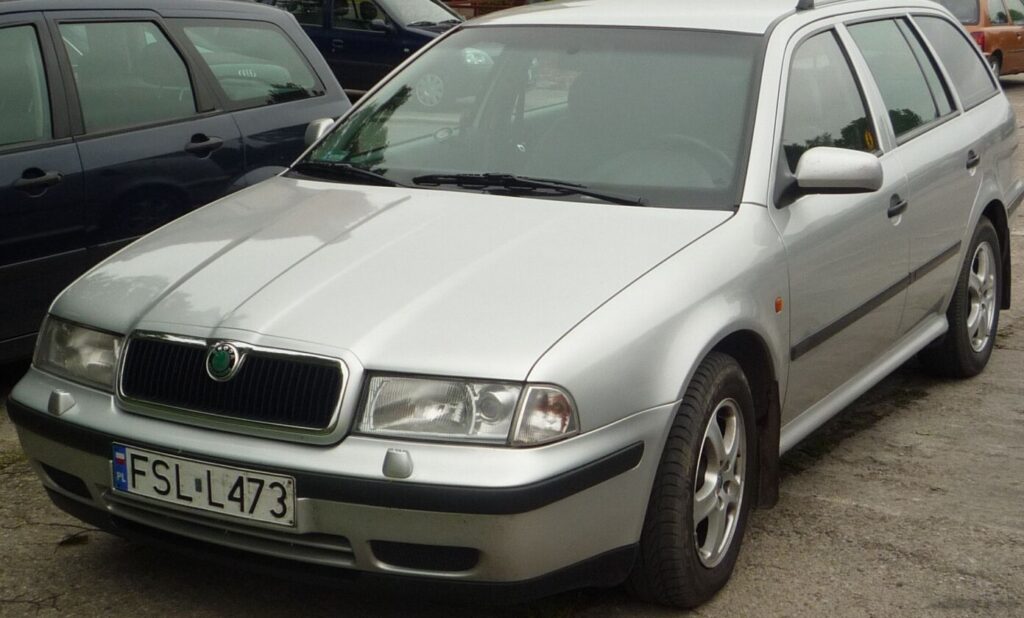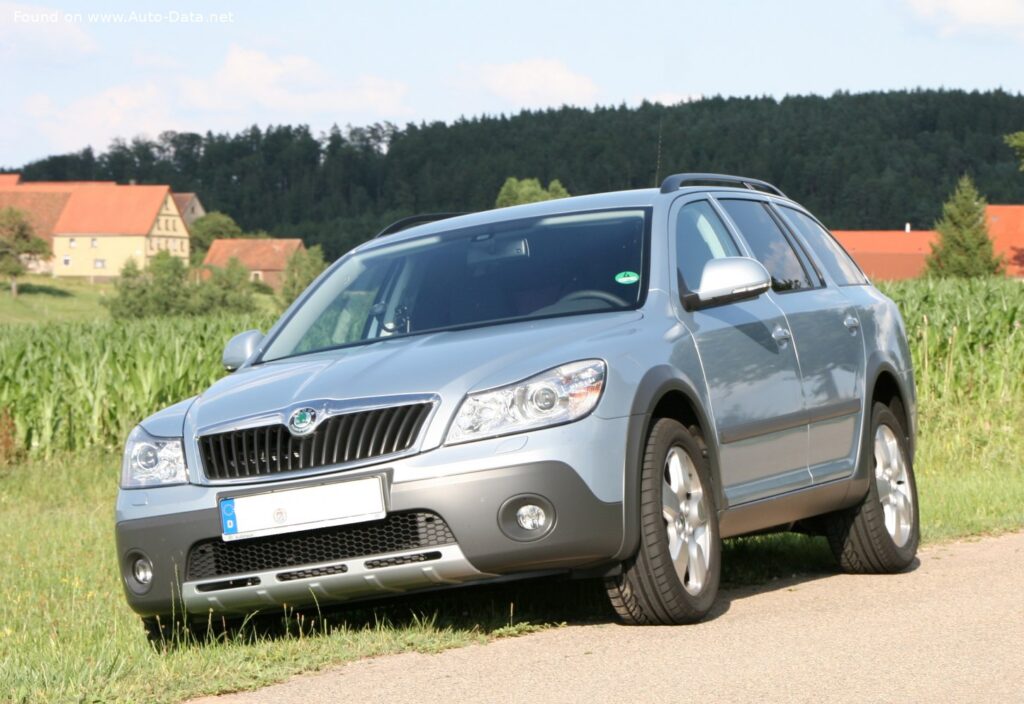
The Skoda Octavia II Scout, specifically the facelift model produced from 2009 to 2012, represented Skoda’s entry into the compact crossover segment. This variant, equipped with the 1.8 TSI (160 hp) engine and a six-speed manual transmission coupled with a four-wheel-drive system, aimed to provide a blend of practicality, fuel efficiency, and all-weather capability. Positioned as a mid-range offering within the Octavia Scout lineup, it sat above the base diesel models but below the more powerful 2.0 TSI variants. The Octavia II Scout (facelift) was built on the Volkswagen Group’s A5 (1HX0) platform, shared with models like the Volkswagen Golf Mk5 and Audi A3.
Powertrain & Engine Architecture
The heart of the 2009-2012 Skoda Octavia II Scout 1.8 TSI 4×4 is the CDAA engine code, a 1.8-liter inline-four cylinder gasoline engine. This engine is a member of the Volkswagen Group’s EA888 family, known for its robust design and tuning potential. It utilizes direct fuel injection (FSI – Fuel Stratified Injection) and a turbocharger with an intercooler to achieve a balance of power and efficiency. The engine produces 160 horsepower at 4,500-6,200 rpm and 250 Nm (184.39 lb-ft) of torque between 1,500 and 4,500 rpm. The direct injection system allows for precise fuel delivery, optimizing combustion and reducing emissions. The engine features a double overhead camshaft (DOHC) valvetrain with four valves per cylinder, contributing to its responsive nature.
The drivetrain employs a Haldex all-wheel-drive system. This system is primarily front-wheel drive under normal conditions, but can dynamically transfer torque to the rear wheels when traction is lost. This is achieved through a multi-plate clutch controlled by an electronic control unit, reacting to wheel slip and steering angle. The six-speed manual transmission provides precise gear changes and contributes to the vehicle’s overall driving experience. Gear ratios are tuned to balance acceleration and fuel economy, with a relatively tall sixth gear for efficient highway cruising.
Fuel Injection and Turbocharging
The direct injection system in the CDAA engine is a key component of its performance. Unlike traditional port fuel injection, direct injection sprays fuel directly into the combustion chamber, allowing for more precise control over the air-fuel mixture. This results in improved fuel economy, reduced emissions, and increased power output. The turbocharger, coupled with an intercooler, forces more air into the engine, further boosting power and torque. The intercooler cools the compressed air, increasing its density and further enhancing performance.
Driving Characteristics
The 1.8 TSI 4×4 Octavia Scout offers a composed and capable driving experience. While not as overtly sporty as the 2.0 TSI versions, the 160 hp engine provides ample power for everyday driving and occasional highway journeys. Acceleration from 0 to 100 km/h (0-62 mph) takes approximately 8.4 seconds. The turbocharger provides a noticeable boost in power, delivering strong acceleration in the mid-range. The Haldex all-wheel-drive system provides excellent traction in various conditions, enhancing stability and confidence, particularly on slippery surfaces. The manual transmission offers a direct and engaging driving experience, allowing the driver to fully control the engine’s power. Compared to the diesel variants, the 1.8 TSI offers a more responsive and refined driving experience, albeit with slightly higher fuel consumption.
The Scout’s raised suspension and all-wheel drive contribute to a comfortable ride, even on uneven surfaces. The steering is precise and well-weighted, providing good feedback to the driver. The vehicle feels stable and planted, even at higher speeds. The six-speed gearbox is well-matched to the engine’s power delivery, providing smooth and efficient gear changes.
Equipment & Trim Levels
The 2009-2012 Skoda Octavia II Scout 1.8 TSI 4×4 typically came equipped with a generous level of standard features. These included air conditioning, alloy wheels, front and rear electric windows, a CD/radio system, ABS brakes, and driver and passenger airbags. The Scout trim level also added specific exterior styling cues, such as plastic cladding around the wheel arches and sills, giving it a more rugged appearance. Interior upholstery was typically cloth, with options for leather upgrades.
Optional extras included a sunroof, parking sensors, a more advanced audio system, and navigation. Climate control was also a popular option. The dashboard layout was functional and well-designed, with clear instrumentation and intuitive controls. The interior space was generous, offering ample room for passengers and luggage. The Scout’s estate body style provided a large cargo area, making it a practical choice for families and those who frequently transport large items.
Chassis & Braking
The Octavia Scout’s chassis is based on the standard Octavia II platform, but with several modifications to enhance its off-road capability. The suspension is raised compared to the standard Octavia, providing increased ground clearance. The front suspension utilizes independent McPherson struts with a transverse stabilizer bar, while the rear suspension features an independent multi-link setup, also with a transverse stabilizer bar. This configuration provides a good balance of ride comfort and handling. The braking system consists of ventilated discs on the front wheels and discs on the rear wheels. ABS (Anti-lock Braking System) is standard, enhancing braking performance and stability. The steering system is a rack and pinion type with electric power steering.
Market Reception & Comparison
The Skoda Octavia II Scout 1.8 TSI 4×4 was generally well-received by automotive critics. It was praised for its practicality, fuel efficiency, and all-weather capability. The 1.8 TSI engine was considered a good compromise between performance and economy. However, some critics noted that it lacked the outright performance of the 2.0 TSI variants. Compared to other compact crossovers of the time, such as the Subaru Forester and the Nissan Qashqai, the Octavia Scout offered a more spacious interior and a more refined driving experience. Fuel economy was competitive, with combined fuel consumption figures of around 7.8 l/100 km (30.2 US mpg). Reliability was generally good, although some owners reported minor issues with the turbocharger and the Haldex all-wheel-drive system.
Technical Specifications
| Brand | Skoda |
| Model | Octavia Scout |
| Generation | Octavia II (Facelift 2009) |
| Engine Type | 1.8 TSI (Turbocharged Stratified Injection) |
| Engine Code | CDAA |
| Engine Displacement | 1798 cm³ (109.72 cu in) |
| Number of Cylinders | 4 (Inline) |
| Power Output | 160 hp @ 4500-6200 rpm |
| Torque Output | 250 Nm (184.39 lb-ft) @ 1500-4500 rpm |
| Fuel Type | Petrol (Gasoline) |
| Transmission | 6-speed Manual |
| Drivetrain | All-Wheel Drive (Haldex) |
| Acceleration 0-100 km/h | 8.4 seconds |
| Maximum Speed | 211 km/h (131.11 mph) |
| Fuel Consumption (Combined) | 7.8 l/100 km (30.2 US mpg, 36.2 UK mpg) |
| CO2 Emissions | 182 g/km |
| Kerb Weight | 1455 kg (3207.73 lbs) |
| Fuel Tank Capacity | 60 liters (15.85 US gal, 13.2 UK gal) |
| Trunk Space (Minimum) | 605 liters (21.37 cu ft) |
| Trunk Space (Maximum) | 1655 liters (58.45 cu ft) |
Legacy
The Skoda Octavia II Scout 1.8 TSI 4×4 remains a popular choice in the used car market. Its combination of practicality, fuel efficiency, and all-weather capability makes it a versatile and appealing option for buyers seeking a compact crossover. The 1.8 TSI engine is generally considered reliable, although regular maintenance is essential to ensure its longevity. The Haldex all-wheel-drive system can require occasional servicing, but is generally robust. The Octavia II Scout’s spacious interior and large cargo area continue to be highly valued by owners. While newer crossovers offer more advanced technology and features, the Octavia II Scout 1.8 TSI 4×4 remains a capable and well-rounded vehicle that provides good value for money.