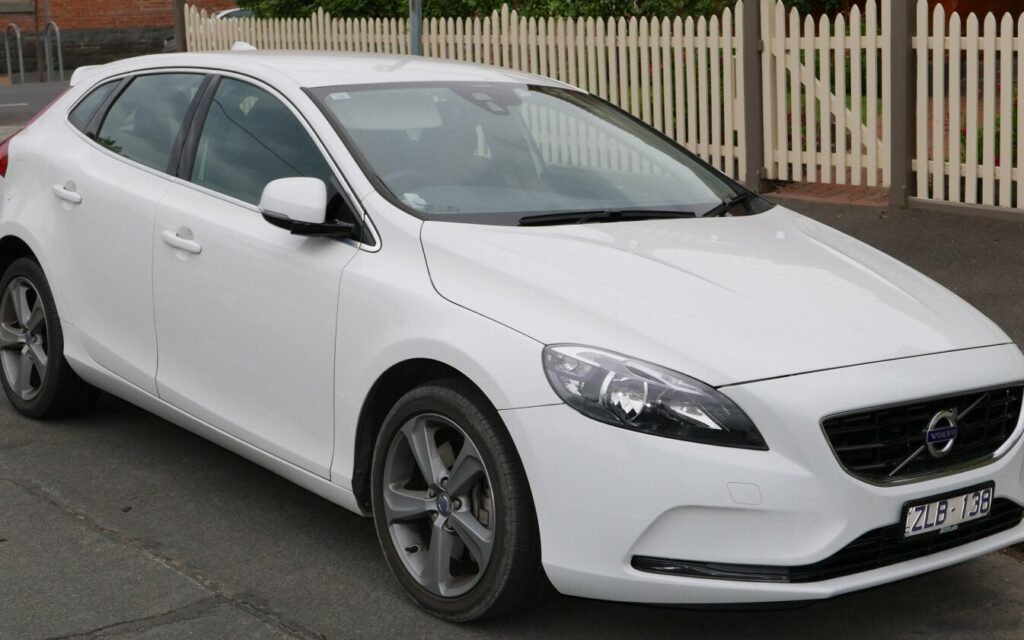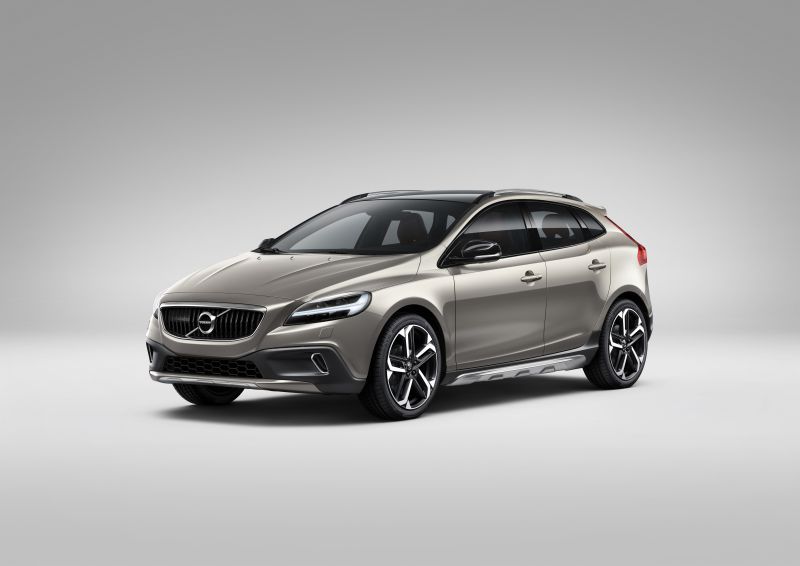
The Volvo V40 Cross Country, specifically the facelifted 2016-2018 model year equipped with the 2.0 D4 engine producing 190 horsepower, represents a blend of compact hatchback practicality and raised ride height for a more rugged appearance. Introduced as part of Volvo’s broader V40 range, the Cross Country variant aimed to appeal to buyers seeking a versatile vehicle capable of handling both urban commutes and occasional off-pavement excursions. This particular engine and trim level occupied a mid-range position within the V40 Cross Country lineup, offering a balance between performance, fuel efficiency, and price. It sat above the lower-powered D2 and D3 diesel options, and below the more potent D5 and petrol-powered T5 models.
Volvo V40 Cross Country (2016-2018) 2.0 D4: An Overview
The V40 Cross Country, based on Volvo’s C/S platform (internally designated as 1HX0), was a significant model for the Swedish automaker. The 2016 facelift brought revised styling, including a new grille, headlights, and taillights, along with interior upgrades and enhanced safety features. The 2.0 D4 engine, a mainstay of Volvo’s diesel offerings, was a key component of the Cross Country’s appeal, providing a compelling combination of torque and economy. This variant was primarily sold in European markets, with limited availability in North America.
Powertrain & Engine Architecture
The heart of the V40 Cross Country D4 is Volvo’s 2.0-liter four-cylinder diesel engine, internally designated as D4204T14. This engine is a turbocharged diesel, utilizing a common-rail direct fuel injection system. The fuel injection system operates at extremely high pressures to ensure efficient combustion and reduced emissions. The engine features a single turbocharger, intercooler, and a 16:1 compression ratio. It produces 190 hp at 4250 rpm and a substantial 400 Nm (295 lb-ft) of torque between 1750 and 2500 rpm. This broad torque curve provides strong acceleration in everyday driving situations.
The engine’s valvetrain consists of four valves per cylinder (DOHC), contributing to its efficient breathing and power output. The engine is transversely mounted in the front of the vehicle, driving the front wheels. While a six-speed manual transmission was standard, a six-speed automatic transmission (Geartronic) was also available, and is the focus of this article. The automatic transmission is a conventional torque-converter type, offering smooth shifts and ease of use. It is programmed to prioritize fuel efficiency while still providing responsive performance when needed.
Driving Characteristics
The V40 Cross Country 2.0 D4 with the automatic transmission delivers a comfortable and refined driving experience. The engine’s ample torque allows for effortless cruising and confident overtaking. Acceleration from 0 to 100 km/h (0-62 mph) takes approximately 7.7 seconds, making it reasonably quick for a compact crossover. The automatic transmission’s gear ratios are optimized for both fuel economy and performance. Lower gears provide brisk acceleration, while higher gears allow for relaxed highway cruising. Compared to the manual transmission version, the automatic offers slightly reduced fuel economy and a marginally slower 0-60 mph time (around 7.3 seconds calculated), but provides greater convenience, particularly in urban traffic.
The raised ride height of the Cross Country, compared to the standard V40 hatchback, provides improved visibility and a more comfortable ride over uneven surfaces. However, it also results in a slightly higher center of gravity, which can be noticeable during spirited cornering. The steering is precise and well-weighted, providing a confident feel behind the wheel.
Equipment & Trim Levels
The V40 Cross Country D4 typically came well-equipped, even in base trim. Standard features often included climate control, power windows and mirrors, a touchscreen infotainment system with Bluetooth connectivity, and a suite of safety features such as ABS, traction control, and stability control. Higher trim levels added features such as leather upholstery, heated front seats, a sunroof, and advanced driver-assistance systems like adaptive cruise control and lane-keeping assist. Optional extras included a premium sound system, navigation, and parking sensors.
Interior upholstery typically consisted of cloth or leather, with a range of color options available. The dashboard layout was clean and modern, with a focus on ergonomics and ease of use. The Cross Country trim also featured unique interior trim elements, such as aluminum or wood accents, to differentiate it from the standard V40.
Chassis & Braking
The V40 Cross Country’s chassis is based on Volvo’s C/S platform, featuring independent suspension at all four wheels. The front suspension utilizes a McPherson strut design with coil springs and an anti-roll bar, while the rear suspension employs an independent multi-link setup. This suspension configuration provides a good balance between ride comfort and handling. The Cross Country variant features a slightly raised suspension compared to the standard V40, providing increased ground clearance.
Braking duties are handled by ventilated discs at the front and solid discs at the rear. ABS (Anti-lock Braking System) is standard, along with electronic brake-force distribution (EBD) and brake assist. The steering system is a rack-and-pinion type with electric power assistance.
Market Reception & Comparison
The Volvo V40 Cross Country 2.0 D4 was generally well-received by automotive critics. It was praised for its stylish design, comfortable ride, fuel efficiency, and strong diesel engine. However, some critics noted that the rear seat space was somewhat limited and that the infotainment system could be complex to use. Compared to other compact crossovers, such as the Audi Q3 and BMW X1, the V40 Cross Country offered a more distinctive Scandinavian design and a focus on safety. In terms of fuel economy, the D4 engine delivered impressive figures, achieving around 4.0 l/100 km (58.8 US mpg) on the combined cycle. Reliability was generally good, although some owners reported minor issues with the infotainment system and electrical components.
Technical Specifications
| Engine Model/Code | D4204T14 |
| Engine Displacement | 1969 cm3 (120.16 cu. in.) |
| Number of Cylinders | 4, Inline |
| Fuel Type | Diesel |
| Power | 190 Hp @ 4250 rpm |
| Torque | 400 Nm (295.02 lb.-ft.) @ 1750-2500 rpm |
| Compression Ratio | 16:1 |
| Fuel Injection System | Diesel Commonrail |
| Turbocharger | Single Turbo, Intercooler |
| Transmission | 6-speed Automatic (Geartronic) |
| Drive Wheels | Front Wheel Drive |
| Kerb Weight | 1520 kg (3351.03 lbs.) |
| Maximum Speed | 210 km/h (130.49 mph) |
| 0-100 km/h | 7.7 sec |
| Fuel Consumption (Combined) | 4 l/100 km (58.8 US mpg) |
| CO2 Emissions | 104 g/km |
| Fuel Tank Capacity | 62 l (16.38 US gal) |
Legacy
The Volvo V40 Cross Country 2.0 D4 remains a popular choice in the used car market, particularly in Europe. The D4 engine is known for its durability and reliability, and the automatic transmission is generally trouble-free. However, as with any used vehicle, it’s important to check for signs of wear and tear and to ensure that the car has been properly maintained. The V40 Cross Country’s blend of style, practicality, and fuel efficiency continues to appeal to buyers seeking a versatile and comfortable compact crossover. While superseded by the XC40, the V40 Cross Country represents a significant chapter in Volvo’s history and a testament to the brand’s commitment to safety and innovation.