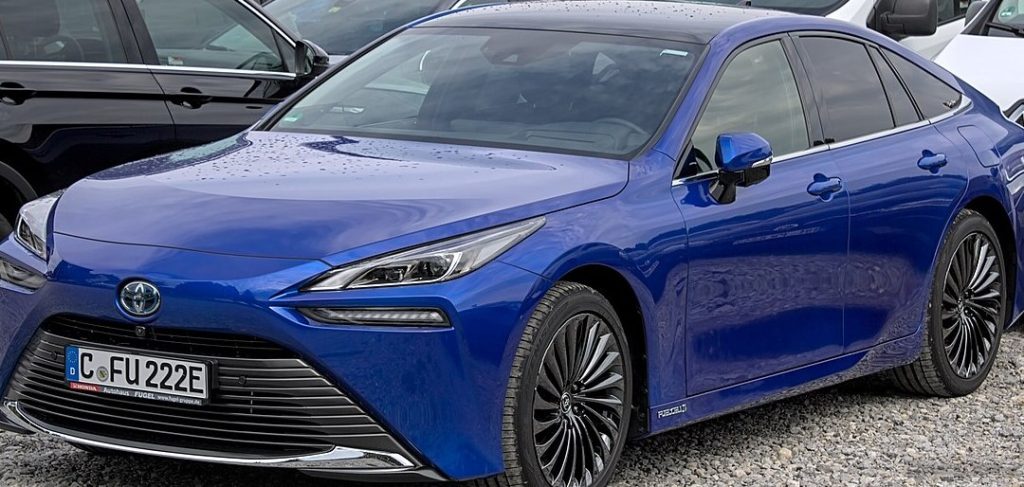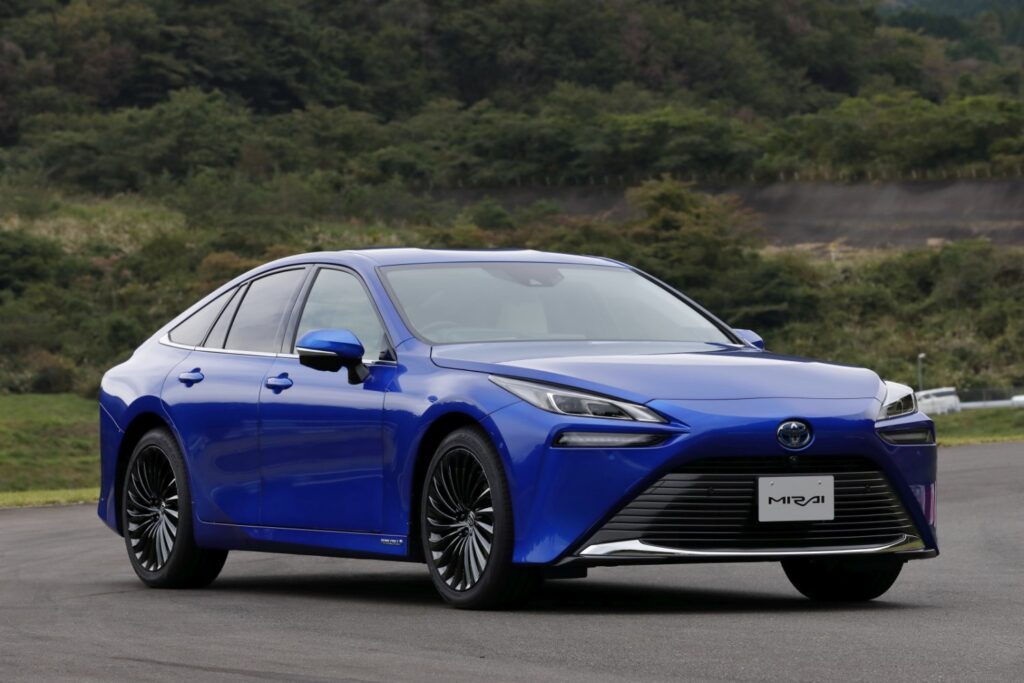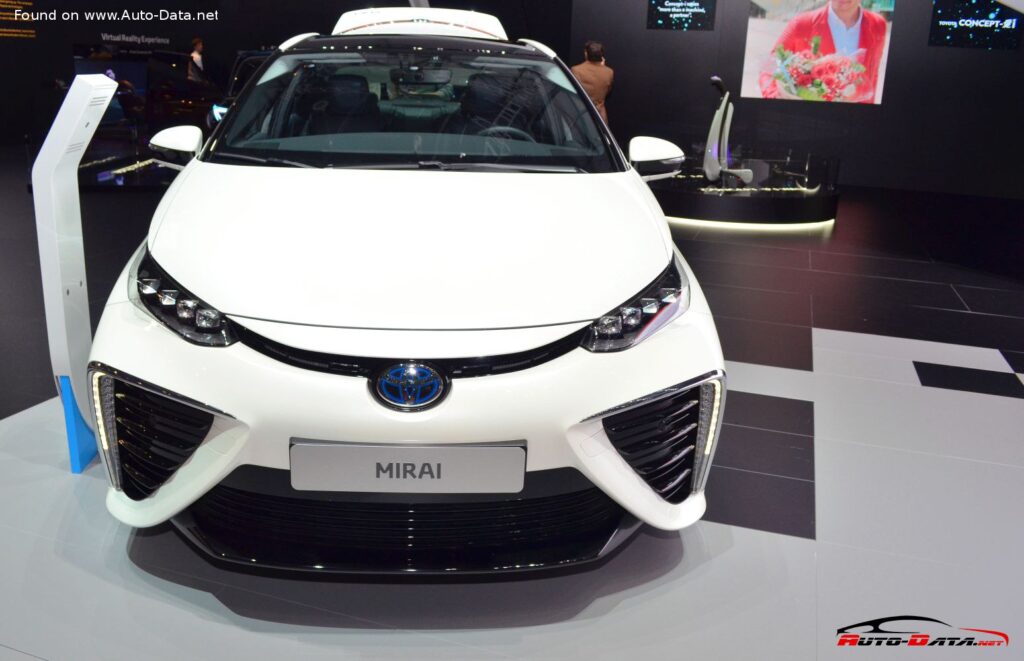
The Toyota Mirai 1.6 kWh (154 hp) Hydrogen e-CVT represents a pivotal moment in automotive history, being one of the first mass-produced hydrogen fuel cell vehicles (FCEVs). Produced from 2014 to 2020, this first-generation Mirai (codenamed JPD10) aimed to demonstrate the viability of hydrogen as a zero-emission fuel source for personal transportation. It occupied a unique position in Toyota’s lineup, representing a forward-thinking, albeit niche, offering focused on environmental sustainability rather than traditional performance metrics. The Mirai was built on a dedicated platform, showcasing Toyota’s commitment to fuel cell technology and its vision for a hydrogen-based future.
Powertrain & Engine Architecture
The core of the Mirai is its Fuel Cell Electric Vehicle (FCEV) powertrain. Unlike battery electric vehicles (BEVs), the Mirai doesn’t rely on plugging into an external power source. Instead, it generates electricity onboard by combining hydrogen with oxygen. This process produces water as the only emission. The 1.6 kWh battery pack serves as a buffer, storing energy generated by the fuel cell and providing supplemental power during acceleration. The electric motor, delivering 154 hp at 6144 rpm and 247.08 lb-ft of torque between 0-2048 rpm, drives the front wheels. The system power output is also rated at 154 hp. The fuel cell stack itself is a sophisticated piece of engineering, utilizing a proton exchange membrane (PEM) to facilitate the electrochemical reaction. Hydrogen is stored in a high-pressure tank, typically at 700 bar (approximately 10,000 psi). The e-CVT (electronically controlled continuously variable transmission) manages the power delivery from the electric motor to the wheels, optimizing efficiency and providing a smooth driving experience.
Fuel Cell System Details
The fuel cell system isn’t simply a hydrogen-to-electricity converter. It includes a complex system of air compressors, humidifiers, temperature control systems, and power control units. The air compressor supplies oxygen to the fuel cell, while the humidifier maintains optimal moisture levels for efficient operation. Precise temperature control is crucial for maximizing fuel cell performance and longevity. The power control unit manages the flow of electricity from the fuel cell to the battery and the electric motor. The entire system is designed for high efficiency and reliability, with Toyota implementing numerous safety features to mitigate the risks associated with hydrogen storage and handling.
Driving Characteristics
The Mirai 1.6 kWh offers a driving experience that prioritizes smoothness and quietness over outright performance. Acceleration from 0-60 mph takes approximately 9.1 seconds, and 0-62 mph/0-100 km/h takes 9.6 seconds, which is comparable to some conventional gasoline-powered vehicles in its class, but not particularly sporty. The e-CVT provides seamless acceleration, eliminating the gear shifts associated with traditional automatic transmissions. The instant torque delivery of the electric motor provides adequate responsiveness for everyday driving situations. However, the car’s relatively high curb weight (4078.55 lbs) and the limitations of the fuel cell system mean that it doesn’t offer the same level of acceleration as some of its gasoline-powered competitors. The steering is light and precise, and the suspension provides a comfortable ride, although it’s not particularly engaging for enthusiastic drivers. The focus is clearly on providing a refined and eco-friendly driving experience.
Equipment & Trim Levels
The Mirai was generally well-equipped, reflecting its position as a technologically advanced vehicle. Standard features typically included automatic climate control, a touchscreen infotainment system, navigation, Bluetooth connectivity, and a suite of safety features such as pre-collision system, lane departure alert, and adaptive cruise control. Interior upholstery was typically a combination of synthetic leather and fabric, with higher trims offering genuine leather options. Dashboard configuration was modern and minimalist, emphasizing the car’s high-tech character. Optional extras included a premium audio system, heated and ventilated front seats, and a power moonroof. The Mirai was offered in a limited number of trim levels, with the primary differentiation being the addition of luxury features and convenience items.
Chassis & Braking
The Mirai utilizes a front-engine, front-wheel-drive layout. The front suspension employs an independent McPherson strut design, while the rear suspension features a torsion beam setup. This configuration provides a good balance of ride comfort and handling stability. The braking system consists of ventilated discs at the front and solid discs at the rear, providing adequate stopping power for the vehicle’s weight and performance. Anti-lock braking system (ABS) is standard, enhancing safety during emergency braking situations. The tires are typically 255/55 R17, mounted on 17-inch alloy wheels. The chassis was designed to accommodate the hydrogen fuel tank and the fuel cell system components, requiring careful packaging and weight distribution considerations.
Market Reception & Comparison
The Toyota Mirai faced a unique set of challenges in the marketplace. Its high price tag, limited hydrogen refueling infrastructure, and the novelty of the technology hindered widespread adoption. Critics generally praised the car’s technology, fuel efficiency, and smooth driving experience, but also noted its limited range and the inconvenience of finding hydrogen refueling stations. Compared to other vehicles in its price range, the Mirai offered a different value proposition, prioritizing environmental sustainability over traditional performance and practicality. Fuel economy, measured in miles per gallon equivalent (MPGe), was significantly higher than that of conventional gasoline-powered vehicles. Reliability was generally good, although long-term durability of the fuel cell system remained a concern for some potential buyers. Compared to the gasoline-powered Toyota Camry or Accord, the Mirai offered a significantly different driving experience and ownership proposition.
Technical Specifications
| Brand | Toyota |
| Model | Mirai |
| Generation | Mirai |
| Type (Engine) | 1.6 kWh (154 Hp) Hydrogen e-CVT |
| Start of production | 2014 year |
| End of production | 2020 year |
| Powertrain Architecture | FCEV (Fuel Cell Electric Vehicle) |
| Body type | Sedan |
| Seats | 4 |
| Doors | 4 |
| Fuel Type | Hydrogen |
| Acceleration 0 – 100 km/h | 9.6 sec |
| Acceleration 0 – 62 mph | 9.6 sec |
| Acceleration 0 – 60 mph | 9.1 sec |
| Maximum speed | 175 km/h (108.74 mph) |
| Weight-to-power ratio | 12 kg/Hp, 83.2 Hp/tonne |
| Gross battery capacity | 1.6 kWh |
| Electric motor power | 154 Hp @ 6144 rpm |
| Electric motor Torque | 335 Nm @ 0-2048 rpm (247.08 lb.-ft. @ 0-2048 rpm) |
| System power | 154 Hp @ 6144 rpm |
| Kerb Weight | 1850 kg (4078.55 lbs) |
| Max. weight | 2180 kg (4806.08 lbs) |
| Max load | 330 kg (727.53 lbs) |
| Trunk (boot) space – minimum | 361 l (12.75 cu. ft) |
| Length | 4890 mm (192.52 in) |
| Width | 1810 mm (71.26 in) |
| Height | 1535 mm (60.43 in) |
| Wheelbase | 2780 mm (109.45 in) |
| Front track | 1535 mm (60.43 in) |
| Rear (Back) track | 1545 mm (60.83 in) |
| Front overhang | 1080 mm (42.52 in) |
| Rear overhang | 1030 mm (40.55 in) |
| Ride height (ground clearance) | 130 mm (5.12 in) |
| Drag coefficient (Cd) | 0.29 |
| Minimum turning circle (turning diameter) | 11.3 m (37.07 ft) |
| Drive wheel | Front wheel drive |
| Number of gears and type of gearbox | automatic transmission e-CVT |
| Front suspension | Independent type McPherson |
| Rear suspension | Torsion |
| Front brakes | Ventilated discs |
| Rear brakes | Disc |
| Assisting systems | ABS (Anti-lock braking system) |
| Tires size | 255/55 R17 |
| Wheel rims size | 17 |
Legacy
The first-generation Toyota Mirai served as a crucial stepping stone in the development of hydrogen fuel cell technology. While its market impact was limited, it provided valuable real-world data and experience that informed the design of the second-generation Mirai. The powertrain, while complex, has proven to be relatively reliable in real-world use, with many early models still on the road today. However, the long-term durability of the fuel cell stack remains a key area of ongoing research and development. In the used car market, the Mirai represents a unique and intriguing option for environmentally conscious buyers, but its limited refueling infrastructure and higher maintenance costs compared to conventional vehicles continue to be significant drawbacks. The Mirai’s legacy lies not in its sales figures, but in its pioneering role in paving the way for a potential hydrogen-powered future.