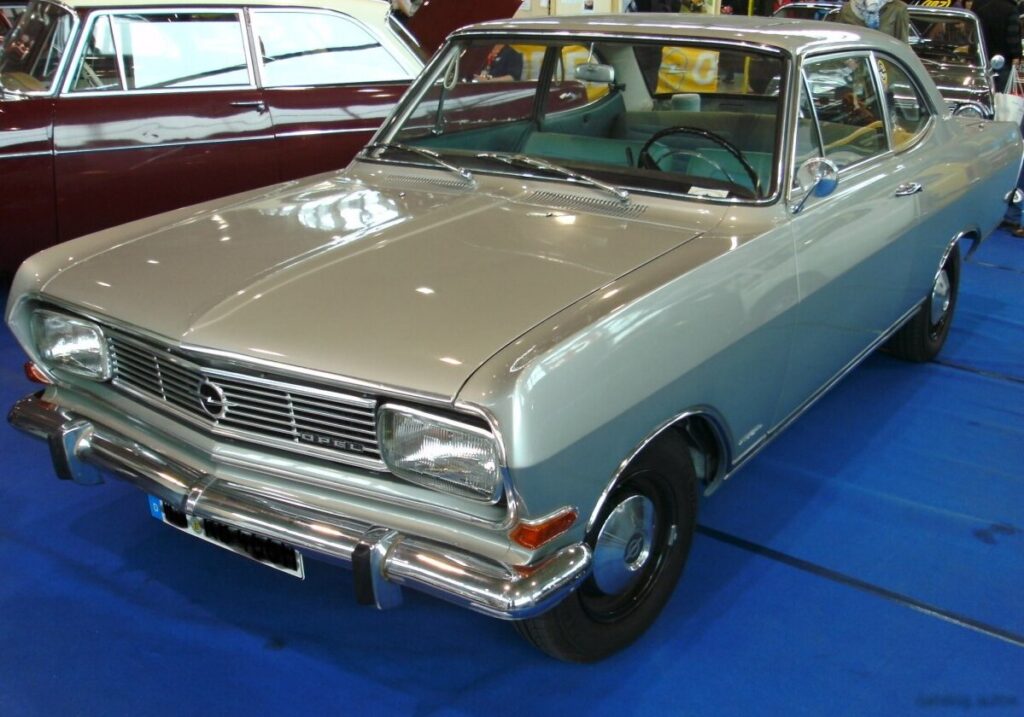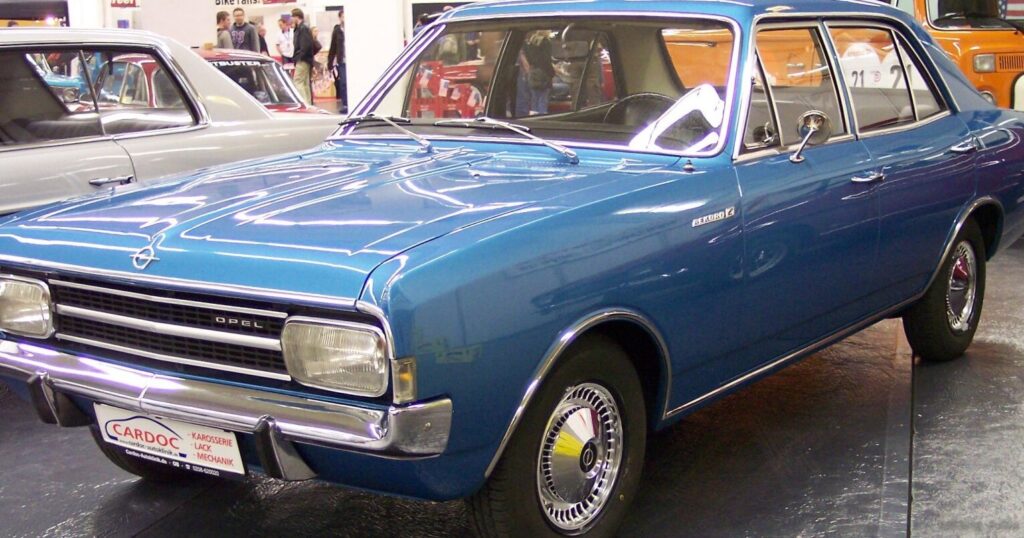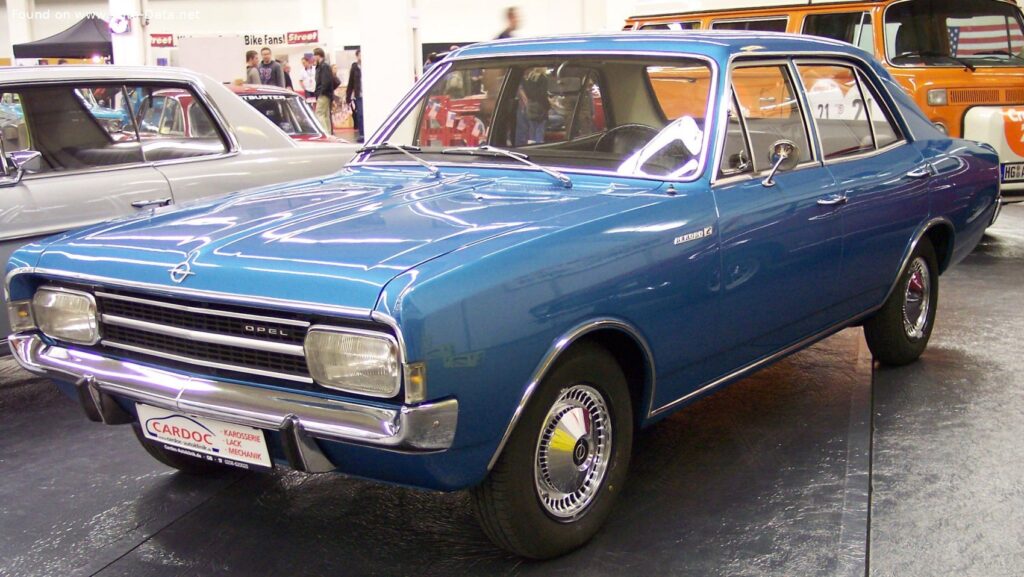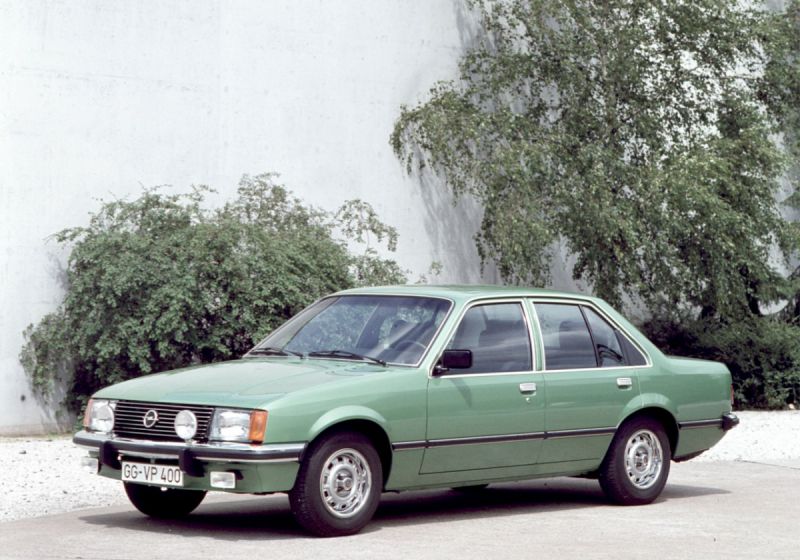
The Opel Rekord E 2.0 E (110 hp) was a variant of the Rekord E produced between 1977 and 1982. Positioned as a mid-range offering within the Rekord E lineup, it provided a balance between performance and affordability, slotting above the base 1.7L models and below the more powerful 2.1L and diesel options. The Rekord E itself was a significant model for Opel, representing a modern, comfortable, and relatively spacious family sedan designed to compete in the increasingly competitive European market. It was built on the GM H-platform, shared with other GM vehicles like the Chevrolet Monza and Buick Skylark, reflecting Opel’s integration within the General Motors organization.
Powertrain & Engine Architecture
The heart of the Rekord E 2.0 E was the 20E engine, a 1,979 cc (120.77 cubic inches) inline-four cylinder gasoline engine. This engine featured a single overhead camshaft (SOHC) valvetrain with two valves per cylinder. The 20E utilized Bosch multi-port manifold fuel injection, a relatively advanced system for the time, contributing to improved fuel efficiency and smoother operation compared to carbureted engines. The engine produced 110 horsepower at 5,400 rpm and 159 Nm (117.27 lb-ft) of torque at 3,000 rpm. The compression ratio was 9.4:1. Engine oil capacity was 3.8 liters (4.02 US quarts), and the cooling system held 9.1 liters (9.62 US quarts) of coolant.
While a four-speed manual transmission was standard, the 2.0 E was also frequently paired with a three-speed automatic transmission. This automatic, a General Motors-sourced unit, was a popular choice for buyers prioritizing convenience and ease of driving. The automatic transmission’s gear ratios were geared towards comfortable cruising rather than outright acceleration, reflecting the Rekord E’s role as a family car.
Engine Codes and Variations
The 20E engine code designates this specific configuration. While the basic engine architecture remained consistent throughout the Rekord E’s production run, minor variations in fuel injection settings and emissions control equipment existed depending on the specific market and year of manufacture. These changes were primarily aimed at complying with evolving emissions regulations.
Driving Characteristics
The Rekord E 2.0 E offered a comfortable and predictable driving experience. With 110 hp, acceleration was adequate but not particularly brisk. Zero to 62 mph (0-100 km/h) took approximately 12 seconds. The automatic transmission, while providing smooth shifts, did detract somewhat from the engine’s available power, resulting in a slightly slower acceleration time compared to the manual transmission version. The engine delivered its peak torque at 3,000 rpm, providing reasonable pulling power for everyday driving and highway overtaking. The rear-wheel drive configuration offered balanced handling, although it wasn’t particularly sporty. The suspension was tuned for comfort, absorbing bumps and providing a relatively smooth ride.
Compared to the base 1.7L Rekord E, the 2.0 E offered a noticeable improvement in performance, particularly in terms of highway cruising ability. The larger engine had more reserve power for climbing hills or carrying a full load of passengers and luggage. Compared to the more powerful 2.1L models, the 2.0 E was less focused on outright performance, offering a more economical and accessible option.
Equipment & Trim Levels
The Rekord E 2.0 E typically came equipped with a reasonable level of standard features for its time. These included cloth upholstery, a basic instrument panel with speedometer, fuel gauge, and temperature gauge, and manually adjustable seats. Power steering and a four-speed automatic transmission were often included as standard or optional equipment. Optional extras included a sunroof, upgraded audio system, and more luxurious interior trim options. The trim level could vary depending on the market, with some countries offering more comprehensive packages than others.
The interior design of the Rekord E was functional and straightforward, prioritizing practicality and durability. The dashboard layout was clean and uncluttered, with easy-to-read gauges. The cabin offered ample space for five passengers, and the trunk provided a generous 540 liters (19.07 cubic feet) of cargo capacity.
Chassis & Braking
The Rekord E 2.0 E utilized a conventional rear-wheel drive chassis with independent front suspension and a solid rear axle. The front suspension featured coil springs and anti-roll bar, while the rear suspension used leaf springs. Braking was accomplished via ventilated discs on the front wheels and drum brakes on the rear wheels. The braking system provided adequate stopping power for normal driving conditions, but it wasn’t particularly powerful by modern standards. The kerb weight of the Rekord E 2.0 E was approximately 1,100 kg (2,425.08 lbs).
Market Reception & Comparison
The Opel Rekord E 2.0 E was generally well-received by automotive critics as a practical and comfortable family sedan. It was praised for its spacious interior, smooth ride, and relatively fuel-efficient engine. However, some critics noted that its performance was not particularly exciting, and its handling was not as sharp as some of its competitors. Fuel consumption was rated at 9.5 l/100 km (24.8 US mpg, 29.7 UK mpg, 10.5 km/l). Compared to the 1.7L Rekord E, the 2.0 E offered a significant improvement in performance and refinement. Compared to the 2.1L models, it offered a more affordable price point and slightly better fuel economy.
Reliability was generally good, although the automatic transmission could be prone to issues if not properly maintained. The 20E engine was known to be durable and relatively trouble-free.
Technical Specifications
| Brand | Opel |
| Model | Rekord |
| Generation | Rekord E |
| Type (Engine) | 2.0 E (110 Hp) |
| Start of production | 1977 |
| End of production | 1982 |
| Powertrain Architecture | Internal Combustion engine |
| Body type | Sedan |
| Seats | 5 |
| Doors | 2-4 |
| Fuel consumption (combined) | 9.5 l/100 km |
| Fuel Type | Petrol (Gasoline) |
| Acceleration 0 – 100 km/h | 12 sec |
| Acceleration 0 – 62 mph | 12 sec |
| Acceleration 0 – 60 mph | 11.4 sec |
| Maximum speed | 181 km/h (112.47 mph) |
| Weight-to-power ratio | 10 kg/Hp |
| Power | 110 Hp @ 5400 rpm |
| Torque | 159 Nm @ 3000 rpm (117.27 lb.-ft. @ 3000 rpm) |
| Engine Model/Code | 20E |
| Engine displacement | 1979 cm3 (120.77 cu. in.) |
| Number of cylinders | 4 |
| Engine configuration | Inline |
| Cylinder Bore | 95 mm (3.74 in.) |
| Piston Stroke | 69.8 mm (2.75 in.) |
| Compression ratio | 9.4:1 |
| Number of valves per cylinder | 2 |
| Fuel injection system | Multi-port manifold injection |
| Engine aspiration | Naturally aspirated |
| Valvetrain | SOHC |
| Engine oil capacity | 3.8 l (4.02 US qt | 3.34 UK qt) |
| Coolant capacity | 9.1 l (9.62 US qt | 8.01 UK qt) |
| Kerb Weight | 1100 kg (2425.08 lbs.) |
| Max. weight | 1600 kg (3527.4 lbs.) |
| Max load | 500 kg (1102.31 lbs.) |
| Trunk (boot) space – minimum | 540 l (19.07 cu. ft.) |
| Fuel tank capacity | 65 l (17.17 US gal | 14.3 UK gal) |
| Length | 4593 mm (180.83 in.) |
| Width | 1726 mm (67.95 in.) |
| Height | 1420 mm (55.91 in.) |
| Wheelbase | 2668 mm (105.04 in.) |
Legacy
The Opel Rekord E 2.0 E, while not a particularly rare or collectible model today, remains a popular choice among classic car enthusiasts. The 20E engine is known for its durability and relatively simple maintenance requirements. Parts availability is generally good, although some specific components may be difficult to find. The automatic transmission, if well-maintained, can provide years of reliable service. The Rekord E 2.0 E represents a well-built and comfortable family sedan from a bygone era, offering a nostalgic driving experience and a glimpse into the automotive landscape of the late 1970s and early 1980s. In the used car market, well-preserved examples command reasonable prices, appealing to those seeking a classic European car with a reputation for reliability.