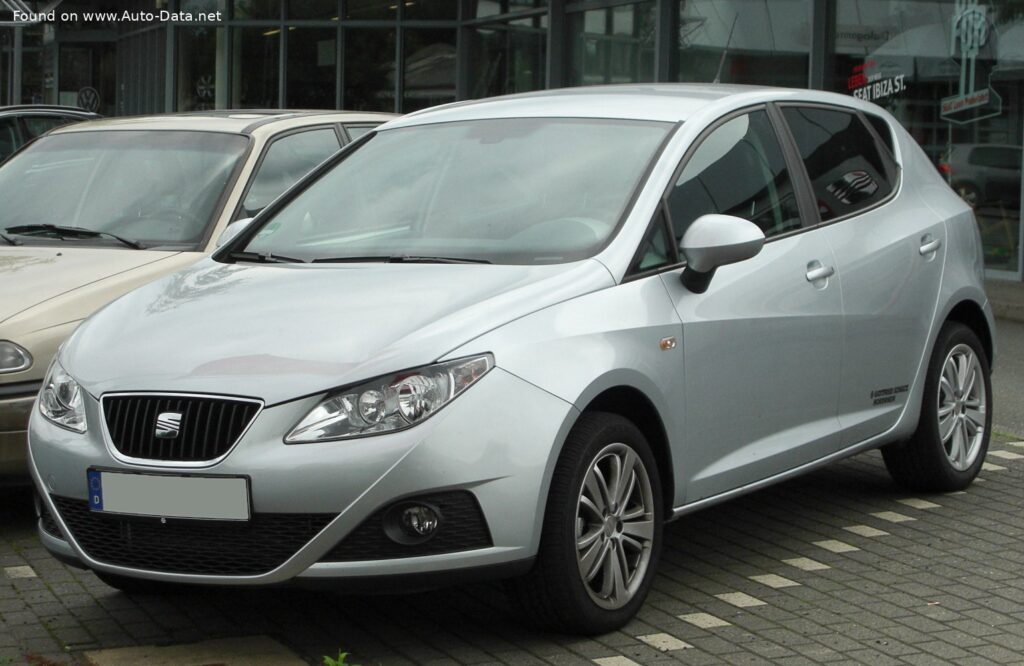
The Seat Ibiza IV 1.2 TDI (75 hp) Start & Stop E-Ecomotive is a subcompact hatchback produced by the Spanish automaker Seat between 2010 and 2012. This variant occupied the entry-level position within the fourth generation Ibiza (Ibiza IV, chassis code 6L) lineup, focusing on fuel efficiency and affordability. It was positioned below the 1.6-liter gasoline and larger 1.6 TDI models, and aimed at buyers prioritizing low running costs over outright performance. The E-Ecomotive designation signified the inclusion of Seat’s Start & Stop system and other efficiency-enhancing technologies, making it a key model in Seat’s efforts to reduce its fleet average CO2 emissions.
Powertrain & Engine Architecture
The Ibiza 1.2 TDI E-Ecomotive is powered by the CFWA engine code, a 1.2-liter three-cylinder turbocharged diesel engine. This engine is part of the Volkswagen Group’s EA188 family, known for its compact size and relatively lightweight construction. The CFWA features a common rail direct fuel injection system, delivering fuel directly into the combustion chamber at pressures up to 1,600 bar. This system, supplied by Bosch, optimizes fuel atomization for improved combustion efficiency and reduced emissions. The engine utilizes a single overhead camshaft (SOHC) design operating four valves per cylinder (DOHC). A small turbocharger with an intercooler is employed to boost power and torque, mitigating the typical power deficit associated with small-displacement engines.
The engine’s 75 horsepower output is achieved at 4,000 rpm, while peak torque of 180 Nm (132.76 lb-ft) is available between 1,500 and 3,450 rpm. This broad torque curve provides reasonable drivability in everyday conditions. The Ibiza 1.2 TDI E-Ecomotive was exclusively offered with a five-speed manual transmission. This transmission was chosen to maximize fuel economy and complement the engine’s torque characteristics. The gearbox is a standard, cable-operated unit, known for its relatively simple and robust design.
Start & Stop System
A defining feature of this variant is the inclusion of Seat’s Start & Stop system. This system automatically shuts off the engine when the vehicle comes to a standstill (e.g., at traffic lights) and restarts it instantly when the driver depresses the clutch pedal. The system relies on a reinforced starter motor and a robust dual-mass flywheel to withstand the frequent start-stop cycles. The Start & Stop system, combined with other E-Ecomotive enhancements, contributes significantly to the vehicle’s low fuel consumption and CO2 emissions.
Driving Characteristics
The 1.2 TDI E-Ecomotive offers modest performance, prioritizing fuel economy over acceleration. The 0-100 km/h (0-62 mph) sprint takes approximately 13.9 seconds, and the top speed is 173 km/h (107.5 mph). In real-world driving, the engine feels adequate for urban and suburban commuting, but can feel strained when fully loaded or during highway overtaking maneuvers. The five-speed manual transmission is well-matched to the engine’s torque curve, allowing for comfortable cruising at highway speeds, although engine noise can become noticeable. Compared to the 1.6-liter gasoline Ibiza, the 1.2 TDI offers significantly better fuel economy but lacks the responsiveness and overall power of the larger engine. The 1.6 TDI models provided a noticeable performance upgrade, but at the cost of increased fuel consumption and emissions.
The gear ratios are optimized for fuel efficiency, with a relatively long fifth gear. This helps to reduce engine speed at highway speeds, minimizing fuel consumption. However, it also means that the engine may require downshifting when encountering hills or needing to accelerate quickly. The steering is light and precise, making the Ibiza easy to maneuver in tight spaces. The suspension provides a comfortable ride, absorbing bumps and imperfections in the road surface reasonably well.
Equipment & Trim Levels
The Ibiza 1.2 TDI E-Ecomotive typically came equipped with a basic level of standard features. These included central locking, power front windows, a basic audio system (usually with CD player and MP3 compatibility), and ABS brakes. Safety features included driver and passenger airbags. Interior upholstery was typically cloth, with a simple and functional dashboard design. The trim level was generally considered the base trim, with limited options for customization.
Optional extras available for this trim included air conditioning, alloy wheels, a trip computer, and upgraded audio systems. Some models also offered the option of a panoramic sunroof. The overall interior ambiance was functional and practical, rather than luxurious. The focus was on providing a comfortable and reliable driving experience at an affordable price point.
Chassis & Braking
The Ibiza 1.2 TDI E-Ecomotive utilizes a front-wheel-drive layout. The front suspension consists of independent McPherson struts with coil springs and an anti-roll bar. The rear suspension employs a semi-independent torsion beam setup, which is a cost-effective and space-saving solution. The front brakes are ventilated discs measuring 256×22 mm, providing adequate stopping power. The rear brakes are drum brakes measuring 200×40 mm. This combination of disc and drum brakes was common on entry-level Ibiza models to reduce production costs.
The steering system is a rack and pinion type with electric power assistance. The electric power steering provides light and precise steering feel, while also contributing to fuel efficiency by only drawing power when steering assistance is needed. The vehicle rides on 175/70 R14 tires mounted on 5J x 14 steel or alloy wheels.
Market Reception & Comparison
The Seat Ibiza 1.2 TDI E-Ecomotive was generally well-received by critics for its exceptional fuel economy and low CO2 emissions. It was praised as an ideal choice for urban commuters and environmentally conscious buyers. However, some reviewers criticized its lack of performance and basic interior appointments. Compared to other subcompact hatchbacks in its class, such as the Ford Fiesta and Volkswagen Polo, the Ibiza offered a competitive price point and a strong focus on fuel efficiency. The Fiesta often provided a more engaging driving experience, while the Polo offered a more refined interior. Within the Ibiza lineup, the 1.2 TDI E-Ecomotive was the most fuel-efficient model, but it lagged behind the 1.6-liter gasoline and TDI variants in terms of performance.
Reliability reports suggest that the 1.2 TDI engine is generally reliable, although the diesel particulate filter (DPF) can be prone to clogging if the vehicle is primarily used for short trips. Regular servicing and the use of high-quality diesel fuel are essential to maintain the engine’s health and prevent DPF issues.
Technical Specifications
| Brand | Seat |
| Model | Ibiza |
| Generation | Ibiza IV |
| Type | 1.2 TDI (75 Hp) Start & Stop E-Ecomotive |
| Start of production | 2010 |
| End of production | 2012 |
| Fuel consumption (urban) | 4.1 l/100 km (57.4 US mpg) |
| Fuel consumption (extra urban) | 3 l/100 km (78.4 US mpg) |
| Fuel consumption (combined) | 3.4 l/100 km (69.2 US mpg) |
| CO2 emissions | 89 g/km |
| Fuel Type | Diesel |
| Acceleration 0-100 km/h | 13.9 sec |
| Maximum speed | 173 km/h (107.5 mph) |
| Engine Model/Code | CFWA |
| Engine displacement | 1199 cm3 (73.17 cu. in.) |
| Number of cylinders | 3 |
| Power | 75 Hp @ 4000 rpm |
| Torque | 180 Nm @ 1500-3450 rpm (132.76 lb.-ft.) |
| Kerb Weight | 1075 kg (2369.97 lbs.) |
| Fuel tank capacity | 45 l (11.89 US gal) |
| Length | 4052 mm (159.53 in.) |
| Width | 1693 mm (66.65 in.) |
| Height | 1445 mm (56.89 in.) |
Legacy
The Seat Ibiza IV 1.2 TDI E-Ecomotive remains a popular choice in the used car market, particularly for buyers seeking an affordable and fuel-efficient vehicle. Its simple mechanical design and relatively low running costs make it an attractive option for first-time car owners and those on a tight budget. While the engine may not offer exhilarating performance, it is generally reliable and capable of providing years of service with proper maintenance. The inclusion of the Start & Stop system and other E-Ecomotive technologies demonstrates Seat’s commitment to reducing its environmental impact. Today, these models represent a cost-effective entry point into diesel hatchback ownership, offering a blend of practicality, efficiency, and affordability.