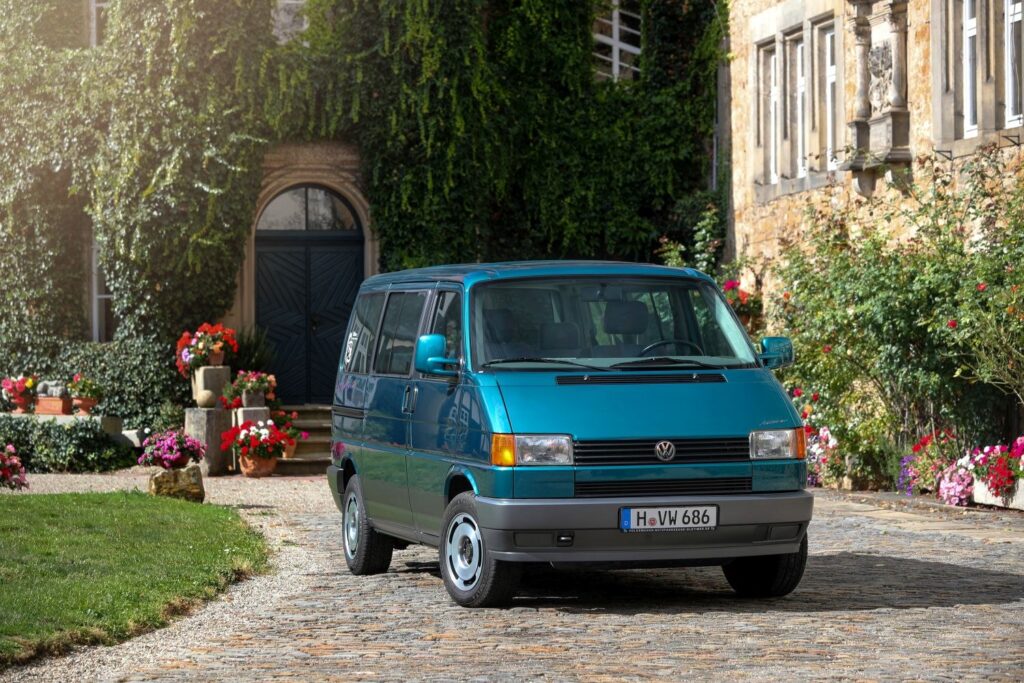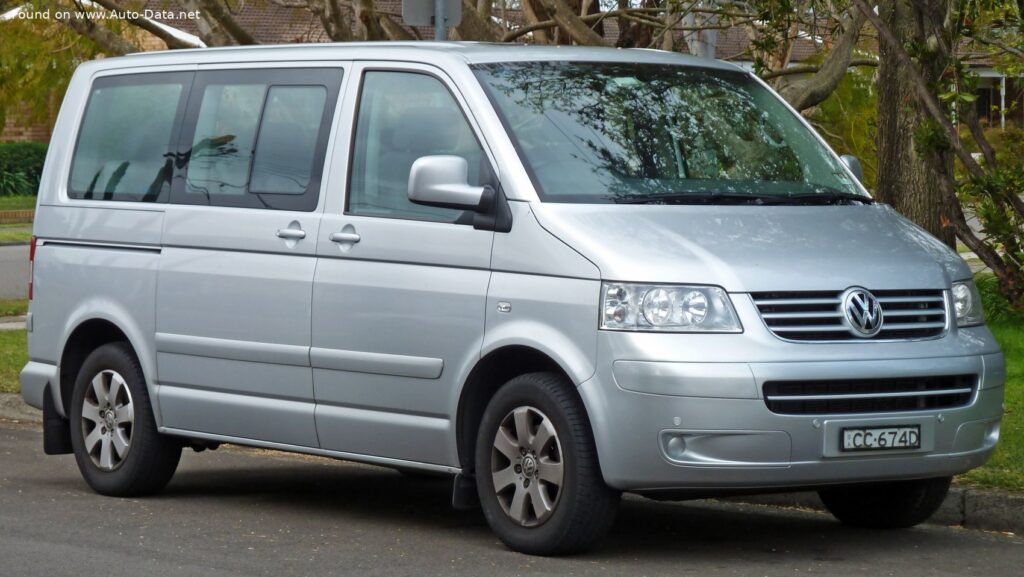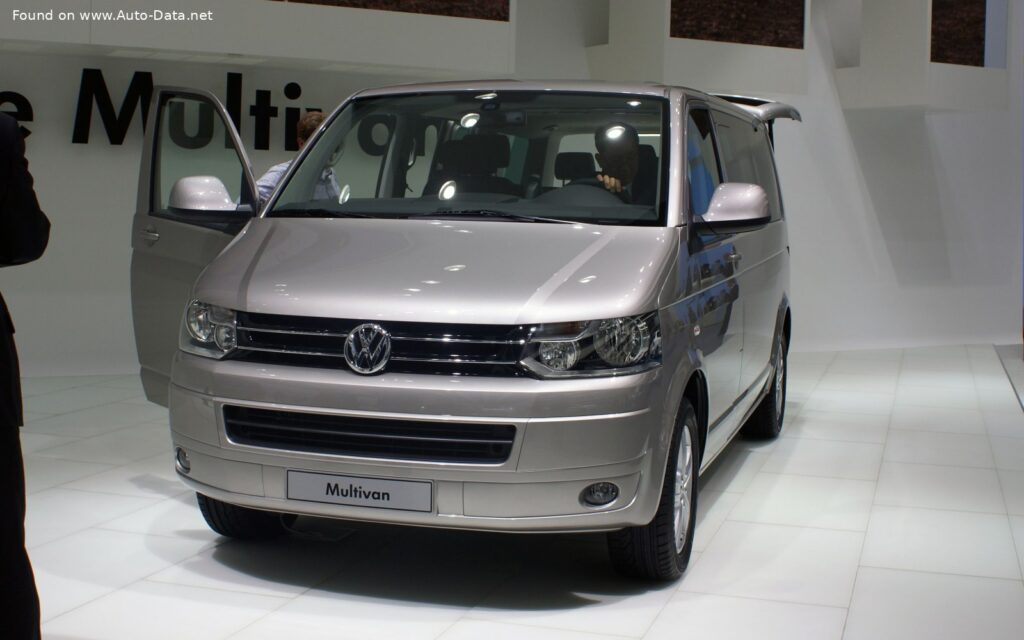
The Volkswagen Multivan (T5, facelift 2009) 2.0 TDI (180 hp) BMT DSG represents a significant iteration of Volkswagen’s popular commercial vehicle, blending passenger comfort with utility. Produced from 2009 to 2016, this variant occupied a mid-to-upper position within the T5 Multivan range, appealing to families and businesses requiring a versatile and relatively fuel-efficient people carrier. It was based on the Volkswagen Group’s 1HX0/A3 platform, shared with other models like the Volkswagen Transporter and, indirectly, the Volkswagen Golf. The “BMT” designation signifies “BlueMotion Technology,” indicating the inclusion of fuel-saving measures. This model aimed to provide a balance between performance, economy, and practicality, making it a common sight on European roads.
Powertrain & Engine Architecture
At the heart of the Multivan 2.0 TDI (180 hp) BMT DSG lies the CFCA engine code, a 1,968 cc (120.09 cu. in.) inline four-cylinder diesel engine. This engine is a common-rail direct injection diesel, utilizing piezo injectors for precise fuel delivery. The “BiTurbo” designation indicates the presence of two turbochargers – a smaller, more responsive turbocharger for low-end torque and a larger turbocharger for higher-end power. An intercooler is also incorporated to cool the compressed intake air, further enhancing performance. The engine produces 180 horsepower (hp) at 4,000 rpm and 400 Newton-meters (295.02 lb-ft) of torque between 1,500 and 2,000 rpm.
The engine features four valves per cylinder and is designed to meet Euro 5 emission standards, incorporating a diesel particulate filter (DPF) to reduce harmful emissions. The engine oil capacity is 7 liters (7.4 US qt / 6.16 UK qt), and specific oil specifications should be consulted in the vehicle’s owner’s manual. The engine is transversely mounted in the front of the vehicle.
Power is transmitted to the front wheels via a seven-speed dual-clutch gearbox (DSG). This DSG transmission offers both fully automatic operation and the ability for the driver to manually shift gears, providing a balance of convenience and control. The DSG’s quick and smooth gear changes contribute to a more engaging driving experience compared to traditional automatic transmissions.
Fuel Injection and Valvetrain
The common rail direct injection system operates at extremely high pressures, ensuring fine atomization of the fuel for efficient combustion. This system allows for precise control over the injection timing and quantity, optimizing both power and fuel economy. The valvetrain utilizes overhead camshafts, operating the four valves per cylinder. This configuration contributes to improved breathing and overall engine efficiency.
Driving Characteristics
The 2.0 TDI (180 hp) BMT DSG-equipped Multivan offers a respectable level of performance for its size and intended purpose. Acceleration from 0 to 100 km/h (0-62 mph) takes approximately 11.3 seconds, while 0 to 60 mph is achieved in around 10.7 seconds. The maximum speed is electronically limited to 191 km/h (118.68 mph). The twin-turbocharger setup provides a broad torque curve, delivering strong pulling power from low engine speeds. This makes the Multivan well-suited for carrying passengers and luggage, even on inclines.
Compared to the lower-powered diesel variants, the 180 hp engine offers a noticeable improvement in acceleration and overall responsiveness. While not as sporty as some passenger cars, the Multivan provides sufficient power for comfortable highway cruising and overtaking. Compared to higher-output TDI engines available in other Volkswagen commercial vehicles, this version prioritizes fuel efficiency and refinement over outright performance. The DSG transmission contributes to smooth gear changes and helps to keep the engine in its optimal power band.
Equipment & Trim Levels
The Multivan 2.0 TDI (180 hp) BMT DSG typically came equipped with a generous level of standard features. These included air conditioning, power windows, central locking, and an audio system. Higher trim levels offered additional features such as alloy wheels, parking sensors, a navigation system, and upgraded interior upholstery. Interior configurations varied, with options for five to seven seats, and the rear seats could often be folded or removed to create more cargo space. The dashboard layout was functional and ergonomic, with clear instrumentation and easy-to-use controls. Optional extras included features like a sunroof, leather seats, and advanced driver-assistance systems.
Chassis & Braking
The Multivan’s chassis is based on a reinforced version of the Volkswagen Transporter platform. The front suspension utilizes independent MacPherson struts, while the rear suspension employs a semi-trailing arm setup. This configuration provides a good balance of ride comfort and handling. The braking system features ventilated discs on the front wheels and drum brakes on the rear wheels. Anti-lock Braking System (ABS) is standard, enhancing braking performance and stability. Stabilizer bars are fitted to both the front and rear axles to reduce body roll during cornering. The steering system is a rack and pinion type, providing precise and responsive steering feel.
Market Reception & Comparison
The Volkswagen Multivan 2.0 TDI (180 hp) BMT DSG was generally well-received by automotive critics. It was praised for its versatility, comfortable ride, and relatively fuel-efficient engine. Fuel consumption figures are rated at 8.8 l/100 km (26.7 US mpg / 32.1 UK mpg) in urban conditions, 6.9 l/100 km (34.1 US mpg / 40.9 UK mpg) on the extra-urban cycle, and 7.6 l/100 km (30.9 US mpg / 37.2 UK mpg) combined. CO2 emissions are rated at 199 g/km. Compared to the lower-powered diesel variants, the 180 hp engine offered a noticeable improvement in performance without significantly compromising fuel economy. Compared to the more powerful TDI engines, it provided a more affordable and fuel-efficient option. Reliability was generally good, although owners should be aware of the potential for issues with the DPF and DSG transmission, as with many modern diesel vehicles.
Technical Specifications
| Brand | Volkswagen |
| Model | Multivan |
| Generation | Multivan (T5, facelift 2009) |
| Type (Engine) | 2.0 TDI (180 Hp) BMT DSG |
| Start of production | 2009 |
| End of production | 2016 |
| Powertrain Architecture | Internal Combustion engine |
| Body type | Minivan |
| Seats | 5-7 |
| Doors | 5 |
| Fuel consumption (urban) | 8.8 l/100 km (26.7 US mpg) |
| Fuel consumption (extra urban) | 6.9 l/100 km (34.1 US mpg) |
| Fuel consumption (combined) | 7.6 l/100 km (30.9 US mpg) |
| CO2 emissions | 199 g/km |
| Fuel Type | Diesel |
| Acceleration 0 – 100 km/h | 11.3 sec |
| Acceleration 0 – 62 mph | 11.3 sec |
| Acceleration 0 – 60 mph | 10.7 sec |
| Maximum speed | 191 km/h (118.68 mph) |
| Emission standard | Euro 5 |
| Power | 180 Hp @ 4000 rpm |
| Torque | 400 Nm @ 1500-2000 rpm (295.02 lb.-ft.) |
| Engine layout | Front, Transverse |
| Engine Model/Code | CFCA |
| Engine displacement | 1968 cm3 (120.09 cu. in.) |
| Number of cylinders | 4 |
| Engine configuration | Inline |
| Fuel injection system | Diesel Commonrail |
| Engine aspiration | BiTurbo, Intercooler |
| Engine oil capacity | 7 l (7.4 US qt / 6.16 UK qt) |
| Kerb Weight | 2181 kg (4808.28 lbs.) |
| Max. weight | 3000 kg (6613.87 lbs.) |
| Max load | 819 kg (1805.59 lbs.) |
| Length | 4892 mm (192.6 in.) |
| Width | 1904 mm (74.96 in.) |
| Height | 1970 mm (77.56 in.) |
| Wheelbase | 3000 mm (118.11 in.) |
| Number of gears and type of gearbox | 7 gears, automatic transmission DSG |
Legacy
The Volkswagen Multivan 2.0 TDI (180 hp) BMT DSG remains a popular choice in the used car market. The CFCA engine, while requiring regular maintenance (particularly regarding the DPF), is generally considered reliable. The DSG transmission, if properly maintained with regular fluid changes, can provide years of trouble-free operation. These vehicles offer a compelling combination of practicality, comfort, and fuel efficiency, making them well-suited for families and businesses alike. Their enduring popularity is a testament to Volkswagen’s reputation for building durable and versatile commercial vehicles.