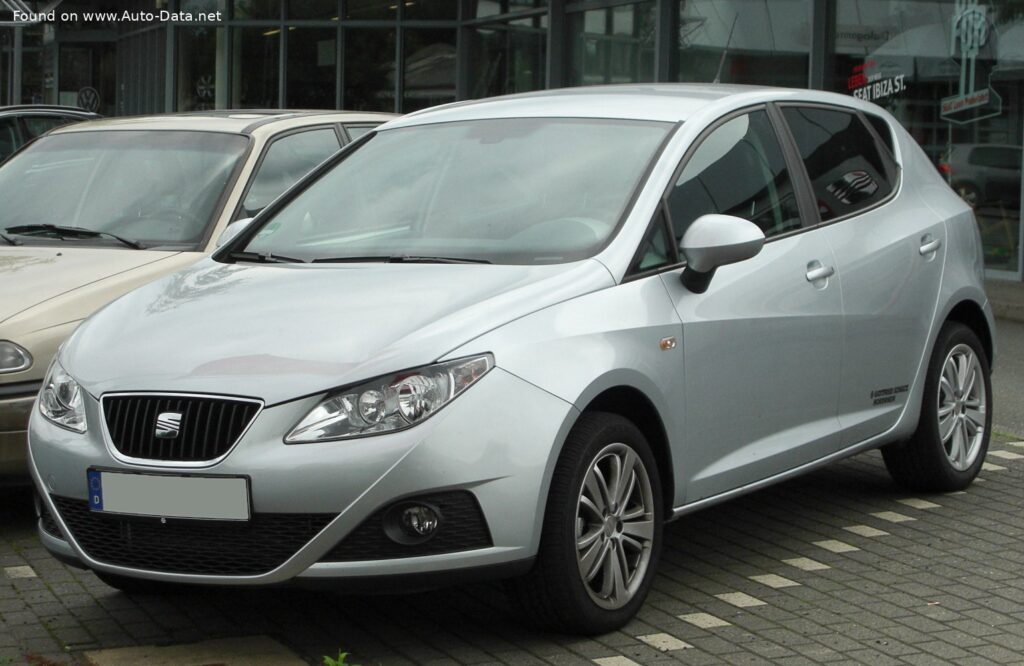
The Seat Ibiza IV 1.2 TSI (105 hp) was a front-wheel-drive hatchback produced between 2010 and 2012 as part of the fourth generation of the Seat Ibiza (Ibiza IV), which ran from 2008 to 2017. This variant occupied a mid-range position within the Ibiza IV lineup, offering a balance between fuel efficiency, performance, and affordability. It represented a move towards smaller, turbocharged engines as Seat sought to improve fuel economy and reduce emissions while still providing a reasonably engaging driving experience. The Ibiza IV itself was based on the Volkswagen Group’s PQ25 platform, shared with models like the Volkswagen Polo and Škoda Fabia.
The 1.2 TSI Engine and its Role in the Ibiza IV Lineup
The 1.2 TSI engine, designated with the engine code CBZB, was a key component of Seat’s powertrain strategy during this period. It was designed to replace larger, naturally aspirated engines, offering comparable power with significantly improved fuel economy. Within the Ibiza IV range, the 1.2 TSI 105 hp model sat between the lower-powered 1.2-liter MPI (Multi-Point Injection) versions and the more potent 1.6-liter TSI models. It provided a step up in performance from the base models, appealing to buyers who desired a more responsive driving experience without the higher running costs associated with the larger engines.
Powertrain & Engine Architecture
The CBZB 1.2 TSI engine is a 1.2-liter (1197 cc) inline-four cylinder gasoline engine featuring direct fuel injection and a turbocharger with an intercooler. This combination allowed for a relatively high power output of 105 hp (78 kW) at 5000 rpm and a torque figure of 175 Nm (129.07 lb-ft) available from 1550 to 4100 rpm. The direct injection system, utilizing high-pressure fuel injectors, precisely meters fuel into the combustion chamber, optimizing combustion efficiency and reducing emissions. The turbocharger, driven by exhaust gases, forces more air into the engine, increasing power output. The engine employed a timing chain rather than a belt, generally contributing to longer service intervals. The engine oil capacity is 3.6 liters (3.8 US qt / 3.17 UK qt), and the recommended coolant capacity is 5.6 liters (5.92 US qt / 4.93 UK qt). The engine’s transverse mounting and front-wheel-drive configuration were standard for this class of vehicle.
Transmission
The Ibiza IV 1.2 TSI (105 hp) was primarily offered with a 5-speed manual transmission. While a 7-speed DSG (Direct-Shift Gearbox) dual-clutch automatic transmission was available as an option, the manual gearbox was the more common configuration. The 5-speed manual transmission provided a straightforward and engaging driving experience, with gear ratios tailored to maximize fuel efficiency and provide adequate acceleration. The gear ratios were relatively closely spaced, allowing the engine to remain within its optimal torque band during everyday driving.
Driving Characteristics
The 1.2 TSI engine in the Ibiza IV provided a noticeable improvement in performance compared to the naturally aspirated 1.2 MPI engines. The turbocharger provided a boost in power, making overtaking and merging onto highways easier. While not a particularly fast car, the 1.2 TSI offered sufficient power for typical urban and highway driving. The engine felt responsive at lower RPMs thanks to the turbocharger, and the torque band was relatively broad, making it easy to drive in various conditions. Compared to the higher-output 1.6 TSI models, the 1.2 TSI felt less powerful, but it also offered better fuel economy. The manual transmission allowed for greater driver control, while the optional DSG provided smoother and faster gear changes.
Equipment & Trim Levels
The Ibiza IV 1.2 TSI (105 hp) was available in several trim levels, including Reference, Style, and Sport. The base Reference trim typically included features such as air conditioning, power steering, ABS brakes, front airbags, and a basic audio system. The Style trim added features like alloy wheels, electric windows, remote central locking, and a more comprehensive audio system. The Sport trim included features like sport suspension, sport seats, and unique styling elements. Optional extras included a sunroof, parking sensors, and a navigation system. Interior upholstery was typically cloth, with higher trims offering upgraded fabric options. The dashboard layout was functional and straightforward, with a focus on ergonomics.
Chassis & Braking
The Ibiza IV 1.2 TSI utilized an independent McPherson strut suspension system at the front, providing good handling and ride comfort. The rear suspension employed a torsion beam setup, which was a cost-effective solution that provided adequate stability. The front brakes were ventilated discs, offering good stopping power, while the rear brakes were typically solid discs. Hydraulic power steering was standard, providing a responsive and precise steering feel. Tire sizes varied depending on the trim level, ranging from 175/70 R14 to 215/40 R17. Wheel rim sizes also varied accordingly, from 5.0J x 14 to 7.0J x 17.
Market Reception & Comparison
The Seat Ibiza IV 1.2 TSI (105 hp) was generally well-received by automotive critics. It was praised for its fuel efficiency, responsive engine, and comfortable ride. However, some critics noted that the engine could feel strained at higher speeds or when fully loaded. Compared to other trims in the Ibiza IV lineup, the 1.2 TSI offered a good balance between performance and economy. It was more affordable than the 1.6 TSI models, while offering better performance than the base 1.2 MPI versions. In terms of fuel economy, the 1.2 TSI typically achieved around 5.5-6.0 liters per 100 kilometers (43-39 mpg) in combined driving conditions, making it a competitive option in its class. Reliability was generally good, although some owners reported issues with the turbocharger and fuel injectors.
Technical Specifications
| Body Type | Hatchback, 5 Doors, 5 Seats |
| Engine Type | Petrol (Gasoline), Turbocharged |
| Emission Standard | Euro 5 |
| Power | 105 Hp @ 5000 rpm |
| Torque | 175 Nm @ 1550-4100 rpm (129.07 lb.-ft. @ 1550-4100 rpm) |
| Engine Layout | Front, Transverse |
| Engine Model/Code | CBZB |
| Engine Displacement | 1197 cm3 (73.05 cu. in.) |
| Number of Cylinders | 4 |
| Engine Configuration | Inline |
| Fuel Injection System | Direct Injection |
| Engine Oil Capacity | 3.6 l (3.8 US qt / 3.17 UK qt) |
| Coolant Capacity | 5.6 l (5.92 US qt / 4.93 UK qt) |
| Trunk (Boot) Space (minimum) | 292 l (10.31 cu. ft.) |
| Fuel Tank Capacity | 45 l (11.89 US gal / 9.9 UK gal) |
| Length | 4034 mm (158.82 in.) |
| Width | 1693 mm (66.65 in.) |
| Height | 1445 mm (56.89 in.) |
| Wheelbase | 2469 mm (97.2 in.) |
| Gearbox | 5-speed Manual (primarily) |
| Front Suspension | Independent, McPherson Strut with Coil Spring and Anti-Roll Bar |
| Rear Suspension | Hydraulic Elements (Torsion Beam) |
| Front Brakes | Ventilated Discs |
| Rear Brakes | Discs |
Legacy
The Seat Ibiza IV 1.2 TSI (105 hp) powertrain has proven to be relatively reliable, although, as with any turbocharged engine, regular maintenance is crucial. Common issues include potential problems with the turbocharger, fuel injectors, and carbon buildup on the intake valves. However, these issues are not widespread and can often be prevented with proper servicing. In the used car market, the Ibiza IV 1.2 TSI (105 hp) remains a popular choice for buyers seeking an affordable and fuel-efficient hatchback. Its combination of practicality, performance, and economy makes it a compelling option in its price range. The engine’s relatively small displacement and turbocharging technology continue to be relevant in modern automotive design, demonstrating its enduring legacy.