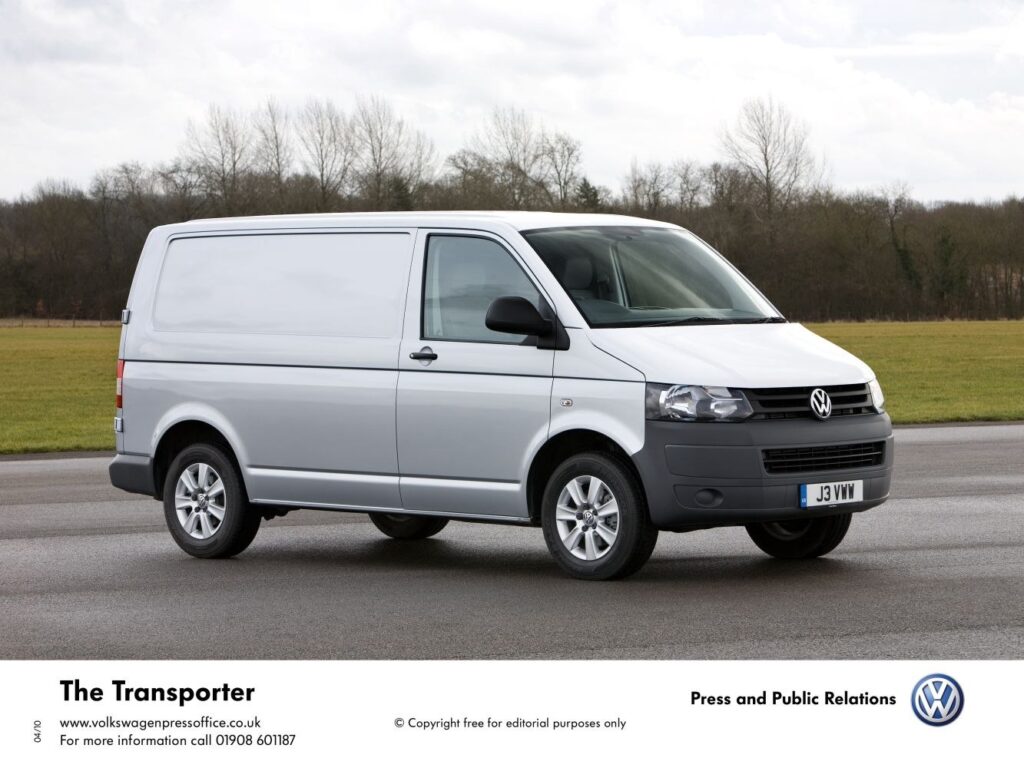
The Volkswagen Transporter (T5) facelift, produced from 2009 to 2015, represented a significant update to the fifth generation of Volkswagen’s popular commercial vehicle. Within the T5 range, the 2.0 TDI 140 hp Panel Van (specifically the L1H2 configuration) occupied a crucial middle ground, offering a balance between affordability, fuel efficiency, and practicality for commercial users. This variant was designed to appeal to businesses and tradespeople requiring a versatile and reliable van for everyday operations. The L1H2 designation refers to the van’s body length (L1 – short wheelbase) and roof height (H2 – high roof), providing a useful cargo volume while remaining relatively manageable in urban environments.
Powertrain & Engine Architecture
The heart of the Transporter 2.0 TDI 140 was the EA189 series four-cylinder diesel engine, specifically the CAAC engine code. This 1968 cc (120.09 cubic inches) engine utilized a common rail direct injection system, delivering fuel at extremely high pressure for optimized combustion. The engine featured a single turbocharger with an intercooler, boosting power output to 140 horsepower (hp) at 3500 rpm and 340 Newton-meters (250.77 lb-ft) of torque between 1750 and 2500 rpm. The engine employed a double overhead camshaft (DOHC) valvetrain with four valves per cylinder, contributing to its relatively efficient operation.
The 2.0 TDI 140 was typically paired with a six-speed manual transmission, although a six-speed automatic transmission was also available as an option. The automatic transmission, while offering convenience, was sometimes criticized for slightly less responsive shifts compared to the manual. Engine oil capacity was 7 liters (7.4 US quarts / 6.16 UK quarts), and the engine required coolant totaling 11 liters (11.62 US quarts / 9.68 UK quarts). A diesel particulate filter (DPF) was standard equipment to meet Euro 5 emission standards.
Engine Specifications Breakdown
The EA189 engine family, while robust, was later subject to scrutiny regarding potential issues with the DPF and injection system. However, the 140 hp variant generally proved to be more reliable than some of the higher-output versions within the same engine family, due to the lower stress placed on its components.
Driving Characteristics
The 2.0 TDI 140 hp engine provided adequate performance for typical commercial van duties. Acceleration from 0 to 100 km/h (0-62 mph) took approximately 12.3 seconds, with a top speed of 167 km/h (103.77 mph). While not a particularly sporty vehicle, the engine delivered sufficient torque for hauling moderate loads and maintaining comfortable cruising speeds on highways. The six-speed manual transmission allowed drivers to keep the engine within its optimal torque band, maximizing fuel efficiency and responsiveness. The automatic transmission, while convenient, could sometimes feel sluggish, particularly when accelerating or climbing hills. The front-wheel-drive configuration provided predictable handling, but traction could be limited in slippery conditions, especially when heavily loaded.
Compared to the more powerful 180 hp TDI variant, the 140 hp engine offered a noticeable trade-off in performance. However, it also provided better fuel economy and potentially lower maintenance costs. The 140 hp version was also a step up in performance from the lower-powered 80 hp or 102 hp TDI options, making it a popular choice for those needing a balance of power and efficiency.
Equipment & Trim Levels
The Transporter T5 facelift 2.0 TDI 140 Panel Van was typically offered in a relatively basic trim level, focused on functionality and durability. Standard equipment generally included power steering, ABS brakes, a driver’s airbag, and basic steel wheels. The interior was typically finished with durable, easy-to-clean plastics and cloth upholstery. The cab typically accommodated two or three occupants, depending on the configuration.
Optional extras included air conditioning, a radio/CD player, electric windows, central locking, and upgraded seating. Higher trim levels, such as Trendline or Highline, added more comfort and convenience features, including alloy wheels, upgraded interior trim, and additional safety equipment. The L1H2 body style provided a generous cargo volume of approximately 6700 liters (236.61 cubic feet), making it suitable for a wide range of commercial applications.
Chassis & Braking
The Transporter T5 utilized an independent McPherson strut front suspension with a coil spring and anti-roll bar. The rear suspension employed a semi-independent trailing arm setup with coil springs and a transverse stabilizer. This suspension configuration provided a reasonable balance between ride comfort and load-carrying capacity. The front brakes were ventilated discs measuring 308×29.5 mm, while the rear brakes were also ventilated discs measuring 294×22 mm. ABS (Anti-lock Braking System) was standard equipment. The vehicle’s curb weight ranged from 1722 to 2138 kg (3796.36 to 4713.48 lbs), depending on the specific configuration and equipment.
Market Reception & Comparison
The Volkswagen Transporter T5 2.0 TDI 140 Panel Van was generally well-received by critics and commercial vehicle operators. It was praised for its reliability, fuel efficiency, and practicality. Fuel consumption figures averaged around 7.4-7.7 l/100 km (31.8-30.5 US mpg), making it a relatively economical choice for businesses. Compared to other vans in its class, such as the Ford Transit and Mercedes-Benz Vito, the Transporter offered a reputation for build quality and a comfortable driving experience. However, some critics noted that the interior was somewhat basic and that the automatic transmission could be less responsive than the manual. The 140 hp TDI engine offered a good compromise between performance and running costs, making it a popular choice for a wide range of applications.
Technical Specifications
| Brand | Volkswagen |
| Model | Transporter |
| Generation | Transporter (T5, facelift 2009) Panel Van |
| Type (Engine) | 2.0 TDI (140 Hp) L1H2 |
| Start of production | 2009 |
| End of production | 2015 |
| Powertrain Architecture | Internal Combustion engine |
| Body type | Van |
| Seats | 2-3 |
| Doors | 4-5 |
| Fuel consumption (economy) – urban (NEDC) | 9.5-9.8 l/100 km (24.8 – 24 US mpg, 29.7 – 28.8 UK mpg, 10.5 – 10.2 km/l) |
| Fuel consumption (economy) – extra urban (NEDC) | 6.2-6.5 l/100 km (37.9 – 36.2 US mpg, 45.6 – 43.5 UK mpg, 16.1 – 15.4 km/l) |
| Fuel consumption (economy) – combined (NEDC) | 7.4-7.7 l/100 km (31.8 – 30.5 US mpg, 38.2 – 36.7 UK mpg, 13.5 – 13 km/l) |
| CO2 emissions (NEDC) | 195-203 g/km |
| Fuel Type | Diesel |
| Acceleration 0 – 100 km/h | 12.3 sec |
| Acceleration 0 – 62 mph | 12.3 sec |
| Acceleration 0 – 60 mph | 11.7 sec |
| Maximum speed | 167 km/h (103.77 mph) |
| Emission standard | Euro 5 |
| Weight-to-power ratio | 12.3 kg/Hp, 81.3 Hp/tonne |
| Weight-to-torque ratio | 5.1 kg/Nm, 197.4 Nm/tonne |
| Power | 140 Hp @ 3500 rpm |
| Torque | 340 Nm @ 1750-2500 rpm (250.77 lb.-ft. @ 1750-2500 rpm) |
| Engine layout | Front, Transverse |
| Engine Model/Code | EA189 / CAAC |
| Engine displacement | 1968 cm3 (120.09 cu. in.) |
| Number of cylinders | 4 |
| Engine configuration | Inline |
| Cylinder Bore | 81 mm (3.19 in.) |
| Piston Stroke | 95.5 mm (3.76 in.) |
| Compression ratio | 16.5:1 |
| Number of valves per cylinder | 4 |
| Fuel injection system | Diesel Commonrail |
| Engine aspiration | Turbocharger, Intercooler |
| Valvetrain | DOHC |
| Engine oil capacity | 7 l (7.4 US qt | 6.16 UK qt) |
| Coolant | 11 l (11.62 US qt | 9.68 UK qt) |
| Kerb Weight | 1722-2138 kg (3796.36 – 4713.48 lbs.) |
| Max. weight | 2800-3200 kg (6172.94 – 7054.79 lbs.) |
| Max load | 1062-1078 kg (2341.31 – 2376.58 lbs.) |
| Trunk (boot) space – maximum | 6700 l (236.61 cu. ft.) |
| Fuel tank capacity | 80 l (21.13 US gal | 17.6 UK gal) |
| Permitted trailer load with brakes (12%) | 2500 kg (5511.56 lbs.) |
| Permitted trailer load without brakes | 750 kg (1653.47 lbs.) |
| Permitted towbar download | 100 kg (220.46 lbs.) |
| Length | 4892 mm (192.6 in.) |
| Width | 1904 mm (74.96 in.) |
| Width including mirrors | 2283 mm (89.88 in.) |
| Height | 2176 mm (85.67 in.) |
| Wheelbase | 3000 mm (118.11 in.) |
| Front overhang | 896 mm (35.28 in.) |
| Rear overhang | 996 mm (39.21 in.) |
| Ride height (ground clearance) | 201 mm (7.91 in.) |
| Minimum turning circle (turning diameter) | 11.9 m (39.04 ft.) |
Legacy
The Volkswagen Transporter T5 2.0 TDI 140 Panel Van remains a popular choice in the used commercial vehicle market. Its reputation for reliability, fuel efficiency, and practicality continues to attract buyers. While the EA189 engine has been subject to some scrutiny, the 140 hp variant has generally proven to be relatively durable. Regular maintenance, including timely DPF regeneration and oil changes, is crucial for ensuring long-term reliability. The T5 continues to be a workhorse for many businesses, and well-maintained examples can provide years of dependable service.