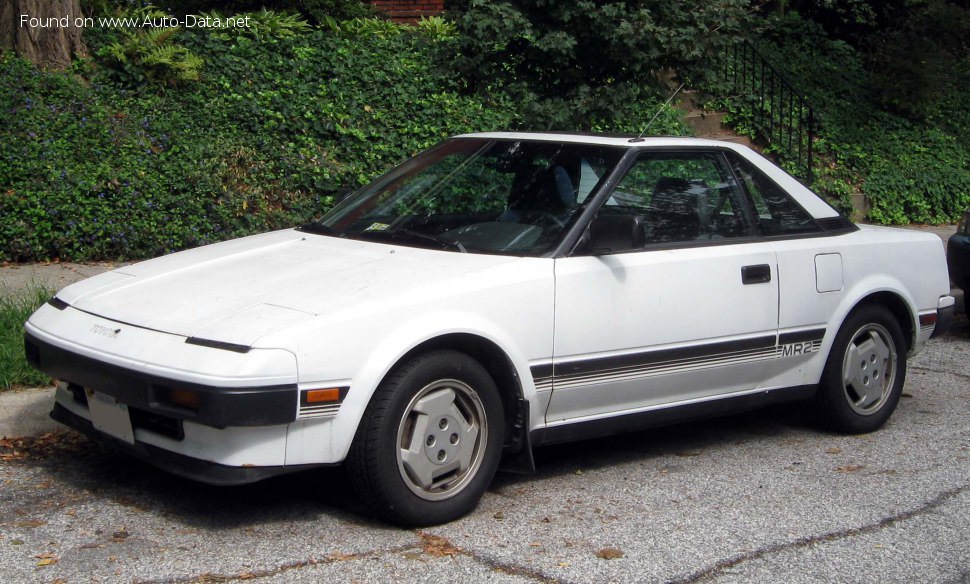
The Toyota MR2 (AW11) 1.6 16V, produced between 1984 and 1989, represents the first generation of Toyota’s mid-engine, rear-wheel-drive sports car. Positioned as an affordable and accessible sports coupe, the 1.6-liter 16-valve variant served as the entry point into the MR2 lineup, offering a balance of performance and economy. It was built on the Toyota A-series platform, internally designated as the W10 series, and aimed to deliver a European sports car experience at a Japanese price point. This initial MR2 generation was a significant departure for Toyota, venturing into a market segment previously dominated by European manufacturers.
Powertrain & Engine Architecture
The heart of the AW11 MR2 1.6 16V is the 4A-GE engine, a 1.6-liter (1587 cc) inline-four cylinder gasoline engine. This engine is notable for its dual overhead camshafts (DOHC) and four valves per cylinder, contributing to its relatively high output for its displacement. The 4A-GE utilizes a multi-port fuel injection system, enhancing fuel efficiency and throttle response. The engine produces 116 horsepower at 6,600 rpm and 134 Nm (98.83 lb-ft) of torque at 4,800 rpm. Compression ratio is set at 9.4:1. The engine’s transverse rear-mid engine layout contributes to excellent weight distribution, enhancing handling characteristics.
While a five-speed manual transmission was the most common pairing for the 1.6 16V, an optional four-speed automatic transmission was available. The automatic transmission, though offering convenience, did impact acceleration and overall driving engagement compared to the manual version. The automatic’s gear ratios were optimized for fuel economy and smooth cruising rather than outright performance. The automatic transmission was a popular choice for buyers prioritizing ease of use over sporty driving dynamics.
Engine Codes and Variations
The 4A-GE engine code designates this specific variant. Later iterations of the 4A-GE, particularly those found in the AE86 Corolla GT-S and subsequent MR2 generations, featured improvements such as individual throttle bodies (ITBs) and higher compression ratios, resulting in increased power output. However, the AW11’s 4A-GE was tuned for a balance of reliability and drivability, making it a robust and relatively maintenance-free engine.
Driving Characteristics
The MR2 1.6 16V offers a distinct driving experience thanks to its mid-engine layout. This configuration provides exceptional balance and nimble handling. The car feels responsive to steering inputs and exhibits minimal understeer, making it enjoyable on winding roads. Acceleration from 0 to 60 mph takes approximately 8.3-8.7 seconds, depending on testing conditions and whether the vehicle is equipped with the manual or automatic transmission. The automatic transmission version typically records slightly slower acceleration times due to the inherent efficiency losses within the torque converter and less aggressive gear ratios.
Compared to the later, more powerful MR2 variants (such as the 2.0-liter turbocharged models), the 1.6 16V feels less potent. However, its lighter weight and responsive engine make it a fun and engaging car to drive, particularly at lower speeds. The manual transmission provides a more connected driving experience, allowing the driver to fully exploit the engine’s powerband. The automatic, while less engaging, offers a more relaxed driving experience suitable for daily commuting.
Equipment & Trim Levels
The AW11 MR2 1.6 16V was generally offered with a relatively basic level of equipment, reflecting its position as the entry-level model. Standard features typically included cloth upholstery, a basic stereo system, and manual windows and locks. Air conditioning was often an optional extra. Interior trim was functional and focused on providing a driver-centric environment. Dashboard design was simple and straightforward, with clearly marked gauges for speed, tachometer, fuel level, and coolant temperature.
Optional extras included upgraded stereo systems, power windows, power locks, and a sunroof. Some models were also equipped with alloy wheels, which were a popular upgrade over the standard steel wheels with hubcaps. The availability of optional equipment varied depending on the market and the year of production.
Chassis & Braking
The MR2 AW11 features an independent suspension system at all four wheels. The front suspension utilizes a McPherson strut design, while the rear also employs a McPherson strut setup. This suspension configuration provides a comfortable ride while maintaining good handling characteristics. The car’s relatively low weight contributes to its agility and responsiveness.
Braking duties are handled by ventilated discs at the front and solid discs at the rear. The braking system is adequate for the car’s performance capabilities, providing sufficient stopping power in most driving situations. Power steering, utilizing a hydraulic system, is standard, making the car easy to maneuver at low speeds. Tire size is typically 185/60 R14 for both front and rear wheels.
Market Reception & Comparison
The MR2 1.6 16V was generally well-received by automotive critics, who praised its handling, balance, and affordability. It was often compared to other small sports cars of the era, such as the Mazda RX-7 and the Porsche 944. While the MR2 offered less power than some of its competitors, its mid-engine layout and nimble handling made it a compelling alternative. Fuel economy was also a strong point, with the 1.6-liter engine achieving approximately 28 mpg in urban driving and 38 mpg on the highway.
Compared to the higher-trim MR2 variants, the 1.6 16V offered a more accessible entry point into the MR2 ownership experience. The 2.0-liter turbocharged models provided significantly more power but came at a higher price. The 1.6 16V was often favored by buyers who prioritized handling and fuel economy over outright speed. Reliability was generally good, although the early MR2s were known for occasional issues with oil leaks and cooling system components.
Technical Specifications
| Body Type | Coupe, 2 Doors, 2 Seats |
| Engine Displacement | 1.6 l / 1587 cm³ / 96.78 cu. in. |
| Number of Cylinders | 4, Inline |
| Power | 116 Hp @ 6600 rpm |
| Torque | 134 Nm @ 4800 rpm / 98.83 lb.-ft. @ 4800 rpm |
| Fuel Type | Petrol (Gasoline) |
| Acceleration 0-60 mph | 8.3 sec (Calculated) |
| Kerb Weight | 1090 kg / 2403.04 lbs. |
| Fuel Tank Capacity | 41 l / 10.83 US gal / 9.02 UK gal |
| Length | 3925 mm / 154.53 in. |
| Width | 1665 mm / 65.55 in. |
| Height | 1250 mm / 49.21 in. |
| Wheelbase | 2320 mm / 91.34 in. |
| Gearbox | 5 gears, manual transmission (optional 4-speed automatic) |
Legacy
The AW11 MR2 1.6 16V remains a popular choice among enthusiasts today. Its affordability, engaging driving dynamics, and relatively simple mechanicals make it an attractive option for those seeking a classic sports car experience. While some maintenance may be required due to the car’s age, parts availability is generally good. The 4A-GE engine is known for its durability and can be reliably maintained with proper care.
In the used car market, the AW11 MR2 1.6 16V typically commands a lower price than the higher-trim models. However, well-maintained examples are becoming increasingly collectible. The car’s enduring appeal lies in its unique combination of performance, handling, and affordability, making it a true icon of the 1980s sports car scene. The MR2 established Toyota as a serious contender in the sports car market and paved the way for future generations of the model.