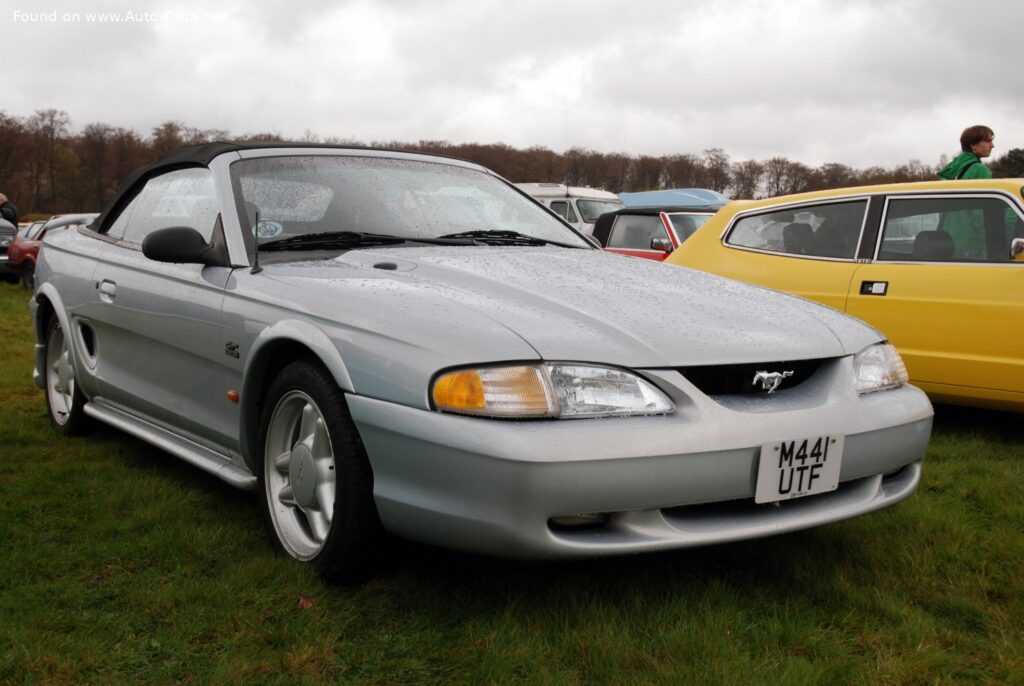
The Ford Mustang Convertible IV 4.6 V8 GT, produced from 1998 to 2005, represented a significant iteration of Ford’s iconic pony car. This fourth-generation Mustang (SN-95 platform) offered open-air driving enjoyment combined with the power of Ford’s Modular V8 engine. The 4.6L GT model occupied the performance-oriented mid-range of the Convertible IV lineup, positioned above the base V6 models and below any potential special edition or higher-performance variants. It aimed to deliver a balance of power, handling, and affordability for buyers seeking a classic American sports car experience.
Powertrain & Engine Architecture
The heart of the Mustang Convertible IV 4.6 V8 GT was Ford’s 4.6-liter Modular V8 engine, specifically the 99WSFI code. This engine was a significant departure from the older pushrod V8s previously used in the Mustang, employing overhead camshafts (OHC) and a more modern design. The engine featured a 90.2 mm bore and 90 mm stroke, resulting in a displacement of 4601 cubic centimeters (280.77 cubic inches). It utilized a 9:1 compression ratio and two valves per cylinder. Fuel delivery was handled by a multi-port manifold fuel injection system, contributing to improved efficiency and responsiveness.
The 4.6L V8 produced 228 horsepower at 4750 rpm and 393 Nm (289.86 lb-ft) of torque at 3500 rpm. This power output, while not the highest available in the Mustang lineup, provided ample performance for spirited driving. The engine’s longitudinal front-engine layout and rear-wheel-drive configuration were traditional Mustang hallmarks. The engine oil capacity was 5.7 liters (6.02 US quarts / 5.02 UK quarts), and the cooling system held 13.3 liters (14.05 US quarts / 11.7 UK quarts) of coolant.
The Mustang Convertible IV 4.6 V8 GT was primarily equipped with a 5-speed manual transmission. However, a 4-speed automatic transmission was also available, and this configuration is the focus of this article. The automatic transmission offered convenience and ease of use, appealing to a broader range of drivers. Gear ratios were optimized for a balance of acceleration and highway cruising.
Engine Code Specifics (99WSFI)
The 99WSFI engine code designates a specific iteration of the 4.6L Modular V8. This version incorporated improvements over earlier iterations, including enhanced intake manifold design and revised engine management calibration. These changes contributed to improved power delivery and overall engine refinement.
Driving Characteristics
The 1998-2005 Mustang Convertible IV 4.6 V8 GT with the automatic transmission delivered a driving experience that prioritized comfortable cruising and accessible power. While not as aggressively geared as the manual transmission versions, the automatic provided smooth and predictable shifts. Acceleration from 0 to 60 mph typically took around 6.5-7.0 seconds, depending on testing conditions and vehicle weight. The torque peak at 3500 rpm provided good mid-range punch for passing maneuvers and everyday driving.
Compared to the base V6 Mustang, the GT offered a noticeable improvement in acceleration and overall responsiveness. However, it lacked the raw, visceral feel of the manual transmission GT models. The automatic transmission, while convenient, did introduce some power loss compared to the more direct connection of a manual gearbox. The suspension tuning aimed for a balance between ride comfort and handling, making it a suitable daily driver.
Equipment & Trim Levels
The Mustang Convertible IV 4.6 V8 GT came standard with a range of features designed to enhance the driving experience. These included power windows, power locks, air conditioning, and an AM/FM stereo system. Interior upholstery typically consisted of cloth or leather, with options for different color schemes. The dashboard featured a traditional analog gauge cluster, providing information on speed, engine RPM, fuel level, and coolant temperature.
Optional extras included a premium sound system, leather upholstery, power driver’s seat, and a convertible top boot. Appearance packages were also available, offering unique exterior styling cues such as body-colored side moldings and rear spoilers. The GT trim level also included specific exterior styling elements, such as a unique front fascia and rear spoiler, differentiating it from the base V6 models.
Chassis & Braking
The Mustang Convertible IV utilized a body-on-frame construction, a traditional design for American rear-wheel-drive cars. The front suspension employed a wishbone configuration, while the rear suspension utilized a trailing arm setup. This suspension design aimed to provide a comfortable ride while maintaining reasonable handling characteristics. The kerb weight of the vehicle was approximately 1550 kg (3417.17 lbs).
Braking duties were handled by ventilated discs at the front and solid discs at the rear. An Anti-lock Braking System (ABS) was standard equipment, enhancing safety and control during emergency braking situations. The steering system was a hydraulic power steering rack and pinion, providing responsive and precise steering feel. The standard tire size was 245/45 R17, offering a good balance of grip and ride comfort.
Market Reception & Comparison
The Mustang Convertible IV 4.6 V8 GT was generally well-received by automotive critics and consumers alike. It was praised for its classic styling, powerful V8 engine, and relatively affordable price point. However, some critics noted the car’s somewhat dated interior and less-than-stellar build quality compared to some of its foreign competitors.
In terms of fuel economy, the 4.6L GT Automatic achieved approximately 13.8 l/100 km (17 US mpg / 20.5 UK mpg) in urban driving and 9 l/100 km (26.1 US mpg / 31.4 UK mpg) in extra-urban driving. Compared to the V6 Mustang, the GT offered significantly more performance but at the cost of increased fuel consumption. Compared to the manual transmission GT, the automatic version offered slightly lower fuel economy due to the inherent inefficiencies of the torque converter.
Technical Specifications
| Brand | Ford |
| Model | Mustang |
| Generation | Mustang Convertible IV |
| Engine Type | 4.6 V8 GT (228 Hp) |
| Production Years | 1998-2005 |
| Body Type | Cabriolet |
| Seats | 4 |
| Doors | 2 |
| Fuel Consumption (Urban) | 13.8 l/100 km (17 US mpg / 20.5 UK mpg) |
| Fuel Consumption (Extra Urban) | 9 l/100 km (26.1 US mpg / 31.4 UK mpg) |
| Fuel Type | Petrol (Gasoline) |
| Weight-to-Power Ratio | 6.8 kg/Hp |
| Power | 228 Hp @ 4750 rpm |
| Torque | 393 Nm @ 3500 rpm (289.86 lb-ft @ 3500 rpm) |
| Engine Layout | Front, Longitudinal |
| Engine Model/Code | Modular / 99WSFI |
| Engine Displacement | 4601 cm3 (280.77 cu. in.) |
| Number of Cylinders | 8 |
| Cylinder Bore | 90.2 mm (3.55 in.) |
| Piston Stroke | 90 mm (3.54 in.) |
| Compression Ratio | 9:1 |
| Fuel Injection System | Multi-port manifold injection |
| Kerb Weight | 1550 kg (3417.17 lbs.) |
| Trunk Space (Minimum) | 220 l (7.77 cu. ft.) |
| Fuel Tank Capacity | 58 l (15.32 US gal / 12.76 UK gal) |
| Length | 4635 mm (182.48 in.) |
| Width | 1820 mm (71.65 in.) |
| Height | 1360 mm (53.54 in.) |
| Wheelbase | 2570 mm (101.18 in.) |
| Gearbox | 4-speed Automatic |
Legacy
The Mustang Convertible IV 4.6 V8 GT, particularly the automatic transmission variant, remains a popular choice in the used car market. The 4.6L Modular V8 engine is generally considered reliable, although regular maintenance is crucial to prevent issues such as oil leaks and timing chain wear. The automatic transmission, while not as sporty as the manual, is known for its durability. The car’s classic styling and open-air driving experience continue to appeal to enthusiasts. While not a high-performance machine by modern standards, the Mustang Convertible IV 4.6 V8 GT offers a compelling combination of style, power, and affordability, making it a desirable classic American sports car.